
You’ve typed it a hundred times. An email, a notice, a customer support ticket. And then it hits you: is it “cancellation” or “cancelation“?Both look right the moment you stare at them too long. That’s the trap. Your brain starts doubting a word you actually know.Here’s the short version before we go deep: cancellation (with two L’s) is the standard spelling almost everywhere, including in the US dictionaries and most style guides.
Cancelation (one L) shows up sometimes, but it’s the rare spelling, not the safe bet.Stick with us. We’ll break down the spelling rules, the origin, the regional split, and where each version actually gets used in real life.
Cancellation or Cancelation – Quick Answer
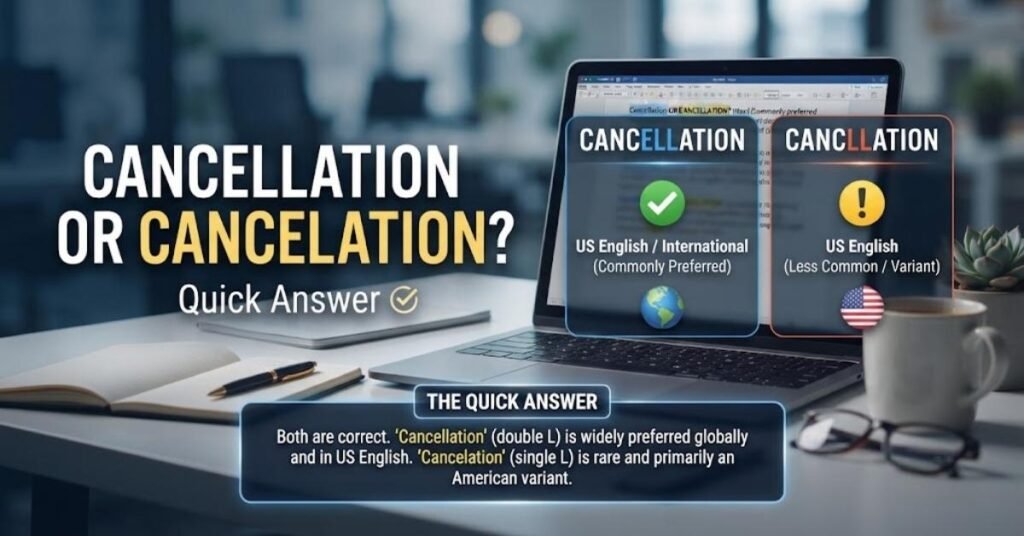
If you only remember one thing, remember this: cancellation wins. It’s the preferred spelling in American English, British English, UK English, and basically every Commonwealth English variant out there.
“Cancelation” isn’t wrong on a technical level. Dictionaries even list it as a minor variant. But in formal writing, business writing, and academic writing, people expect two L’s.
Think of it like ordering coffee. You can ask for “a coffee” and get one. But if you want it exactly how you like it, you specify. Same with spelling. One version fits the moment. The other creates a tiny question mark in the reader’s head.
The Origin of Cancellation or Cancelation
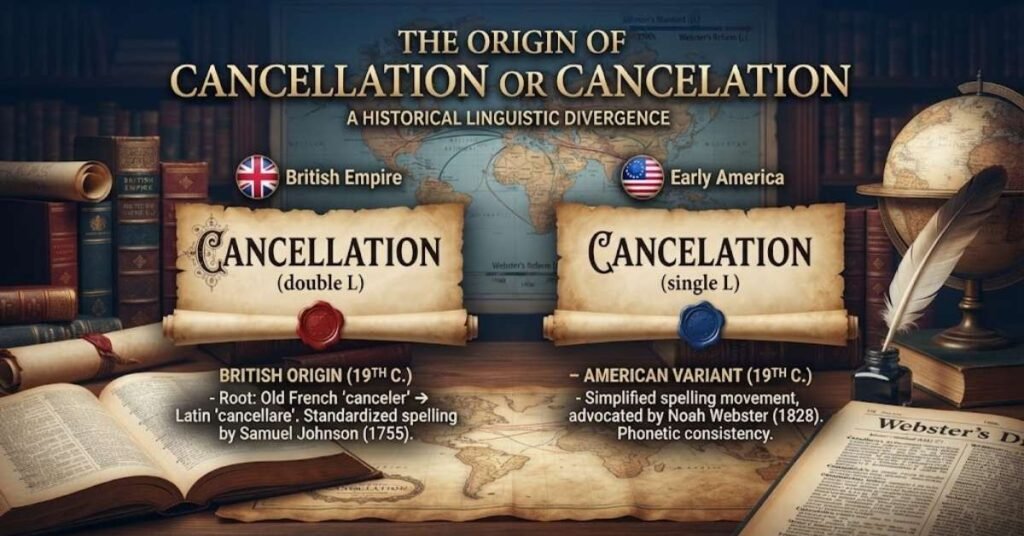
Every word has a backstory, and this one’s actually kind of fun. The etymology traces back to the Latin word cancellare, which meant to cross out or mark something with crossed lines, like a grid.
Picture a scribe centuries ago drawing an X over a mistake on parchment. That’s basically the ancestor of “cancel.”
Over time, English absorbed the base word “cancel” and added the -ation suffix to turn the verb into a noun. That’s a normal move in language evolution. Think “inform” to “information,” or “create” to “creation.”
The tricky part is the doubled consonant. English has this quirky spelling convention where certain verb endings double the final letter before adding a suffix, especially in British spelling. That single rule is the whole reason we’re even having this conversation.
British English vs American English Spelling
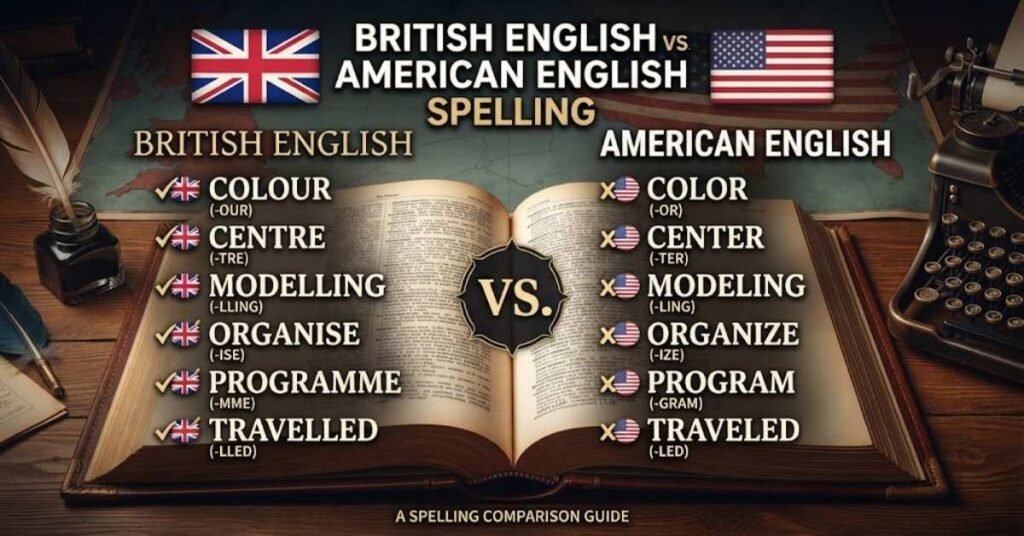
This is where most of the confusion actually starts. British English tends to double consonants more often. Think “travelling,” “modelling,” and yes, “cancelling.”
American English usually skips the extra letter. Americans write “traveling,” “modeling,” and “canceling.”
But here’s the twist that throws people off: when you get to the noun form, both US English and UK English settle on the double L. “Cancellation” is standard on both sides of the Atlantic, even though “canceling” versus “cancelling” splits them.
So the spelling difference isn’t really American versus British in this case. It’s more of a rare spelling versus a dominant spelling situation. “Cancelation” pops up occasionally in American writing, but it never became the standard form.
Which Spelling Should You Use?
Simple rule: default to cancellation unless you have a specific reason not to.
It’s the correct spelling recognized by major dictionaries, used in published content, news writing, and official notices across the board. If you’re a student, a professional, or anyone writing for a global audience, this is your safe preferred form.
Here’s a quick checklist for writing confidence:
- Writing an email, resume, or business documents? Use cancellation.
- Working on academic writing or a school paper? Use cancellation.
- Drafting a cancellation notice or cancellation policy for customers? Still cancellation.
- Not sure which spellcheck tools your platform uses? Doesn’t matter. Two L’s almost always passes.
The one L version rarely causes real trouble, but why gamble your credibility on a less common spelling when the safer accepted spelling is right there?
Common Mistakes with Cancellation or Cancelation
People don’t usually mess this up on purpose. It happens because of muscle memory from other words.
One frequent slip: writers see “canceled” (one L, correct in American English) and assume the noun follows the same spelling rules. It doesn’t. “Canceled” drops a letter. “Cancellation” keeps both.
Another common mix up shows up in proofreading and copy editing. Autocorrect sometimes “fixes” cancellation into cancelation on certain devices, especially older spellcheck tools that weren’t updated with current language standard databases.
A few more mistakes worth flagging:
- Mixing “cancelling” (verb, British) with “cancellation” (noun, both regions), which is actually fine, but confuses people who assume they should match letter for letter.
- Using “cancelation” in formal writing just because it looks shorter.
- Assuming spelling doesn’t matter for online content, when in reality, consistency builds trust in writing.
Cancellation or Cancelation in Everyday Examples
Let’s make this real instead of abstract.
Say your flight gets scrapped last minute. The airline sends a confirmation email titled “Flight Cancellation Notice.” Not “flight cancelation.” Every major airline style guide sticks with two L’s.
Same goes for a subscription cancellation. Netflix, gym memberships, streaming services, they all use cancellation in their customer support language and cancellation policy pages.
Even a meeting cancellation email at work follows the same pattern. “Due to scheduling conflicts, today’s meeting has been cancelled” or “the cancellation of today’s meeting” both lean on double L’s.
And weather? If rain wrecks an outdoor event, the news headline reads “Event Cancellation Due to Rain,” not the shorter spelling. Even social platforms follow this pattern when posting a last-minute cancellation update.
Cancellation or Cancelation – Google Trends & Usage Data
Numbers don’t lie, and this one’s pretty lopsided.
Pull up Google Trends and search both terms. Search data consistently shows cancellation getting dramatically more search trends volume than cancelation, often by a margin of ten to one or higher.
This lines up with real-world usage across websites, books, and online searches. Publishers, dictionaries, and major outlets treat “cancellation” as the dominant spelling, and readers search accordingly.
Even in countries where American spelling is common, like parts of India and Canada, usage trends still favor cancellation for this particular word. It’s one of those rare cases where modern usage doesn’t split neatly along regional lines.
Cancellation vs Cancelation – Comparison Table
Sometimes a table just makes things click faster than paragraphs.
| Feature | Cancellation | Cancelation |
| Letter count | Two L’s | One L |
| Region | American English, British English, UK English, US English | Rarely used anywhere |
| Dictionaries | Primary listing | Minor variant, sometimes absent |
| Formal writing | Fully accepted | Not recommended |
| Google Trends volume | High | Low |
| Everyday use | Booking, airline, subscription cancellation notices | Almost none |
| Style guides | Standard correct form | Discouraged |
If you’re skimming this instead of reading every section, this table alone answers your question.
Why This Spelling Confusion Even Exists
Here’s a question worth asking. If it’s so lopsided, why do people still doubt themselves?
Part of it comes from how English handles word usage inconsistently. We double consonants in “cancelling” but not always in similar words like “traveled.” There’s no single clean rule, just patterns with exceptions.
The other part is exposure. If you’ve read more American content, “canceled” with one L feels normal. Your brain quietly assumes the noun follows suit, even though it doesn’t. That mismatch is the root of most spelling confusion around this word.
How Style Guides and Dictionaries Settle the Debate
If you want a definitive answer instead of a “well, it depends,” this is where to look.
Major style guides used in news writing, content writing, and editorial style decisions almost universally list cancellation as the go-to. AP Style, for instance, keeps two L’s for the noun form even while trimming the verb to one L in American usage.
US dictionaries like Merriam-Webster list “cancellation” as the primary entry. Some do note “cancelation” exists, but they flag it as a less common spelling, not an equal alternative. That distinction matters if you’re aiming for standard spelling in professional content.
Quick Tips to Remember the Correct Spelling
Nobody wants to Google this every single time. So here’s a mental shortcut.
- Picture two L’s like two crossed lines, echoing the original cancellare meaning of crossing something out.
- Remember: the verb can lose a letter in American English (“canceled”), but the noun almost never does.
- If your spellcheck tools flag “cancelation” as an error, trust it. Most modern tools are built around the language rules that favor two L’s.
Say it out loud a few times if you’re a visual learner: cancel-LA-tion. That little emphasis trick sticks surprisingly well.
Cancellation Across Different Industries
Different industries lean on this word constantly, and they all land on the same spelling.
In travel and booking policy contexts, flight cancellation notices, hotel cancellation policy pages, and travel insurance documents all use cancellation without exception. When you’re dealing with refunds and deadlines, the last thing anyone wants is spelling that looks off in an official notice.
Healthcare and appointment based businesses follow the same path. A dentist rescheduling your visit sends a “cancellation confirmation,” not the shorter version. Legal and insurance paperwork, where trust in writing genuinely matters, treats cancellation as non negotiable.
Even entertainment and events use it the same way. Concert postponements, event cancellation alerts, and ticket refund emails on social media all stick with the two L spelling because that’s what audiences expect to see.
What This Means for Writers and Students
If you’re a student prepping for exams, or a writer building a portfolio, small details like this one add up fast.
English learners especially benefit from locking in this rule early, since it removes one recurring source of hesitation. Once you know the noun always keeps two L’s, you stop second guessing yourself mid paragraph.
For professionals producing business documents, official notices, or client facing emails, consistency signals competence. Nobody consciously thinks “wow, great spelling,” but they absolutely notice when something feels slightly off, even if they can’t name why.
FAQs
Is “cancelation” a real word?
Technically, yes. Some dictionaries list it as a variant. But it’s rarely used in professional writing and isn’t the preferred spelling.
Do British and American English spell this word differently?
Not really, not for the noun. Both use cancellation with two L’s. The difference shows up more in verb forms like “cancelling” versus “canceling.”
Which spelling should I use for a resume or business email?
Always go with cancellation. It’s the safe, accepted spelling across formal writing, business documents, and professional communication.
Why does my spellcheck sometimes suggest “cancelation”?
Older or region specific spellcheck tools occasionally include less common variants. It doesn’t mean it’s the better choice, just that it technically exists in some databases.
Conclusion
So, cancellation or cancelation? The answer isn’t really a coin toss.Cancellation is the standard spelling, backed by dictionaries, style guides, Google Trends data, and everyday real-world usage. Whether you’re writing a cancellation notice, handling a booking cancellation, or just sending a casual email, two L’s keeps you on solid ground.
“Cancelation” isn’t a crime against the English language. It’s just the underdog nobody picked. Save yourself the second guessing, and let two L’s do the work.Next time you’re mid sentence and your fingers hesitate over the keyboard, you’ll already know the answer.

Jack Harrison is a passionate writer with 4 years of experience exploring names, meanings, origins, symbolism, and cultural significance. He creates clear, engaging, and well-researched content to help readers discover the deeper meanings behind names and words.
