
WTD meaning in chat almost always comes down to one simple question: “What To Do.” Someone sends it when they’re stuck, bored, or just waiting on you to make the call.You’ll spot it in group chats when plans fall apart last minute. You’ll see it in DMs when a friend has no idea how to handle something. It’s short, it’s fast, and it gets straight to the point without any extra typing.
The WTD slang meaning works so well because it mirrors how people actually talk when they’re rushed. Nobody wants to type out “what should we do” every single time, so the internet trimmed it down. That’s really the whole story behind what does WTD mean in chat.
Quick Meaning Guide
Here’s the fast version if you’re skimming:
- WTD = What To Do
- Used to ask for a decision, plan, or next step
- Common on Snapchat, TikTok, Instagram, and Discord
- Casual tone, not meant for formal writing
- Meaning can shift slightly based on context
That’s the WTD definition in a nutshell. The rest of this guide digs into where it came from, how people use it, and where you should probably avoid it.
Other Meanings of WTD
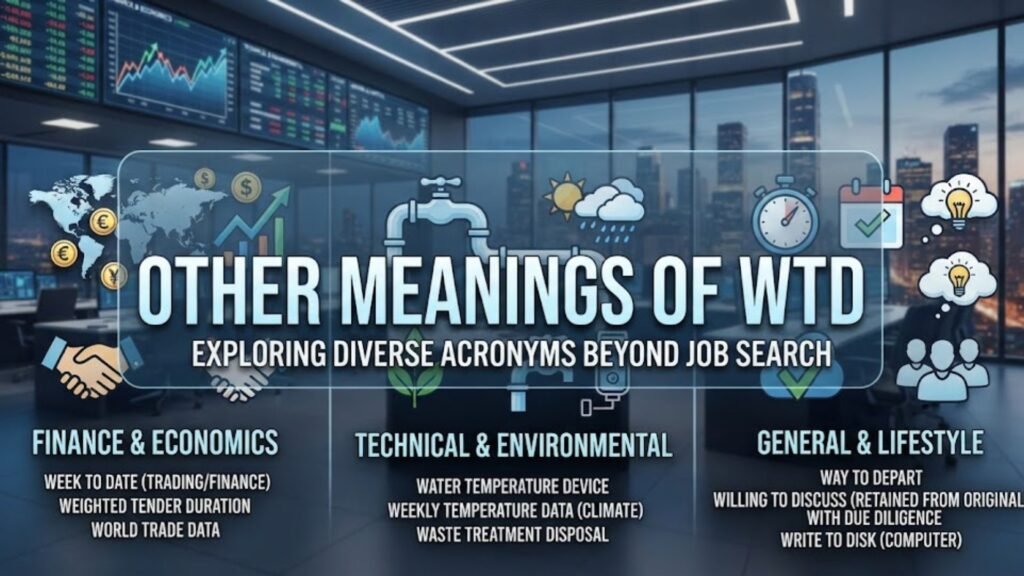
Not every WTD abbreviation points to “What To Do.” Context changes everything, and this one’s a bit of a chameleon.
Sometimes people use it to mean “What’s The Deal,” especially when they’re confused or a little annoyed about something. Picture a friend texting “wtd with the group project,” clearly asking what’s going on rather than what to do next. There’s also “What The Deuce,” an older, cheekier way of expressing surprise or disbelief, though it’s far less common now.
Outside of texting, WTD shows up in totally different worlds. In finance and business, it stands for Week to Date, used in sales reports and analytics dashboards. Dating apps have their own twist too, where it can playfully mean “Want To Date.” And in some online spaces, especially gaming or group chats, people jokingly use it as “Who To Delete” when cleaning up a friends list. The WTD full form really depends on where you found it.
Origin of WTD in Online Communication
The origin of WTD traces back to the early days of mobile texting, when character limits and slow keyboards forced people to shorten everything. Typing full sentences on a flip phone was painful, so abbreviations like this one became second nature.
As smartphones took over and messaging apps exploded, WTD stuck around because it filled a real gap. People needed a quick way to ask “so, what’s the plan” without breaking conversational flow. Slang dictionaries and sites like Dictionary.com eventually documented it as internet slang gained more mainstream attention around the late 2010s.
What’s interesting is how the phrase spread through group texting culture first, then jumped into gaming voice chats and social platforms. It didn’t come from one single app or trend. It grew organically because it solved a real, everyday communication problem: deciding what happens next, fast.
How WTD Is Used in Chat Conversations
The WTD chat meaning shifts slightly depending on the situation, but it almost always circles back to one thing: someone wants direction. Here’s how that plays out in real conversations.
Asking for Plans
This is the most common use. Someone’s free, bored, or just checking in, and they fire off a quick “wtd tonight?” It’s the texting equivalent of poking your head into a room and asking what’s happening.
You’ll see this constantly in group chats where nobody has committed to anything yet. It’s casual, low-pressure, and doesn’t demand a long response.
Asking for Advice
Sometimes WTD isn’t about plans at all, it’s a cry for help. A friend might text “my landlord just raised rent, wtd” because they genuinely want your opinion on the next move.
This version leans more emotional. The person isn’t just filling time, they’re actually stuck and looking for advice from someone they trust.
Asking About a Situation
Here, WTD works almost like a confused shrug in text form. Think “the wifi’s down again, wtd” or “coach cancelled practice, wtd.” It’s less about deep advice and more about figuring out what’s actually going on.
This use case blends into that “What’s The Deal” meaning we mentioned earlier, so context clues matter a lot here.
Coordinating a Group
In bigger chats, WTD often triggers a chain reaction. One person asks it, and suddenly five people are throwing out ideas. It becomes a quick, informal way to open the floor for group coordination without sounding demanding.
Examples of WTD in Real Conversations
Seeing WTD in action makes the meaning click faster than any definition could. Here are five everyday scenarios.
Example 1: Making Plans
Sara: “Free tonight?” Mike: “Yeah, wtd?” Sara: “Movie or food first?”
Simple, quick, no overthinking. This is the classic making plans use case.
Example 2: Asking for Advice
Jordan: “Boss just added a new deadline, wtd” Priya: “Push back on it tomorrow morning, don’t stress tonight”
Here, WTD carries real weight. Jordan isn’t just curious, he wants a genuine opinion.
Example 3: Weekend Plans
Group chat: “Rain’s supposed to hit Saturday, wtd for the trip?”
This shows how WTD handles last-minute schedule changes without needing a paragraph of explanation.
Example 4: Confusing Situation
Alex: “App keeps logging me out every five minutes, wtd”
No plans involved here, just pure confusion about a frustrating situation.
Example 5: Gaming
Teammate: “Boss fight in 30 seconds, healer’s down, wtd”
In gaming, timing matters. WTD lets teammates make split-second calls without wasting precious seconds typing.
Why WTD Is Popular in Chatting
The popularity of WTD really boils down to speed. Typing on a phone, even with autocorrect, takes longer than talking. Shaving four words down to three letters saves real time, especially in fast-moving chats where people expect quick replies.
There’s also a comfort factor. Once a phrase becomes familiar within your friend group or gaming squad, it stops feeling like slang and starts feeling like normal conversation. It signals casualness, like you’re texting someone you don’t need to impress or explain yourself to fully.
Mobile-first communication rewards brevity. Between notifications, multitasking, and shrinking attention spans, short expressions like WTD just fit the rhythm of how people actually communicate today. It’s not laziness, it’s efficiency.
When to Use WTD in Text
WTD works best in low-stakes, informal settings. Think texting friends, chatting with teammates, or replying in a casual group thread where nobody’s grading your grammar.
It’s especially handy when you genuinely don’t have a plan and want input. Saying “wtd” invites the other person into the decision instead of putting the whole thing on you. It also fits naturally into fast back-and-forth conversations where full sentences would just slow things down.
Use it with people who already know your texting style. If your friend group throws around abbreviations regularly, WTD will land exactly as intended, quick, casual, and easy to answer.
When NOT to Use WTD
Formal settings are where WTD falls apart fast. Sending it in a professional email, a job application, or a message to your manager reads as unclear at best and unprofessional at worst.
Academic writing, official reports, and customer-service replies also need clear, spelled-out language. Nobody reviewing a business proposal wants to decode slang mid-sentence. If you’re unsure whether your audience will recognize the abbreviation, it’s safer to just write the full question out.
A good rule of thumb: if you wouldn’t say “what to do” out loud in that setting, don’t type WTD either. Save it for texts, DMs, and chats where the tone is already relaxed.
WTD in Social Media and Gaming Culture
Different platforms shape how WTD gets used, and each one adds its own little flavor to the phrase.
Snapchat
On Snapchat, WTD shows up constantly between close friends planning last-minute hangouts. Since Snapchat conversations tend to be quick and disappearing, short slang like this fits the throwaway, casual nature of the app perfectly.
TikTok
TikTok comments often use WTD when reacting to confusing or chaotic videos, almost like a shared “what’s happening here” moment. It also pops up in caption replies when creators ask followers what content to make next.
Instagram DMs and comment sections use WTD similarly to Snapchat, mostly for coordinating plans or reacting to something unexpected a friend posted. It keeps replies quick without breaking the scroll.
Gaming and Discord
Gaming and Discord communities lean on WTD heavily during active matches. When a raid goes sideways or a teammate disconnects, someone typing “wtd” keeps the group moving without pausing the action for a full conversation.
Modern Alternatives to WTD
WTD isn’t the only shorthand for asking what’s next. A few close cousins get thrown around just as often, sometimes interchangeably.
- WYD – What You Doing (asking about current activity)
- WDYT – What Do You Think (asking for an opinion)
- WDYD – What Do You Do (asking about someone’s actions or job)
- IDK – I Don’t Know (expressing uncertainty)
- IMO – In My Opinion (offering a personal take)
Each one carries a slightly different flavor, but they all serve the same purpose: keeping conversations moving without typing everything out in full.
WTD vs Other Similar Slang Terms
It helps to line WTD up against its closest relatives so the differences actually stick.
WTD vs WYD comes down to action versus activity. “WYD” asks what you’re currently doing, while WTD asks what should happen next. WTD vs WDYT separates advice from opinion, since “WDYT” wants your take on something already decided, while WTD is still an open question.
WTD vs WBU is another common mix-up. “WBU” (What About You) redirects a question back to the sender, while WTD is asking for a fresh decision. Getting these small differences right keeps your texts from sounding mismatched or confusing to the person on the other end.
Common Misunderstandings About WTD
Slang gets misread all the time, and WTD is no exception. A few mix-ups happen more often than you’d think.
Mistaking “What To Do” for “What’s The Deal”
Since both meanings are common, people sometimes reply with a plan when the sender actually wanted an explanation, or vice versa. Context almost always clears this up within a message or two.
Assuming It Is Always Slang
Not everyone typing “WTD” is texting casually. In business reports, it might mean Week to Date, so seeing it in a spreadsheet or sales email doesn’t automatically mean someone’s being informal.
Thinking It Is Rude
Because it’s short and blunt, WTD can occasionally come across as abrupt, especially without punctuation or emoji softening the tone. Most of the time, though, it’s neutral, not rude, just efficient.
Assuming Everyone Knows It
Not every generation or community uses this abbreviation. Sending it to someone unfamiliar with texting slang can lead to a confused “what does that mean?” reply instead of the quick answer you expected.
Final Words
At the end of the day, WTD is just a fast, friendly way to ask “what should we do” without slowing down the conversation. Whether you’re planning a weekend, stuck on a decision, or coordinating with teammates mid-game, it gets the point across in three letters instead of a full sentence.
Like most slang, it thrives on context and familiarity. Use it with the right crowd, in the right setting, and it works perfectly. Use it in a formal email, and it’ll just confuse people. Once you know the difference, you’ll never second-guess a “wtd” text again.
FAQs
What does WTD mean in texting?
WTD usually means “What To Do,” used when someone’s asking for a plan, suggestion, or next step in a casual text conversation.
What does WTD mean on Snapchat?
On Snapchat, WTD typically means the same thing, friends asking each other what to do or where to meet up, often for spontaneous plans.
What does WTD mean on TikTok?
On TikTok, WTD often appears in comments as a quick reaction to confusing content or as a question about what to watch or do next.
Is WTD rude?
No, WTD isn’t inherently rude. It can read as blunt without extra context or friendly punctuation, but the phrase itself is neutral and common in casual chats.
What does WTD mean in gaming?
In gaming, WTD is used mid-match to ask teammates what move or strategy to take next, especially during fast-paced or high-pressure moments.

Jack Harrison is a passionate writer with 4 years of experience exploring names, meanings, origins, symbolism, and cultural significance. He creates clear, engaging, and well-researched content to help readers discover the deeper meanings behind names and words.
