
You’ve seen it written both ways. One friend types “senpai,” another swears it’s “sempai,” and now you’re stuck wondering who’s actually right.Here’s the short version: “senpai” is the correct, standard romanized spelling of the Japanese word 先輩. “Sempai” isn’t wrong exactly, it’s just an older, less common variant based on how the sound naturally shifts when you say it out loud. Stick with senpai for anything formal, and you’ll be fine.
That answers the headline question. But if you want to actually understand why two spellings exist, when each one shows up, and how to avoid looking clueless in a comment section full of anime fans, keep reading. We’re breaking down the word origin, the pronunciation quirks, the British English vs American English angle, and a few common mistakes that trip up even long-time fans.
Sempai or Senpai – Quick Answer

Let’s not bury the lede any further. Senpai is the version you’ll find in dictionaries, language guides, and any serious piece of learning resources about Japan. It’s the correct spelling taught in Japanese classes and used across standard English writing.
Sempai shows up mostly in casual typing, older manga translations, and situations where someone’s going by ear instead of by the actual Romanization rules. It’s not a typing mistake in the strictest sense, but it’s not the form you want in formal writing.
So if you’re emailing a teacher, writing a school paper, or publishing a blog post like this one, go with senpai. Save sempai for casual chats where nobody’s grading your spelling.
The Origin of Sempai or Senpai
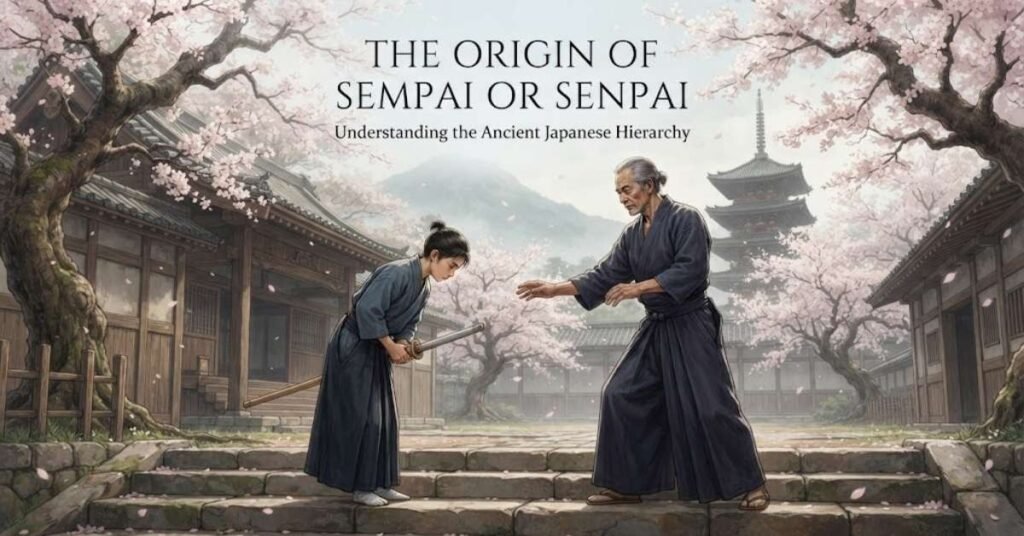
The word comes straight from Japan, written as 先輩 in Japanese. Break it down and you get two characters: one meaning “before” or “previous,” and one meaning “companion” or “fellow.” Put together, it describes someone who came before you, a senior person with more experience than you have right now.
In Japanese culture, this isn’t just about age. It’s about guidance, support, and a built-in sense of respect between an experienced person and someone newer. Think of a senior student showing a first-year around campus, or a workplace senior teaching a new hire the ropes. That relationship has a name, and it’s senpai.
The flip side of senpai is kohai, the junior in the pair. Together they form one of the clearest examples of school hierarchy and workplace hierarchy you’ll find in everyday Japanese language. It’s less about rank and more about mentorship, honestly.
British English vs American English Spelling

Here’s where things get interesting for English speakers outside Japan. Unlike words that genuinely differ between UK English and US English, colour versus color, that sort of thing, senpai isn’t one of them. This isn’t a regional spelling split.
Both British English and American English dictionaries that include the word list it as senpai. There’s no official “UK version” or “US version” here, no matter what some online comment insists. The US audience and the UK audience are working from the same Romanized form.
So if you’ve been assuming this is like “theater” versus “theatre,” you can drop that theory. The senpai and sempai split comes from sound change in speech, not from international usage patterns splitting along country lines.
Which Spelling Should You Use?
Simple rule of thumb: use senpai when you’re writing anything that matters. School assignments, professional emails, published articles, official content creators‘ captions, senpai is the safe, standard form across the board.
Sempai can slide by in casual writing, a quick text to a fellow anime lover, a throwaway comment on a fan forum, that kind of thing. Nobody’s going to correct you in a group chat. But if you’re building a brand, running a blog, or trying to look credible, senpai keeps you on solid ground.
Here’s a quick breakdown to keep things clear:
- Formal writing, dictionaries, news, blogs: use senpai
- Casual texting, memes, fan posts: sempai is tolerated
- Usernames and online conversations: either shows up, but senpai reads as more polished
- Academic or learning resources: senpai, always
Common Mistakes with Sempai or Senpai
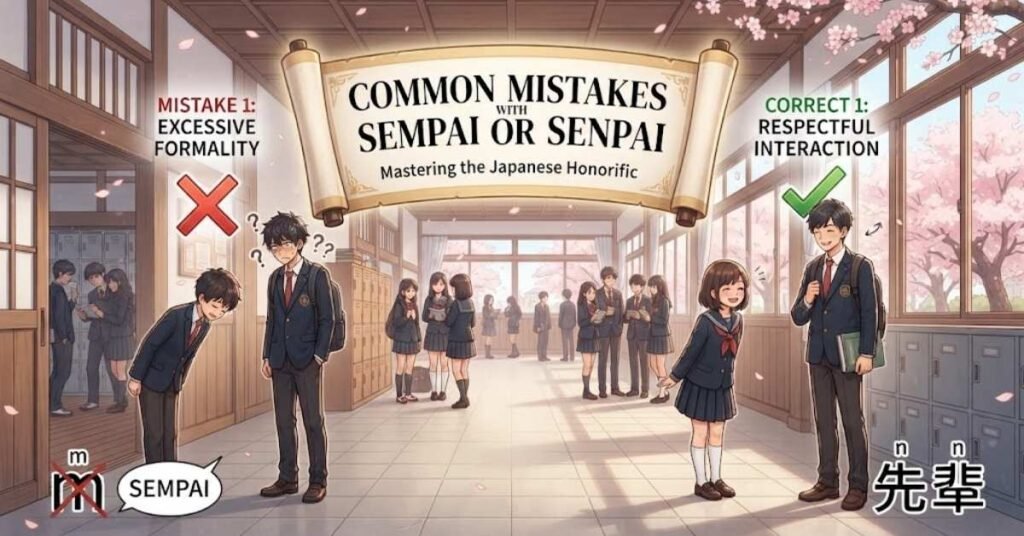
The biggest slip-up isn’t even spelling, it’s meaning. People sometimes use senpai to mean “boss” or “teacher,” but that’s not quite right. A senior colleague doesn’t have to outrank you officially; they just have more time and experience in that specific space.
Another common spelling mistake happens when people mix up senpai with sensei. They sound similar to unfamiliar ears, but sensei refers to a teacher or master, while senpai refers to someone a few steps ahead of you, not necessarily an instructor at all.
Then there’s the pure typing mistake category, autocorrect nudging “senpai” into something else entirely, or folks copying whatever spelling their favorite content creators happened to use without checking. If you’re aiming for the correct form, double check against a real dictionary rather than trusting the first social media post you scroll past.
Sempai or Senpai in Everyday Examples
Let’s ground this in real life instead of just theory. In Japanese schools, a first-year track athlete looks up to the third-year who’s been running the same drills for two seasons. That third-year is their senpai, full stop.
In the workplace, picture a new hire on their first week at the office. The coworker who’s been there three years, who shows them how the coffee machine actually works and which meetings to avoid, that’s a workplace senpai in everyday office life. It happens in training programs too, where a senior employee mentors someone fresh off onboarding.
Sports groups and social groups run on this dynamic constantly. A senpai in a martial arts dojo isn’t just older, they’re the one you watch to learn form. And of course, in anime and manga, the trope is everywhere: the quiet upperclassman the protagonist admires, sometimes academically, sometimes romantically, always with that layer of respect baked in.
Sempai or Senpai – Google Trends & Usage Data
If you pull up Google Trends and compare search volume for both terms, senpai wins by a wide margin. This tracks with what you’d expect since it’s the version taught in language guides and used across dictionaries.
That said, sempai hasn’t vanished. It still pulls a noticeable amount of search data, largely from people who grew up with older anime culture and manga culture translations, back when localization teams weren’t always consistent with Romanization. Some video games and older fan memes cemented that spelling for a specific generation of gamers.
Online usage overall leans hard toward senpai, especially on platforms where anime fans discuss shows in real time. But sempai still pops up in online comments, older forum threads, and usernames that were locked in years ago and never changed.
Comparison Table (Keyword Variations)
Here’s a side by side look to make the differences crystal clear:
| Aspect | Senpai | Sempai |
| Correct spelling | Yes, standard | Informal variant |
| Pronunciation | Matches spoken sound naturally | Reflects sound shift, not spelling rule |
| Formal writing | Preferred | Avoid |
| Casual writing | Fine | Fine |
| Dictionaries | Listed as standard | Rarely primary entry |
| British English / American English | Same in both | Same in both |
| Online usage | Dominant | Present but secondary |
| Anime and manga | Common in modern subs | Common in older dubs/translations |
Why the “M” Sound Happens: A Quick Pronunciation Note
Here’s the part most articles skip. In spoken Japanese language, the “n” before a “p” or “b” sound naturally shifts toward an “m” sound. Say “senpai” out loud a few times fast, and you’ll feel your mouth doing exactly that.
This is a totally normal thing linguists call assimilation, and it happens in plenty of languages, not just Japanese. English speakers do something similar without noticing, think of how “input” often sounds a bit like “imput” in casual speech.
So sempai isn’t some random error someone invented. It’s a phonetic shortcut your mouth takes naturally, then someone wrote it down that way. The standard form in writing stuck with the technically accurate Romanized form, senpai, even though your mouth might drift toward the other sound when you’re talking fast.
Senpai Beyond Anime: Where Else You’ll Hear It
A lot of English speakers first picked up the word through anime and manga culture, but it’s not stuck there anymore. Gaming communities use it constantly, especially in video games with mentorship mechanics or online multiplayer scenes where veteran players guide newcomers.
Content creators on social media have borrowed the term too, often half jokingly, to describe someone whose content they admire or aspire to match. You’ll see it in captions, usernames, and online comments completely detached from any Japanese media at all at this point.
It’s a good example of a Japanese word crossing fully into global audience vocabulary, similar to how “emoji” or “tsunami” stopped feeling foreign after enough repeated use. Senpai has basically earned its own spot in casual English language slang.
Conclusion
So, sempai or senpai? For anything that counts, senpai is your answer. It’s the version backed by dictionaries, favored in formal writing, and consistent across both British English and American English. Sempai isn’t a crime against grammar, it’s just a casual, sound based cousin that works better in texts than in your resume.
Understanding the word origin, the respect baked into the senior-junior relationship, and the natural sound change behind the pronunciation gives you the full picture, not just a spelling rule to memorize. Next time you see the word pop up online, you’ll know exactly which version fits and why.
FAQs
Is sempai a real word or just a misspelling?
It’s a real, recognized variant rather than a flat out mistake. It reflects how the word sounds when spoken, but senpai remains the correct spelling for formal writing and reference use.
Why do some anime subtitles use sempai and others use senpai?
Older anime culture translations weren’t always consistent with Romanization standards, so sempai stuck around in some older dubs and subs even as newer releases moved toward senpai.
Does senpai mean the same as sensei?
No. Sensei refers to a teacher or master figure, while senpai describes a senior person, someone with more experience in a shared setting, school, sport, or workplace, not necessarily a formal instructor.
Is there a British English version of sempai?
No. Unlike words that genuinely differ between UK English and US English, senpai stays the same Romanized form across both. The spelling split isn’t regional at all.
Can I use senpai for someone younger than me?
Yes, technically. Senpai is about who came first in a shared context, school, job, club, not strictly about age.

Jack Harrison is a passionate writer with 4 years of experience exploring names, meanings, origins, symbolism, and cultural significance. He creates clear, engaging, and well-researched content to help readers discover the deeper meanings behind names and words.
