
You typed a word. Then you stopped. Was it “possible” or “posible”?Here’s your quick answer: possible is the only correct spelling in English. Posible is an incorrect spelling, even though it looks reasonable at first glance.
This mix-up happens to writers, students, and professionals every single day, and it’s one of the most common spelling mistakes in the English language.Now let’s dig into why this happens, where the confusion comes from, and how you can fix it for good.
Possible or Posible – Quick Answer
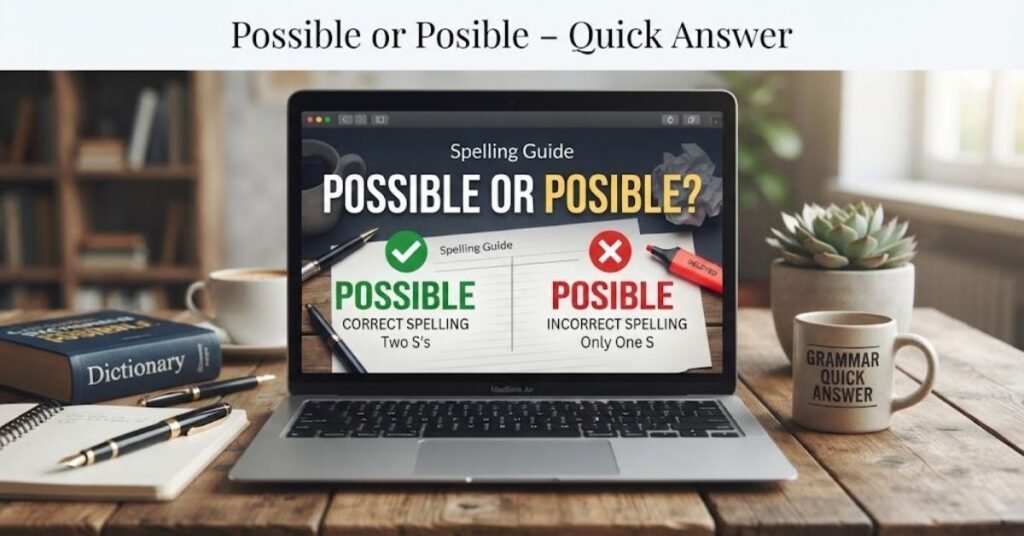
Let’s settle this right away so you’re not left guessing. Possible has two “s” letters, and that’s the detail most people forget when typing fast or writing on autopilot.
The word “posible” isn’t recognized in Standard English dictionaries at all. It’s simply a misspelled word, often the result of fast typing or borrowing spelling habits from another language.
If you remember nothing else from this guide, remember this: possible has a double “s,” and posible does not exist as a proper English word.
Correct Examples
- It’s possible to finish this project by Friday.
- She said it would be possible to reschedule the meeting.
- Is it possible for us to meet earlier tomorrow?
These sentences use the correct form, and each one reads naturally in both casual and professional writing.
Incorrect Examples
- It’s posible to finish this project by Friday.
- She said it would be posible to reschedule.
- Is it posible for us to meet earlier?
Notice how these look almost right? That’s exactly why this common typo slips past so many writers, even sharp ones.
Simple Rule
Here’s an easy rule you can lean on. Whenever you write a word that sounds like “poss-uh-bul,” picture two S’s sitting right next to each other.
Say it slowly in your head: “poss-poss-ible.” That little mental trick alone fixes most instances of this spelling error before they happen.
The Origin of Possible or Posible

Words don’t just appear out of nowhere, and “possible” has a pretty interesting backstory. Understanding its word origin actually makes the spelling stick better in your memory.
The English word traces back to Latin, specifically the word possibilis, which meant “able to be done.” From there, it moved through Old French before landing in the English language as we know it today.
That double “s” isn’t random. It’s a direct carryover from the original Latin spelling, and that’s part of why English kept both letters intact over the centuries.
Word Breakdown
Breaking the word apart helps you see its structure clearly. You’ve got “poss” plus “ible,” and that “ible” ending shows up in tons of other English words too.
Think of words like “visible,” “flexible,” or “terrible.” They all follow that same “ible” pattern, which is a word breakdown worth noticing next time you’re proofreading.
Why People Write “Posible”
So why does this spelling mistake happen so often? A big reason is language influence from Spanish, where the word is actually spelled “posible” with just one “s.”
Millions of English learners come from Spanish-speaking backgrounds, and that single-letter habit carries over naturally. This is a classic case of language transfer, where your first language quietly shapes how you spell in your second one.
British English vs American English Spelling
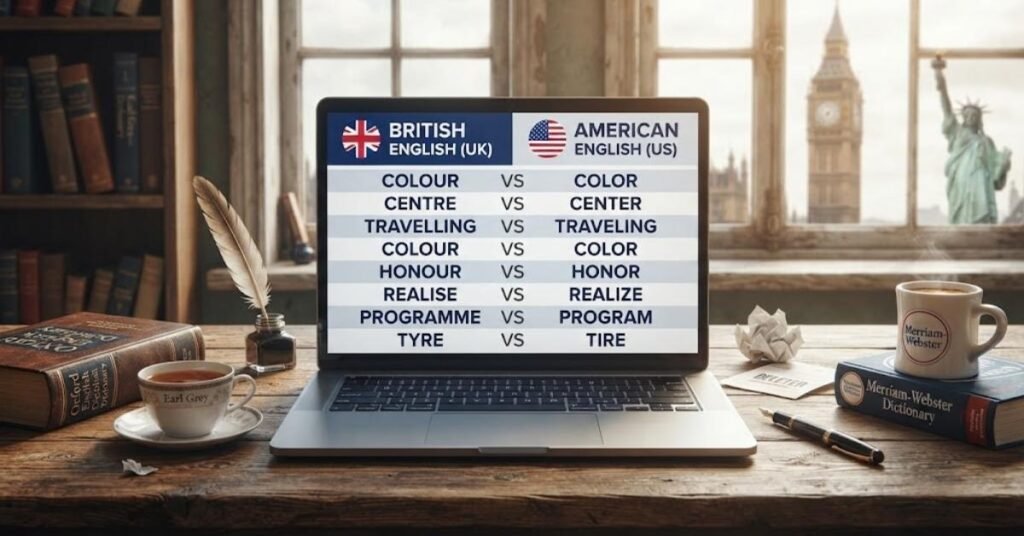
Here’s some good news for once. Unlike words such as “colour” versus “color” or “organise” versus “organize,” this word doesn’t split along British English and American English lines.
Both UK English and US English agree completely on this one. Whether you’re writing for a US audience or a UK audience, “possible” stays exactly the same, double “s” and all.
This makes it a rare case of full agreement in a language known for its regional quirks. No need to switch spellings depending on where your reader lives.
Comparison Table
| Region | Correct Spelling | Notes |
| United States | Possible | Standard across all writing |
| United Kingdom | Possible | No regional difference |
| Global English | Possible | Universally accepted spelling |
As you can see, there’s zero regional difference here. This is one spelling rule you don’t have to second-guess based on your audience’s location.
Which Spelling Should You Use?
The answer is simple: always use “possible,” no matter your audience. There’s no scenario, formal or casual, where “posible” becomes acceptable in English writing.
Whether you’re drafting a business email or texting a friend, stick with the double “s.” It’s the only version any English dictionary or style guide recognizes as correct.
Audience Guide
- US audience: Use “possible” in emails, reports, and everyday writing.
- UK audience: Same spelling applies, no changes needed.
- Global audience: “Possible” works everywhere English is read or written.
- English learners: Practice the double “s” pattern until it becomes automatic.
This audience guide removes any guesswork. One spelling, one rule, every single time.
Common Mistakes with Possible or Posible
Beyond the basic spelling slip, there are a few related errors worth flagging. These common mistakes often travel together, so catching one helps you catch the rest.
Writers under time pressure tend to drop double letters across several words, not just this one. Once you train your eye for “possible,” you’ll start noticing the same pattern elsewhere.
Common Errors and Corrections
Here’s a quick list to keep handy while you’re writing or reviewing your work:
- Posible → Possible
- Imposible → Impossible
- Necesary → Necessary
- Succesful → Successful
- Recomend → Recommend
Each of these follows the same story: a missing double consonant that changes a correct word into a misspelled word.
Wrong Example
“It’s not posible to finish this by tomorrow, and I don’t recomend trying.”
Correct Example
“It’s not possible to finish this by tomorrow, and I don’t recommend trying.”
See the difference proofreading makes? Two small fixes, and the sentence instantly reads as polished and trustworthy writing.
Another Common Error
People also mix up “possable” or “possibel” when typing quickly. Both are wrong, and both point back to the same root issue: rushing past the correct letter order.
Easy Memory Trick for Possible
Memory tricks work because they turn abstract rules into something visual or memorable. Let’s build one specifically for this word so it never trips you up again.
Picture two friends named “S” and “S” standing side by side in the middle of the word. They’re inseparable, always appearing together, never just one alone.
Think of This Pattern
Try this memory trick: “Possible is POSSible, and POSS always needs a partner.” Saying it out loud a few times locks the pattern into your head faster than just reading the rule silently.
Possible Has Two “S” Letters
If you only take one thing from this entire guide, let it be this line: possible has two “S” letters, right in the middle, no exceptions. Repeat it, write it, tape it to your monitor if you need to.
This single easy trick solves the vast majority of cases where writers second-guess themselves mid-sentence.
Possible or Posible in Everyday Examples
Spelling rules matter most when you’re actually using them, not just reading about them. So let’s walk through real situations where this word shows up constantly.
From emails to social media, this word appears more often than you’d think. Getting it right builds trust with your reader, whether that reader is a boss, a client, or a stranger scrolling past your post.
Emails
Business emails carry a lot of weight, and small typos chip away at your writing confidence and credibility. Writing “Is it posible to reschedule?” instead of “Is it possible to reschedule?” can make a message feel rushed or careless.
Keeping your professional writing clean, especially in emails, signals that you pay attention to detail.
News
News outlets rely on correct grammar because credibility is everything in journalism. A misspelled word in a headline or article can undermine reader trust almost instantly.
That’s exactly why editors run every piece through strict spellcheck and human review before publishing.
Social Media
Social media is more relaxed, sure, but “posible” still stands out as a mistake rather than a style choice. Readers notice, even if they don’t comment on it directly.
A little proofreading before you hit post goes a long way toward keeping your online voice sharp.
Formal Writing
In formal writing, like reports, proposals, or academic writing, spelling errors carry more weight. Reviewers and professors often treat spelling as a proxy for overall care and effort.
Double check words like “possible” before submitting anything that represents your professional writing skills.
School Writing
Students working on school writing assignments benefit enormously from catching this early. Grammar practice at this stage builds habits that stick for life, long after graduation.
Teachers frequently flag this exact word, so it’s worth mastering now rather than later.
Possible or Posible – Google Trends & Usage Data
Curious why this topic even gets searched so often? Google Trends data shows a steady stream of search queries for this exact comparison, year after year.
People aren’t just curious, they’re genuinely unsure, and that uncertainty drives real search interest across multiple countries.
Why People Search This Keyword
The search keyword “possible or posible” pops up because millions of people learning English encounter this exact confusion. It’s not a rare question, it’s a recurring one across forums, search engines, and classrooms alike.
Popular Countries
Search data points to strong interest from the United States, India, Pakistan, and the Philippines. These regions have large populations of English learners, and many also speak languages where similar words use a single “s.”
Online Usage Data
Online usage data from books, websites, and articles confirms that “possible” dominates nearly universally in published, edited content. “Posible” appears almost exclusively in casual, unedited writing, texts, quick notes, and social posts.
Comparison Table: Possible vs Posible
| Feature | Possible | Posible |
| Correct in English | Yes | No |
| Appears in dictionaries | Yes | No |
| Common in Spanish | No | Yes (correct in Spanish) |
| Number of “s” letters | Two | One |
| Recommended usage | Always | Never in English |
This word comparison makes the distinction crystal clear. One word belongs in English, the other belongs to a different language entirely.
Words Similar to Possible
Once you’ve nailed this word, a few lookalikes deserve a mention too. They follow similar spelling traps, and knowing them sharpens your overall spelling accuracy.
- Impossible: Also carries the double “s,” inherited straight from “possible.”
- Necessary: Often misspelled as “necesary,” missing a double letter.
- Successful: Frequently written as “succesful” by mistake.
- Absence: Sometimes typed as “absense,” swapping letters entirely.
Learning these together turns isolated grammar correction into a broader writing skills upgrade.
Conclusion
So, possible or posible? The answer never changes: possible is correct, and posible simply isn’t part of the English language. That double “s” is small, but it makes a real difference in how polished your writing looks.Whether you’re sending a quick email, writing a school paper, or posting online, this tiny detail builds writing confidence over time.
Keep that memory trick in your back pocket, and you’ll never second-guess this word again.Got another tricky word you keep mixing up? Drop it in the comments, share this guide with a friend who needs it, and keep building sharper English communication one word at a time.
FAQs
1. Is “posible” ever correct in English?
No. “Posible” is not a correct spelling in English under any context. It’s only correct in Spanish, where it naturally uses a single “s.”
2. Why do people spell possible as posible?
This usually happens due to language transfer from Spanish or other languages that spell it with one “s.” Fast typing and autocorrect gaps also contribute to this common typo.
3. Do British and American English spell possible differently?
No. Both British English and American English use the identical spelling, “possible,” with no regional difference whatsoever.
4. Is impossible spelled with double s too?
Yes. Impossible keeps the same double “s” pattern found in “possible,” since it’s simply the negative form of the same root word.
5. Is possible a noun or adjective?
Possible functions as an adjective, describing something that can happen or be achieved. It’s not typically used as a noun in standard English.
6. How can I remember the spelling?
Use the memory trick from this guide: think of “poss” needing a partner “s” right beside it. Repeating this pattern out loud helps it stick fast.
7. Does spellcheck always fix posible?
Most spellcheck tools catch this error automatically since “posible” isn’t a recognized English word. Still, it’s smart to proofread manually, since some tools miss context-specific mistakes.
8. Can posible be correct in another language?
Yes. In Spanish, “posible” is the fully correct spelling and means the same thing as the English “possible.” Context and language matter here, so always check which language you’re writing in.

Jack Harrison is a passionate writer with 4 years of experience exploring names, meanings, origins, symbolism, and cultural significance. He creates clear, engaging, and well-researched content to help readers discover the deeper meanings behind names and words.
