Ever seen a TikTok comment saying, “Bro got mogged,” and wondered what it means? This strange-looking slang word has become common across memes, social media, group photos, and casual chats. Usually, it describes a clear comparison where one person seems more impressive than another. That difference could involve height, looks, physique, fashion, confidence, or overall presence. A taller friend might mog someone in a photo. A stylish outfit might mog the rest of the group. Even a strong gym physique can become part of the joke. People often use the word playfully. However, it can sound harsh when it targets someone’s appearance or self-worth. Context makes a big difference when you see or use this slang online.
In simple terms, the mogged definition means being outshined or outclassed by someone in a comparison. You may also see related forms like “mog,” “mogging,” and “mogger.” These terms appear frequently in Gen Z slang, TikTok comments, memes, and everyday internet conversations.
Quick Answer
Mogged Meaning — Quick Answer
Mogged definition: “Mogged” means being outclassed, outshined, or overshadowed by someone else.
People usually use it when one person looks more impressive than another. The comparison can involve looks, height, physique, fashion, confidence, or overall presence.
For example, someone may look at a group photo and say:
- “Bro got mogged.”
- “She completely mogged everyone.”
- “He got height mogged.”
- “That outfit mogged mine.”
The word often appears in TikTok comments, memes, texting, and casual social media posts. It can also appear in gym culture and dating discussions.
In many cases, “mogged” sounds playful. Friends may use it as a joke after comparing outfits or photos. However, it can sound insulting when someone seriously ranks another person’s attractiveness.
In simple terms, getting mogged means someone else made you look less impressive by comparison. The comparison does not always mean you actually performed badly.
Introduction
Mogged Meaning — Introduction
Internet slang can turn a simple comparison into one short word. “Mogged” is a good example. You may see it in TikTok comments, memes, group photos, gym posts, or casual chats.
The basic idea is simple. One person looks noticeably better or more impressive than another person nearby.
That difference might involve:
- Attractiveness or facial features
- Height or physique
- Fashion or an outfit
- Confidence or social presence
- Fitness or athletic ability
- Money, fame, or social status
The word can sound funny when friends use it casually. It can also feel harsh when someone uses it to judge another person’s looks.
For example:
“Your brother mogged you in that photo.”
Here, the speaker means the brother looked more impressive. The comment may be playful rather than serious.
This guide explains the mogged definition, origin, slang meaning, TikTok use, texting use, and common examples.
What Does Mogged Mean
What Does Mogged Mean
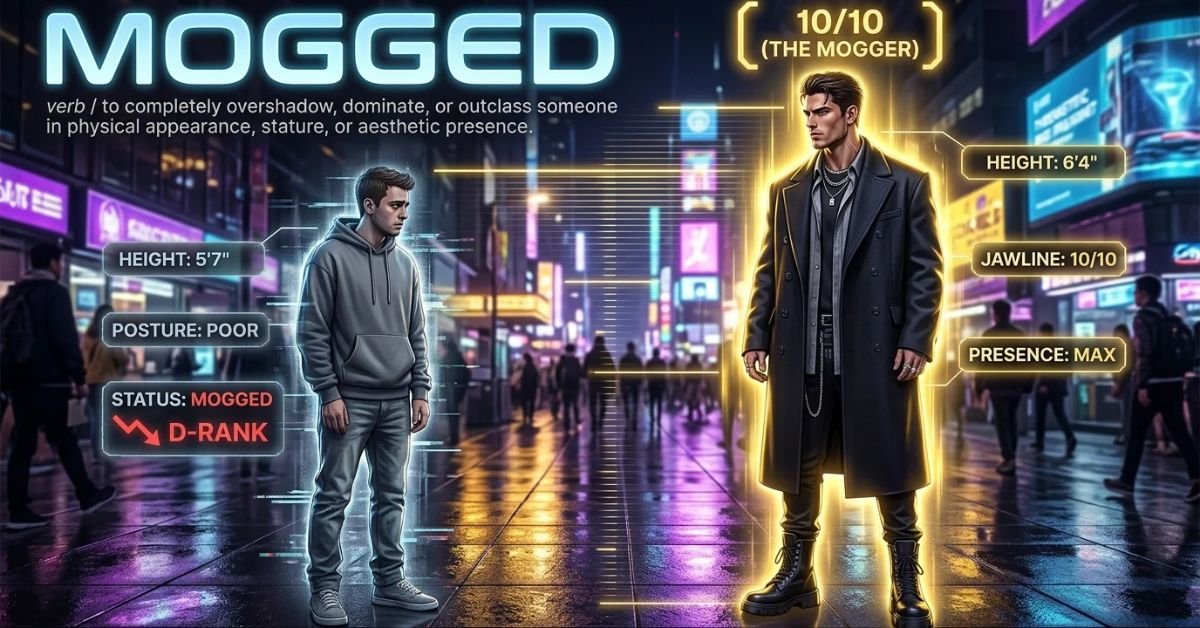
“Mogged” means being noticeably outclassed by someone in a comparison. The comparison often focuses on appearance, but the word can describe other forms of superiority.
Someone can get mogged because another person appears taller, fitter, better dressed, or more confident. The stronger person becomes the obvious focus of attention.
For example, imagine two friends taking a photo together. One has a sharper outfit and stronger presence. Someone might comment, “You got mogged.”
Common forms include:
- Height mogged: Someone looks much taller.
- Jawline mogged: Someone has a more defined jawline.
- Style mogged: Someone wears a better outfit.
- Gym mogged: Someone has a more impressive physique.
- Socially mogged: Someone receives more attention.
The word describes a comparison. It does not prove that one person has greater human worth.
Conversation:
A: “Look at this group photo.”
B: “Bro, I got mogged so badly.”
A: “Your friend definitely stole the spotlight.”
So, “mogged” usually means made to look less impressive by comparison.
Mogged Slang Meaning
Mogged Slang Meaning
In slang, “mogged” means someone got outclassed, outshined, or dominated by another person.
The word usually creates a strong visual comparison. One person appears to have better looks, height, style, physique, confidence, or presence.
For example, someone may say:
- “He mogged everyone at the party.”
- “She got mogged by her sister.”
- “That model mogged the whole group.”
- “I got mogged by his new haircut.”
The slang can also describe objects or situations. A luxury car might “mog” another car in a meme. A newer phone might “mog” an older model.
That makes the word broader than simple appearance.
Still, appearance remains one of its strongest uses. You may see people mention attractiveness, jawline, shoulders, muscles, posture, or body shape.
The tone matters too. Among friends, it may sound playful. In a serious conversation, it may sound judgmental.
Example:
A: “How was the wedding?”
B: “My cousin arrived in a perfect suit and mogged everyone.”
Here, “mogged” simply means he looked exceptionally stylish.
Mogged Origin

Mogged Origin
The modern slang “mogged” is widely linked to AMOG, meaning “Alpha Male of the Group.” The term appeared in older pickup-artist and manosphere internet spaces. It described a socially dominant man who stood out within a group.
Later, online communities shortened AMOG to “mog.” The verb developed into forms such as mogging, mogger, and mogged.
The meaning also became strongly connected with appearance. Online discussions began using the term for differences in height, facial structure, physique, attractiveness, and physical presence.
Social media changed the tone again. TikTok and meme culture helped push “mogged” toward wider internet slang. People began using it humorously for outfits, photos, celebrities, fitness, and everyday comparisons.
The history has darker associations, so context matters.
Today, many users simply mean:
- Outshined
- Outclassed
- Overshadowed
- Made to look less impressive
Example:
“His new haircut mogged his old style.”
Here, the word has a light and modern meaning.
What Does Mog Mean In Slang
What Does Mog Mean in Slang
“Mog” is the root verb behind “mogged.” In slang, to mog someone means to outshine or outclass them.
The word often describes a noticeable difference between two people. One person appears stronger, taller, fitter, more attractive, or more stylish.
For example:
- “He mogs everyone at the gym.”
- “She mogged me in that photo.”
- “That athlete mogged the competition.”
- “His outfit mogs mine.”
The word can also describe confidence or presence. Someone does not always need better looks to mog another person. Their aura or confidence may simply attract more attention.
You may also see playful forms such as jawline mogged, height mogged, and style mogged.
Conversation:
A: “Why does he always look so good in photos?”
B: “He just mogs everyone.”
A: “Fair enough. His style is on another level.”
In casual internet speech, “mog” is basically a dramatic way to say someone outshines another person.
What Does Mogger Mean In Gen Z Slang
What Does Mogger Mean in Gen Z Slang
A mogger is the person doing the mogging. In simple terms, the mogger is the person who outshines someone else.
The word usually appears in appearance-based comparisons. A person might become a mogger because of their height, physique, jawline, fashion, confidence, or overall aura.
For example:
- “He’s a serious gym mogger.”
- “That model is a natural mogger.”
- “She became the mogger of the group photo.”
- “His new haircut turned him into a mogger.”
Gen Z users may also use the word jokingly. A friend with a great outfit might receive the title “mogger” for the day.
The term does not always describe a serious personality. It can simply describe someone who looks impressive in one particular moment.
Conversation:
A: “Who is that guy?”
B: “He’s the mogger in every group photo.”
A: “He definitely steals the spotlight.”
So, mogger means the person who appears to win the comparison.
Mogged Meaning On TikTok And Social Media
Mogged Meaning on TikTok and Social Media
On TikTok and social media, “mogged” usually describes someone who gets visibly outshined. Users often place two people together and highlight the difference.
The comparison may involve looks, height, physique, fashion, confidence, or camera presence. Celebrity edits and group photos often use this format.
You may see comments such as:
- “Bro got mogged.”
- “That jawline mogged everyone.”
- “Height mogged.”
- “He got completely mogged.”
- “Her outfit mogged the whole room.”
TikTok also makes the word easy to use as a joke. Someone may post a normal photo, then reveal another person who looks more impressive.
Example conversation:
A: “Did you see that TikTok?”
B: “Yeah. The second guy completely mogged the first.”
A: “The height difference made it even funnier.”
The term now appears across memes, edits, thumbnails, reaction stickers, and TikTok comments.
However, social media comparisons can become unhealthy. “Mogged” works best as casual slang rather than a serious ranking of someone’s worth.
Mogged Urban Dictionary Style Meaning
Mogged Urban Dictionary Style Meaning
An Urban Dictionary-style explanation would describe “mogged” in simple internet language: someone got completely outclassed by another person.
The joke usually depends on a visible comparison. One person looks taller, fitter, better dressed, more attractive, or more confident.
Think of it like this:
Person A: normal
Person B: noticeably more impressive
Result: Person A got mogged.
Common internet examples include:
- “Bro got mogged by his little brother.”
- “The new guy mogged everyone.”
- “That haircut mogged his old one.”
- “I got mogged in the group photo.”
The word can also become exaggerated for comedy. A meme might say someone got “destroyed” or “obliterated” even when the difference is tiny.
That exaggeration makes the slang entertaining.
Conversation:
A: “I posted my new outfit.”
B: “Then your friend walked in and mogged you.”
A: “Why did you have to say that? 😂”
Unlike a formal dictionary definition, this style focuses on internet humor and context. It explains how people actually use the word online.
Is Mogging An Insult
Is Mogging an Insult
Mogging can be an insult, but it depends heavily on context and tone.
Friends often use “mogged” as playful teasing. Someone might joke about getting mogged after standing beside a taller friend. In that situation, nobody may intend real harm.
However, the word can sound harsh when it targets someone’s attractiveness or body. Saying someone has been “made to look inferior” can create an unhealthy comparison.
The difference often comes from intent.
- Playful: “Your brother mogged you in that photo 😂”
- Complimentary: “That athlete mogged the competition.”
- Harsh: “You always get mogged by better-looking people.”
- Bullying: Repeatedly ranking someone’s appearance against others.
The last examples can affect self-worth. Looks, money, fame, and social status do not determine someone’s value.
Conversation:
A: “Are you insulting me?”
B: “No, I’m joking. Your friend just had a better outfit.”
So, “mogging” is not automatically an insult. Still, choose softer alternatives when the situation feels sensitive.
Mogged In Texting
Mogged in Texting
In texting, “mogged” works as short internet slang for being outshined or outclassed.
You may see it in group chats, DMs, gaming chats, or messages between friends. The word usually appears after someone shares a photo, video, outfit, or funny comparison.
Common texting examples include:
- “Bro got mogged 💀”
- “I got mogged in that pic.”
- “She mogged everyone 😂”
- “Height mogged fr.”
- “That fit mogged mine.”
Emojis can change the tone. A skull emoji often makes the comment feel humorous. A laughing emoji can show playful teasing.
Conversation:
A: “Just posted the group photo.”
B: “You got mogged 😭”
A: “By who?”
B: “Your cousin. That suit was crazy.”
In texting, the word stays informal. It would sound out of place in a business email, school essay, or formal message.
If you want a softer option, use outshined, outclassed, or overshadowed instead.
The meaning remains simple: someone looked or performed better in that particular comparison.
Mogged In A Sentence
“Mogged” becomes easier to understand when you see it in a real sentence. It usually describes a clear comparison between two people or things.
The word can focus on looks, height, fashion, fitness, confidence, or overall presence. It often appears in casual internet conversations.
Here are some natural examples:
- “He got mogged by his taller friend.”
- “Her outfit mogged everyone at the party.”
- “That athlete mogged the entire team.”
- “I got mogged in our group photo.”
- “His jawline mogged mine.”
Conversation example:
A: “Why did everyone comment on your photo?”
B: “Because my brother mogged me.”
A: “His new haircut was definitely better.”
You can also use softer words when needed. “Outshined,” “outclassed,” and “overshadowed” work well in formal situations.
Remember the mogged definition: someone appears less impressive because another person stands out more.
Mogged Meme Meaning
“Mogged” appears frequently in memes because the word makes comparisons sound dramatic and funny.
A typical meme shows two people, celebrities, athletes, or fictional characters. One person looks noticeably stronger, taller, richer, fitter, or more stylish.
The caption might say:
- “Bro got mogged.”
- “Absolute height mog.”
- “Completely mogged.”
- “Bro was not ready.”
- “Mogged in 4K.”
Memes often exaggerate the comparison for humor. Someone may technically look only slightly different, yet the caption makes the situation seem enormous.
Conversation example:
A: “Why does this meme say he got mogged?”
B: “Look at the two pictures. The second guy completely stole the spotlight.”
Mogged memes can involve:
- Group photos
- Celebrity comparisons
- Luxury cars
- Phones
- Apartments
- Gym transformations
- Fashion edits
The meaning stays informal. It usually means one side clearly outshined the other.
Mogged PNG And Image Use
“Mogged PNG” usually refers to an image or transparent graphic connected with the meme or slang concept.
People may use these images in edits, thumbnails, reaction posts, and social media content. A PNG can feature a person, facial expression, text overlay, or meme-style graphic.
The image itself does not change the meaning of “mogged.” It simply helps communicate the joke visually.
Common uses include:
- Meme templates
- Reaction stickers
- YouTube thumbnails
- TikTok edits
- Social media posts
- Gaming graphics
- Text overlays
For example, an editor might place a “mogged” label over a group photo. The label tells viewers that one person appears more impressive.
Conversation example:
A: “Why did you add a mogged PNG?”
B: “It makes the comparison obvious.”
A: “So it’s basically a visual joke?”
B: “Exactly.”
When using someone else’s image, remember that copyright and privacy can matter. A meme graphic should still respect the original creator and subject.
Mogged App Meaning
“Mogged app” can refer to an app, feature, or online tool associated with the word “mogged.” Searchers may also use the phrase when looking for appearance comparison tools, meme creators, or social media edits.
The exact meaning depends on the context. “Mogged” itself does not automatically refer to one specific application.
Some users may search for an app that helps create:
- Before-and-after comparisons
- Face or style edits
- Meme images
- Text overlays
- Reaction graphics
- Fitness comparison posts
- Social media thumbnails
Conversation example:
A: “What mogged app did you use?”
B: “I used a regular photo editor and added the text myself.”
A: “I thought it was a special app.”
This distinction matters because “mogged app” can describe a search phrase rather than a single official product.
If you see the phrase in a TikTok or meme, check the surrounding content. The creator may simply mean an editing app used to make a “mogged” comparison.
Mogged In Gym Culture
Gym culture uses “mogged” to describe noticeable physical differences. The comparison often involves height, muscles, shoulders, body shape, physique, posture, or overall fitness.
For example, someone might stand beside a larger bodybuilder and joke that they got “gym mogged.”
Common gym-related expressions include:
- “He got mogged by the bodybuilder.”
- “Shoulder mogged.”
- “Physique mogged.”
- “Bro got gym mogged.”
- “That guy is a complete mogger.”
Conversation example:
A: “Why did everyone laugh when he entered the gym?”
B: “He stood beside that huge athlete and got mogged.”
A: “That comparison was brutal.”
The term often works as playful gym humor. However, repeated body comparisons can become unhealthy.
Fitness should focus on strength, health, and personal progress. Someone else’s muscles do not make your own progress meaningless.
So, in gym culture, “mogged” usually means another person’s physique makes yours look less impressive by comparison.
Mogged In Dating And Looks
In dating discussions, “mogged” usually refers to attractiveness or physical presence. People may compare height, jawline, facial features, physique, fashion, confidence, or overall appearance.
You might see phrases such as:
- “He got mogged in dating.”
- “She mogged everyone with that outfit.”
- “His jawline mogged mine.”
- “He got height mogged.”
- “That model is a natural mogger.”
Social media can make these comparisons seem more important than they really are. Attraction involves personality, confidence, communication, humor, and many other qualities.
Conversation example:
A: “Why does everyone say he got mogged?”
B: “The other guy was taller and had a sharper style.”
A: “That doesn’t mean he looked bad.”
Exactly. “Mogged” describes a comparison, not a person’s actual worth.
Use the term carefully in dating conversations. A playful joke between friends may be harmless. Repeatedly ranking someone’s attractiveness can become insulting or damaging to self-worth.
Mogged Compared With Related Terms
“Mogged” overlaps with several common words. However, each term carries a slightly different feeling.
- Outshined: Someone attracts more attention.
- Outclassed: Someone performs at a noticeably higher level.
- Overshadowed: Someone receives less attention because another person stands out.
- Dominated: Someone clearly controls a competition or situation.
- Humbled: Someone realizes another person is stronger or better.
- Flexed on: Someone shows off their advantage.
- Made to look small: Someone appears less impressive by comparison.
- Stole the spotlight: Someone becomes the main focus.
“Mogged” feels more like internet slang. It often focuses on appearance, physical traits, or social presence.
Conversation example:
A: “Did he outshine you or mog you?”
B: “Probably both. His outfit was incredible.”
For formal writing, choose “outshined,” “outclassed,” or “overshadowed.” Save “mogged” for casual conversations, memes, texting, and social media.
How To Use Mogged
Use “mogged” when you want to describe someone being noticeably outshined or outclassed. The word works best in casual conversations and online spaces.
You can use it after a comparison involving:
- Looks
- Height
- Jawline
- Physique
- Fashion
- Confidence
- Fitness
- Social presence
- Fame or status
Examples:
- “He got mogged in the group photo.”
- “Her outfit mogged everyone.”
- “That athlete mogged the competition.”
- “I got height mogged by my friend.”
- “His new haircut mogged his old style.”
Conversation example:
A: “How was the party?”
B: “Great. Then my friend arrived in a designer suit and mogged me.”
A: “Sounds like he stole the spotlight.”
Keep the tone in mind. “Mogged” can sound playful among friends, yet it may sound insulting when you judge someone’s appearance.
For formal situations, use softer alternatives such as “outshined,” “outclassed,” or “overshadowed.”
Practical Usage Of Mogged
“Mogged” works best when a casual comparison feels obvious. People often use it online, in texting, or while joking with friends.
You can describe someone who looks better, performs better, or attracts more attention. The comparison may involve appearance, fitness, fashion, confidence, or social presence.
Common situations include:
- A friend getting mogged in a group photo.
- An athlete outclassing another competitor.
- Someone wearing a much better outfit.
- A taller person standing beside a shorter friend.
- A bodybuilder showing a much larger physique.
Conversation example:
A: “Did you see our wedding photo?”
B: “Yeah. Your cousin totally mogged everyone.”
A: “That suit really stole the spotlight.”
The mogged definition centers on comparison. It doesn’t necessarily mean someone performed badly.
For formal writing, choose words like “outshined” or “overshadowed.” “Mogged” sounds much more natural in internet slang, memes, TikTok comments, and casual chats.
Common Mistakes With Mogged
People often misunderstand “mogged” because internet slang changes quickly. The biggest mistake involves using it as a general synonym for every kind of failure.
“Mogged” normally requires some form of comparison. Someone appears more impressive than another person.
Avoid these mistakes:
- Using “mogged” without a comparison.
- Treating it as a formal English word.
- Assuming it always describes physical appearance.
- Using it seriously to judge someone’s worth.
- Confusing “mogged” with “mugged,” which has a completely different meaning.
- Assuming every online use is an insult.
Conversation example:
A: “I failed my exam, so I got mogged.”
B: “That doesn’t really fit. You could say you performed worse.”
The correct mogged definition involves being outshined or outclassed.
You can use it for looks, fashion, fitness, status, or performance. Still, context determines whether the word sounds funny, complimentary, or insulting.
Idioms And Similar Phrases
Several English phrases express an idea similar to “mogged.” These expressions usually describe someone receiving more attention or appearing more impressive.
The best alternative depends on the situation.
For example:
- Steal the spotlight: Become the main focus.
- Outshine everyone: Look or perform better than others.
- Put someone in the shade: Make someone else seem less impressive.
- Stand head and shoulders above: Clearly surpass others.
- Blow someone away: Impress someone greatly.
- Make someone look small: Make another person seem less impressive.
These phrases sound more natural in standard English. “Mogged” remains more strongly connected with internet slang.
Conversation example:
A: “Which phrase should I use in my essay?”
B: “Use ‘outshined’ instead of ‘mogged.’”
A: “What about texting?”
B: “Mogged works perfectly there.”
Understanding these alternatives helps you choose the right expression without losing your intended meaning.
Steal The Spotlight
“Steal the spotlight” means becoming the center of attention. It doesn’t necessarily suggest that someone intentionally tried to outshine others.
The phrase works well at parties, weddings, events, performances, and social gatherings.
For example:
- “Her entrance stole the spotlight.”
- “That athlete stole the spotlight.”
- “His amazing outfit stole the spotlight.”
- “The bride’s dress stole the spotlight.”
Unlike “mogged,” this phrase focuses more on attention than direct comparison.
Conversation example:
A: “Who got everyone’s attention at the party?”
B: “Sarah definitely stole the spotlight.”
A: “Her outfit was incredible.”
You can use this expression in both casual and semi-formal writing. It also sounds less judgmental than “mogged.”
If someone receives attention because of their confidence, style, talent, or presence, “steal the spotlight” can describe the situation naturally.
It works especially well when you want to praise someone rather than make another person feel inferior.
Outshine Everyone
“Outshine everyone” means performing or appearing better than the people around you. It can describe appearance, talent, confidence, style, or achievement.
The phrase sounds more standard than “mogged.” It works in everyday speech and many forms of writing.
Examples include:
- “She outshined everyone at the event.”
- “His performance outshined everyone.”
- “That outfit outshined the others.”
- “The young athlete outshined the competition.”
Conversation example:
A: “Who was the best performer?”
B: “Maya outshined everyone.”
A: “I agree. Her performance was incredible.”
This phrase focuses on excellence rather than humiliation. Someone can outshine others without making them look bad.
That makes it useful when you want a positive tone.
If “mogged” feels too harsh for your audience, “outshined” offers a softer choice. It communicates the same basic comparison while sounding more polished.
Put Someone In The Shade
“Put someone in the shade” means making another person or thing seem less impressive by comparison.
The expression is less common in everyday American conversation than “outshine” or “overshadow.” Still, it clearly communicates the idea.
For example:
- “His new car put the old one in the shade.”
- “Her performance put everyone else in the shade.”
- “That mansion put the other houses in the shade.”
Conversation example:
A: “Did you see their new apartment?”
B: “Yes. It really put my place in the shade.”
A: “The view is unbelievable.”
This phrase can describe people, objects, achievements, or experiences. It doesn’t have to involve physical appearance.
Compared with “mogged,” it sounds more literary and less like Gen Z slang.
Use “put someone in the shade” when you want a colorful expression. For simple everyday English, “outshined” or “overshadowed” may sound more natural.
Stand Head And Shoulders Above
“Stand head and shoulders above” means someone clearly performs better than others. It suggests a strong advantage in quality, skill, achievement, or ability.
The phrase can describe:
- Athletes
- Students
- Performers
- Employees
- Products
- Teams
- Creative work
Conversation example:
A: “Which player impressed you most?”
B: “Jordan stood head and shoulders above the others.”
A: “His performance was excellent.”
Unlike “mogged,” this phrase usually sounds positive. It praises the person who performs exceptionally well.
It also doesn’t focus mainly on appearance. You can use it for talent, leadership, intelligence, quality, or achievement.
If you need a professional alternative to “mogged,” this expression can work well.
For example, instead of saying “The athlete mogged everyone,” you could write, “The athlete stood head and shoulders above the competition.”
Blow Someone Away
“Blow someone away” means to impress someone greatly. It focuses on the reaction of the audience rather than direct comparison.
You might use it for:
- Amazing performances
- Beautiful outfits
- Impressive skills
- Creative work
- Stunning places
- Unexpected achievements
Conversation example:
A: “What did you think of her performance?”
B: “It completely blew me away.”
A: “Same. She was incredible.”
The phrase can sometimes replace “mogged” when the main idea involves being impressed.
However, the meanings aren’t identical. “Mogged” usually creates a comparison. “Blow someone away” simply describes strong admiration or surprise.
For example, “His performance blew me away” doesn’t necessarily mean he performed better than everyone else.
That distinction matters when choosing the right phrase.
Use “blow someone away” when you want to highlight amazement rather than competition or social ranking.
Make Someone Look Small
“Make someone look small” means causing another person to appear less impressive by comparison.
The phrase can describe physical size, confidence, achievement, power, or social status. Its meaning depends strongly on context.
Examples include:
- “The champion made his opponent look small.”
- “That luxury car made mine look small.”
- “His confidence made everyone else look small.”
Conversation example:
A: “Did the new manager intimidate everyone?”
B: “His experience made the others look small.”
This expression can sound harsh. It may suggest humiliation or embarrassment.
That makes it different from softer phrases such as “outshine” or “steal the spotlight.”
“Mogged” can also carry this harsh feeling, especially when people use it to rank attractiveness or physical features.
Choose this phrase carefully when discussing real people. A playful joke among friends may be fine. A serious comment about someone’s appearance can easily become insulting.
Better Words To Use Instead Of Mogged
“Mogged” is useful internet slang, but it isn’t right for every situation. Standard English offers several clearer alternatives.
Choose your replacement based on what you actually mean:
- Outshined: Someone attracted more attention.
- Outclassed: Someone performed at a higher level.
- Overshadowed: Someone received less attention.
- Surpassed: Someone achieved a better result.
- Dominated: Someone clearly controlled a competition.
- Impressed: Someone amazed or pleased others.
- Humbled: Someone realized another person was stronger.
- Stole the spotlight: Someone became the main focus.
Conversation example:
A: “Can I use ‘mogged’ in a work email?”
B: “Not really. ‘Outperformed’ or ‘outshined’ would sound better.”
A: “What about a TikTok caption?”
B: “That’s where ‘mogged’ fits naturally.”
The best alternative depends on your audience and tone. Use “mogged” for casual internet language. Choose softer or more formal words when the situation calls for them.
Conclusion
The mogged definition is simple once you understand the comparison behind it. It usually means someone was outshined or outclassed by another person. The comparison may involve looks, height, physique, fashion, confidence, or social presence. You can see mogged in TikTok comments, memes, texting, gym culture, and dating discussions. The mogged definition can also change slightly with context. Friends may use it as a funny joke. Others may use it as a harsh comment about someone’s appearance. That is why tone matters when using this slang. Knowing the mogged definition helps you understand what people mean online.
Overall, the mogged definition points to being less impressive in a comparison. Related terms include mog, mogging, and mogger. You can use mogged in casual posts and chats. For formal writing, choose words like outshined or overshadowed. Keep the mogged definition in mind before using the word.
FAQs About Mogged
What does mogged mean in slang?
The mogged definition describes someone being outshined or outclassed by another person in appearance, confidence, status, or overall presence online.
What does mog mean in slang?
The mogged definition connects mog with outshining someone through looks, height, physique, fashion, confidence, performance, or social presence online today.
What does mogged mean on TikTok?
On TikTok, the mogged definition describes someone looking noticeably less impressive beside another person in a photo, video, or comparison.
Is mogging an insult?
Mogging can sound insulting when it judges someone’s appearance, but friends often use the term playfully in memes, comments, and conversations online.
What does mogger mean in Gen Z?
According to the mogged definition, a mogger is someone who outshines or outclasses another person in a noticeable comparison online.
What does getting mogged mean?
Getting mogged means another person appears more impressive, attractive, stylish, confident, or physically dominant during a particular comparison or situation.
Is mogged about looks only?
No. The mogged definition can describe height, fitness, fashion, confidence, performance, wealth, fame, or social presence, not appearance alone simply.
Can a girl get mogged?
Yes. Anyone can get mogged when another person appears more impressive through height, style, confidence, attractiveness, fitness, or overall presence.
What is jawline mogged?
Jawline mogged means someone appears to have a noticeably sharper or more defined jawline than another person during a comparison.
What is height mogged?
Height mogged means someone appears noticeably taller than another person, making the shorter person seem less imposing within that comparison.
What is mogged in a sentence?
In a sentence, you could say: He got mogged by his taller friend during their group photo at the party.
What does mogged meme mean?
A mogged meme usually exaggerates a comparison where one person appears better, stronger, taller, richer, or more stylish than another.
What does mogged PNG mean?
Mogged PNG usually refers to a transparent image or graphic used in memes, edits, thumbnails, reactions, or social media comparisons.
Is there a mogged app?
There is no official mogged app. The phrase may describe photo editors, meme tools, or apps used to create comparisons online.
Should I use mogged in formal writing?
Avoid mogged in formal writing. Use outshined, outclassed, overshadowed, or surpassed instead, because they sound clearer and more professional language.

Jack Harrison is a passionate writer with 4 years of experience exploring names, meanings, origins, symbolism, and cultural significance. He creates clear, engaging, and well-researched content to help readers discover the deeper meanings behind names and words.
