Ever seen a comment that says clock it and wondered what it really means? You’re not alone. This phrase is popping up everywhere, from TikTok comments and Instagram posts to texts and casual chats. The word clock may make you think about time, but slang has given it a completely different meaning. It can describe that sharp moment when you notice something, catch a hidden detail, or understand what someone is really trying to say. Sometimes, it even means pointing out something that others failed to notice.
The meaning of clock it depends heavily on context and tone. It can feel funny, playful, supportive, sarcastic, or even confrontational. You may also see it in Gen Z slang, memes, and viral conversations. In this guide, we’ll explain what the phrase means, where it comes from, how people use it online, and how to use it naturally. You’ll also learn when another phrase may fit better.
Quick Answer
clock it means to notice, recognize, or spot something quickly. It often shows sharp observation and quick understanding.
In modern slang, the phrase can mean that you caught a subtle detail or understood someone’s hidden intention.
The meaning depends heavily on context and tone. It can sound playful, supportive, sarcastic, teasing, or even confrontational.
For example:
- Someone notices a friend’s hidden reaction.
- A viewer spots an important detail in a video.
- A friend understands what another person really meant.
- Someone points out something others missed.
Conversation example:
Mia: He said he was fine, but his face looked annoyed.
Jay: I clocked it too.
Here, clock it shows that Jay noticed the subtle detail and understood what was happening.
The expression works best in casual conversations, texting, comments, and social media. It usually doesn’t fit formal writing or professional communication.
What Does Clock It Mean
clock it means to notice, recognize, or understand something that may not be immediately obvious.
The phrase focuses on awareness. You aren’t simply looking at something. You are picking up on what it means.
For example, you might clock it when someone changes their tone during a conversation. You notice the change and understand that something feels different.
It can also describe recognizing a hidden meaning or intention.
- Notice a subtle detail
- Spot unusual behavior
- Recognize someone’s intention
- Understand a hidden message
- Point out something others missed
Conversation example:
Alex: Did you notice how quiet Sam became?
Lena: Yeah, I clocked it right away.
Here, the speaker noticed a small change and understood that it mattered.
The original word clock relates to time. However, clock it uses a completely different informal meaning.
Clock It Meaning in Slang
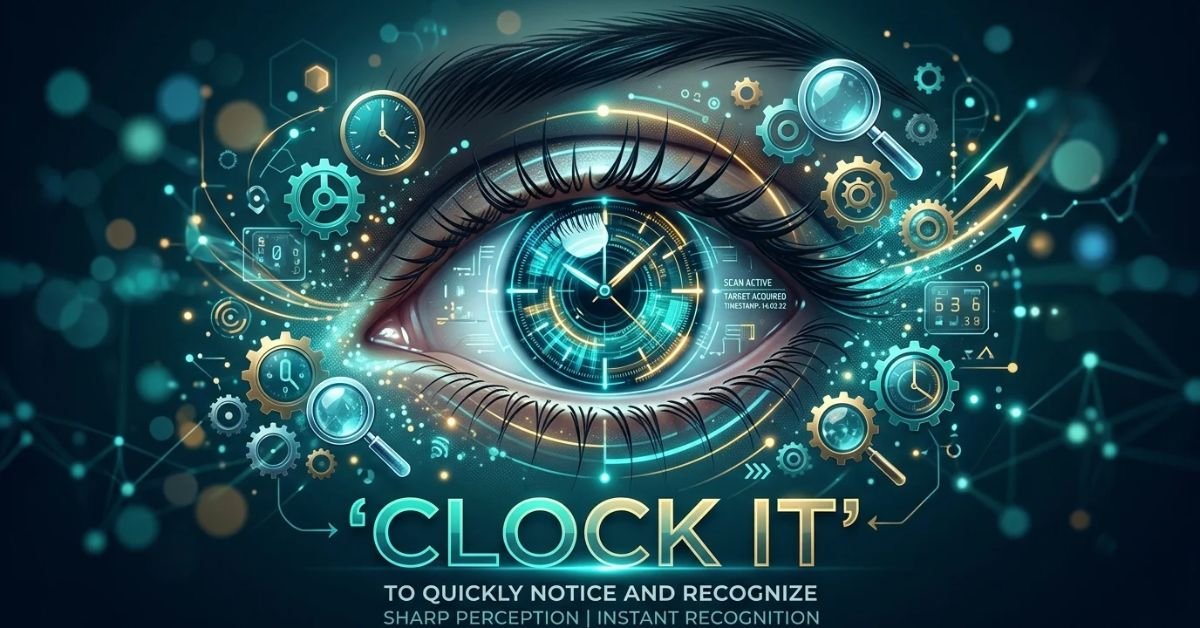
In Gen Z slang, clock it often means noticing something and recognizing the truth behind it.
Someone may use the phrase when they spot fake behavior, catch a contradiction, or understand a hidden intention. It can feel like saying, “I see what you did there.”
The expression has a confident edge. It suggests awareness and sharp observation without requiring a long explanation.
You may see it alongside other modern slang expressions such as read someone, read the room, or pick up on.
- Clock it: Notice and recognize something
- Read someone: Understand their behavior or intention
- Read the room: Understand the social situation
- Catch on: Finally understand something
Conversation example:
Nora: He suddenly started acting nice after asking for a favor.
Ella: Clock it. He definitely wants something.
In this example, the speaker recognizes the hidden intention behind someone’s behavior.
Clock It Meaning in Text

When someone uses clock it in text, they usually want to show quick awareness.
The expression works well because texting often favors short reactions. Instead of explaining every detail, you can use clock it to show that you understand.
You might also see clocked it or you clocked it in messages. These forms can confirm that someone noticed something correctly.
Common uses include:
- Reacting to a friend’s observation
- Agreeing with a hidden meaning
- Noticing someone’s behavior
- Confirming an important detail
- Showing quick understanding
Conversation example:
Sam: Did you see how she avoided that question?
Ryan: You clocked it. She definitely didn’t want to answer.
The tone can change depending on the conversation. It may sound supportive, playful, sarcastic, or teasing.
However, clock it remains informal. Use clearer language in professional emails, academic work, or other formal communication.
What Does Clock It Mean on Social Media

On social media, clock it works as a quick reaction to something people notice.
You may find it in TikTok comments, Instagram captions, X (Twitter) posts, memes, and other trending content. Users often write it when they spot a subtle detail in a video or post.
The phrase works especially well during viral moments. A short comment can communicate an entire reaction.
For example:
- TikTok: Clock it.
- Instagram: You clocked it 👀
- X: Everyone clocked that.
- Meme: They really clocked it.
Conversation example:
Friend: Look at his expression when she mentioned her ex.
You: Clock it 😭
Here, the phrase tells readers that you noticed the reaction and understood its possible meaning.
A clock it meme can also turn the expression into a shared joke. People use it when a post highlights something obvious, ironic, or easy to miss.
Clock It 🤏 Meaning and Hand Gesture
The 🤏 pinching hand emoji can add a visual layer to clock it.
This emoji often suggests something small, subtle, or precise. When people pair it with the phrase, they may emphasize a tiny detail that deserves attention.
For example, clock it 🤏 can suggest noticing something very specific. The gesture makes the reaction feel more expressive.
It can work in several situations:
- Spotting a tiny detail
- Highlighting a subtle clue
- Pointing out something precise
- Making a playful observation
- Adding emphasis to a social media comment
Conversation example:
Ava: Look at the tiny change in his expression.
Maya: Clock it 🤏
The emoji doesn’t create one fixed dictionary definition. Its meaning depends on the surrounding message and context.
In videos, a similar hand gesture can visually emphasize precision. Still, don’t assume that every use of 🤏 specifically means clock it.
Clock It Meaning from a Girl

clock it from a girl has the same basic meaning as the expression used by anyone else.
A girl might say clock it when she notices someone’s behavior, catches a hidden message, or spots a subtle detail.
The phrase itself doesn’t have a separate female definition. Tone matters much more than gender.
Depending on the situation, it might sound:
- Playful
- Supportive
- Teasing
- Sarcastic
- Sharp
- Confrontational
Conversation example:
Emma: He keeps saying he doesn’t care, but he watches every story.
Lily: Clock it. That’s not a coincidence.
Here, Lily is pointing out a pattern and suggesting that she understands the person’s behavior.
So, if you hear clock it from a girl, don’t search for a hidden gender-specific meaning. Look at the conversation, relationship, and tone instead.
That approach gives you a much more accurate interpretation.
Clock It Origin
The modern clock it expression has roots that go beyond recent Gen Z slang.
The verb clock has developed several informal meanings over time. In different communities, clocking has referred to noticing, recognizing, or identifying something about a person or situation.
Its history connects with forms of British slang and African American Vernacular English (AAVE). LGBTQ+ culture and drag culture also helped popularize related uses of “clocking.”
Social media later pushed the expression into mainstream internet slang.
TikTok, Instagram, and X helped make short reactions like clock it highly visible.
A simple progression looks like this:
- Older slang uses developed around “clocking.”
- Communities used it for recognizing details.
- Drag and LGBTQ+ culture gave related meanings cultural depth.
- Social media spread the expression widely.
- Gen Z slang adopted and reshaped its everyday use.
Conversation example:
Ben: Where did people start saying that?
Chris: It has older slang roots, but social media made it much more common.
Clock It vs Call It Out
clock it and call it out overlap, but they aren’t identical.
Clock it usually focuses on noticing or recognizing something. Call it out goes a step further by openly addressing or confronting it.
Think of clock it as spotting the problem. Call it out means speaking directly about the problem.
| Expression | Meaning | Typical Tone |
| Clock it | Notice or recognize something | Casual |
| Notice it | Observe something | Neutral |
| Call it out | Point out something openly | Direct |
| Confront | Challenge someone directly | Strong |
Conversation example:
Nina: Did you notice his excuse didn’t make sense?
Sara: I clocked it.
Nina: Did you tell him?
Sara: No, I just noticed it.
This shows the difference clearly. Nina and Sara clocked it, but they didn’t call it out.
In casual slang, clock it can feel lighter. Call it out often sounds more serious or confrontational.
Clock It Meaning in LGBT Culture
In LGBT slang, clock it can carry a more specific cultural meaning. It may describe noticing or recognizing something about a person’s appearance, behavior, identity, or presentation.
The related term clocking has strong connections with LGBTQ+ culture and drag culture. In some contexts, it means noticing something that someone may want to keep hidden.
However, context matters. Using the phrase about someone’s gender identity, sexuality, or appearance can become rude or offensive if it reveals private information without respect.
- Clock it: Notice or recognize something
- Clocking: Identifying a noticeable detail
- LGBT slang: Informal language used within or around LGBTQ+ communities
- Respect: Important when discussing identity or personal information
Conversation example:
Alex: She noticed the detail immediately.
Jordan: Yeah, she clocked it.
The phrase doesn’t automatically refer to sexuality or gender. Modern internet slang often uses clock it more broadly to mean noticing a truth or subtle detail.
Comparison Table
| Expression | Meaning | Typical Context |
| Clock it | Notice or recognize something | Casual slang |
| Clocking | Identify or notice something | LGBT slang, casual speech |
| Call it out | Point something out directly | Confrontational situations |
| Read someone | Understand or criticize behavior | Informal slang |
| Notice it | Simply observe something | Neutral communication |
This comparison shows why clock it doesn’t always mean the same thing as confronting someone.
Common Idioms
Several English idioms share an idea with clock it because they involve noticing, understanding, revealing, or directly stating something.
However, each expression has its own tone and purpose. Some sound casual, while others work better in formal or serious conversations.
These expressions can help you understand the broader language around clock it:
- Call a spade a spade — speak honestly and directly
- Hit the nail on the head — identify something exactly
- Read the room — understand the mood or situation
- Get the message — understand a hint
- Pick up on — notice a small detail
- Catch on — understand something after a while
Conversation example:
Maya: You really understood what he meant.
Sara: I just picked up on the clues.
These idioms aren’t exact replacements for clock it. Instead, they describe similar ideas involving awareness and understanding.
Call a Spade a Spade
Call a spade a spade means speaking honestly about something instead of hiding the truth.
Unlike clock it, this idiom focuses more on direct honesty than simply noticing something.
You might use it when someone avoids saying what they really think. The phrase encourages clear and straightforward communication.
- Meaning: Say something honestly
- Tone: Direct
- Best for: Clear opinions or uncomfortable truths
Conversation example:
Tom: The plan isn’t working.
Jake: Let’s call a spade a spade. We need a new plan.
Someone can clock it without saying anything. When they call a spade a spade, they openly state what they recognize.
Hit the Nail on the Head
Hit the nail on the head means identifying something exactly or giving an accurate explanation.
The expression connects with clock it because both can involve sharp observation.
However, hit the nail on the head usually describes getting an answer or explanation exactly right.
- Meaning: Be completely accurate
- Tone: Positive
- Best for: Correct observations or explanations
Conversation example:
Lena: He’s not angry. He’s disappointed.
Mark: You hit the nail on the head.
You could also say someone clocked it because they recognized the real emotion.
Read the Room
Read the room means understanding the mood, atmosphere, or social situation around you.
It shares some ground with clock it because both involve awareness. However, read the room focuses specifically on social cues.
For example, you might use it when someone tells an inappropriate joke during a serious moment.
- Meaning: Understand the situation
- Tone: Informal
- Best for: Social interactions
- Related idea: Awareness and context
Conversation example:
Sam: He kept joking during the meeting.
Nora: He really needs to read the room.
You may clock it when you notice his behavior. You read the room when you understand why that behavior doesn’t fit the situation.
Get the Message
Get the message means understanding a hint, signal, or indirect statement.
The phrase works well when someone finally understands what another person has been trying to communicate.
It can describe a subtle realization, much like clock it.
- Meaning: Understand the hint
- Tone: Casual
- Best for: Indirect communication
- Related idea: Hidden meaning
Conversation example:
Ella: I stopped replying because I wanted some space.
Mia: Did he get the message?
Ella: Finally, yes.
When someone clocks it, they notice what is happening. When they get the message, they understand the signal behind it.
Pick Up On
Pick up on means noticing or recognizing something, especially a small or subtle detail.
This expression comes very close to one meaning of clock it. Both can describe awareness of something other people might miss.
You can use it for body language, tone, behavior, or hidden meaning.
- Meaning: Notice a subtle detail
- Tone: Neutral to casual
- Best for: Small clues
- Related ideas: Observe and recognize
Conversation example:
Chris: Did you pick up on her change in tone?
Dan: Yeah, I clocked it immediately.
Here, both expressions communicate quick awareness. Pick up on sounds more general, while clock it feels more like modern slang.
Catch On
Catch on means to understand something after thinking about it or noticing enough clues.
Unlike clock it, it doesn’t always suggest immediate awareness. Someone can take time before they finally catch on.
The phrase works well when a person slowly connects the dots.
- Meaning: Understand or realize
- Tone: Casual
- Best for: Gradual understanding
- Related idea: Put two and two together
Conversation example:
Ava: Did Jake realize they were planning a surprise?
Mia: Not at first, but he eventually caught on.
Someone might clock it immediately. Someone else might need more time to catch on. That difference makes the two expressions useful in different situations.
See Through Someone
See through someone means recognizing what a person is really trying to do. It often involves spotting fake behavior, excuses, or hidden intentions.
This idea overlaps with clock it because both expressions can describe sharp awareness. However, see through someone focuses specifically on a person’s motives.
- Meaning: Recognize someone’s true intentions
- Tone: Informal and sometimes critical
- Best use: When someone tries to deceive you
Conversation example:
Maya: He only apologized because he wanted another favor.
Lena: You really saw through him.
You could also say you clocked it when you noticed the same behavior. The difference is small but useful.
Put Two and Two Together
Put two and two together means connecting separate clues to reach an obvious conclusion.
The expression fits situations where you notice several details and understand what they mean. That’s similar to clock it, especially when the realization happens quickly.
- Meaning: Connect clues
- Tone: Casual
- Best use: Figuring something out
- Related idea: Quick understanding
Conversation example:
Tom: She knew about the surprise before we told her.
Jake: She saw the decorations and put two and two together.
Someone might clock it after noticing one important clue. With this idiom, the speaker usually connects several pieces of information.
Spill the Tea
Spill the tea means sharing gossip, interesting news, or juicy details.
This modern expression often appears in casual conversations and internet slang. It doesn’t exactly mean clock it, but both expressions can appear when people discuss something they noticed.
- Meaning: Share interesting information
- Tone: Playful and informal
- Best use: Gossip or casual stories
- Common setting: Texting and social media
Conversation example:
Sara: You looked shocked when she walked in.
Nina: I clocked it. Now spill the tea!
Here, clock it means noticing the reaction. Spill the tea asks for the story behind it.
Tell It Like It Is
Tell it like it is means speaking honestly without hiding your real opinion.
The expression focuses on directness. Clock it focuses more on noticing or recognizing something.
Still, the two can work together when someone notices a problem and speaks honestly about it.
- Meaning: Speak honestly
- Tone: Direct
- Best use: Honest opinions
- Related phrase: Keep it real
Conversation example:
Alex: The project looks rushed.
Jordan: You clocked it. Now tell it like it is.
This combination shows the difference clearly. First, someone notices the problem. Then, they openly discuss it.
Face the Music
Face the music means accepting the consequences of your actions.
Unlike clock it, this idiom isn’t mainly about noticing something. It describes what happens after a person realizes they must deal with a situation.
- Meaning: Accept consequences
- Tone: Serious
- Best use: Difficult situations
- Related idea: Responsibility
Conversation example:
Ben: He knew the teacher would find out.
Chris: He clocked it and decided to face the music.
The phrase can describe mistakes, difficult decisions, or uncomfortable truths. It usually carries a serious tone.
Let the Cat Out of the Bag
Let the cat out of the bag means accidentally revealing a secret.
It differs from clock it because one phrase involves revealing information while the other involves noticing or recognizing it.
However, both can appear in conversations about hidden information.
- Meaning: Reveal a secret
- Tone: Casual
- Best use: Accidental revelations
- Related idea: Hidden information
Conversation example:
Emma: Did Jake know about the party?
Mia: He clocked our plans, then Tom let the cat out of the bag.
Here, Jake noticed the clues while Tom actually revealed the secret.
Cut to the Chase
Cut to the chase means getting directly to the main point.
People use it when a conversation contains too much unnecessary detail. The phrase encourages someone to stop delaying and explain what matters.
- Meaning: Get to the main point
- Tone: Direct and casual
- Best use: Long conversations
- Related idea: Clear communication
Conversation example:
Ryan: There are several reasons this happened, but—
Sam: Just cut to the chase. What happened?
You might clock it when someone keeps avoiding the main issue. However, cut to the chase asks them to address it directly.
State the Obvious
State the obvious means saying something that everyone already knows.
The phrase can sound neutral or sarcastic. Context determines the tone.
Someone might clock it when they notice something important. Another person might state the obvious by simply saying what everyone can already see.
- Meaning: Say something already clear
- Tone: Neutral or sarcastic
- Best use: Obvious situations
- Related idea: Notice and observation
Conversation example:
Dan: The rain is making the field wet.
Lisa: Thanks for stating the obvious.
Unlike clock it, this phrase doesn’t necessarily suggest clever observation. It can even sound mildly annoyed.
Beat Around the Bush
Beat around the bush means avoiding the main topic instead of speaking directly.
This idiom represents the opposite of straightforward communication. Someone may notice the avoidance and clock it immediately.
- Meaning: Avoid the main point
- Tone: Informal
- Best use: Indirect conversations
- Opposite idea: Cut to the chase
Conversation example:
Mia: Are you upset with me?
Sara: Well, things have been complicated lately…
Mia: Stop beating around the bush.
You can clock it when someone avoids answering a simple question. Then, you might ask them to speak honestly.
Put Someone on the Spot
Put someone on the spot means placing someone in a situation where they must answer or react immediately.
The phrase often describes sudden pressure. It can happen during conversations, meetings, interviews, or social situations.
- Meaning: Force someone to respond
- Tone: Usually uncomfortable
- Best use: Unexpected questions
- Related idea: Direct confrontation
Conversation example:
Liam: Why didn’t you tell everyone about the change?
Noah: You really put me on the spot.
You might clock it when someone looks uncomfortable after being questioned. However, putting someone on the spot involves creating that pressure.Blow the Whistle
Blow the whistle means reporting wrongdoing or exposing something improper.
The expression often appears in serious situations involving rules, dishonesty, or misconduct. It carries a stronger meaning than clock it.
- Meaning: Expose wrongdoing
- Tone: Serious
- Best use: Reporting problems
- Related idea: Call it out
Conversation example:
Ava: Did anyone know about the false reports?
Mark: I clocked the problem and eventually blew the whistle.
Here, clock it describes noticing the issue. Blow the whistle means taking action by reporting it.
Read Between the Lines
Read between the lines means understanding a hidden or indirect message.
This phrase closely connects with clock it because both can involve noticing meaning beneath someone’s actual words.
You might use it when someone’s statement sounds harmless but carries another message.
- Meaning: Understand hidden meaning
- Tone: Neutral to casual
- Best use: Indirect communication
- Related ideas: Pick up on, get the message
Conversation example:
Ella: He said the party was “interesting.”
Mia: Read between the lines. He definitely didn’t enjoy it.
In slang, you might simply say you clocked it. Both expressions suggest that you noticed more than the surface meaning.
Keep It Real
Keep it real means staying honest, genuine, and straightforward.
The phrase often appears in casual speech, captions, texting, and social media. It can describe someone’s attitude or encourage honest communication.
- Meaning: Stay honest and genuine
- Tone: Friendly and casual
- Best use: Personal conversations
- Related phrase: Tell it like it is
Conversation example:
Jay: Do you actually like this idea?
Chris: Keep it real. It’s not my favorite.
Someone who clocks it may notice when another person isn’t being honest. Keep it real encourages them to speak openly.
Say It to My Face
Say it to my face challenges someone to speak directly rather than talking behind someone’s back.
The phrase can sound playful between friends. In a tense argument, however, it can become confrontational.
- Meaning: Speak directly to me
- Tone: Challenging
- Best use: Direct conversations
- Related idea: Call it out
Conversation example:
Alex: I heard you were criticizing my idea.
Ben: If you have something to say, say it to my face.
You might clock it when someone behaves differently around different people. This expression then pushes for direct communication.
Practical Usage
The best practical usage of clock it happens in casual situations where you notice something worth mentioning.
It can describe a reaction, hidden intention, awkward behavior, or tiny detail. The expression works because it communicates awareness quickly.
You can use clock it when you:
- Notice a subtle detail
- Recognize someone’s intention
- Spot a contradiction
- Understand hidden meaning
- Catch an unusual reaction
- Agree with someone’s observation
Conversation example:
Mia: He said he wasn’t nervous, but his hands were shaking.
Lena: Clock it.
The phrase can also appear in TikTok comments, Instagram captions, memes, and texting. However, formal vs. informal communication matters.
In professional writing, use notice, recognize, or observe instead. Those words sound clearer and more appropriate.
How to Use Clock It
Learning how to use clock it becomes easier once you focus on context.
Use it when you want to show that you noticed something meaningful. You don’t need to explain every detail afterward.
Try these natural patterns:
- Clock it. — Notice that.
- I clocked it. — I noticed it.
- You clocked it. — You noticed it correctly.
- We all clocked that. — Everyone noticed.
- I clocked what happened. — I understood what happened.
Conversation example:
Nora: He changed his story after she arrived.
Ella: You clocked it.
You can also use clocked it when talking about something you noticed earlier.
The tone may feel playful, sarcastic, supportive, or teasing. In some situations, it can sound sharp or confrontational.
Always consider the person, setting, and subject. Avoid using it to expose someone’s private information, sexuality, gender identity, or appearance without respect.
Common Mistakes With Clock It
Using clock it naturally isn’t difficult. Most mistakes happen when people ignore context or treat slang like formal English.
The phrase has a casual feel. It doesn’t belong in every situation.
Avoid these common mistakes:
- Using clock it in formal writing
- Assuming it always means “call it out”
- Thinking it only refers to TikTok
- Treating 🤏 as a fixed definition
- Assuming clock it from a girl has a different meaning
- Using it to reveal sensitive personal information
- Ignoring the speaker’s tone
- Repeating it in every sentence
Conversation example:
Chris: I used “clock it” in my job application.
Sam: That sounds too informal. Try “I noticed” instead.
Also, don’t confuse the slang expression with the original clock meaning related to time.
When you understand the setting and intention, clock it becomes much easier to use naturally.
Conclusion
Understanding clock it is easier when you look at the context. The phrase usually means to notice, recognize, or quickly understand something. It can help you point out a hidden detail, catch someone’s intention, or show that you understand what is happening. You may see clock it in texts, TikTok comments, Instagram posts, memes, and casual conversations. The tone can also change its meaning. Clock it may sound playful, funny, supportive, or sarcastic.
Knowing how to use clock it can make online conversations easier to understand. You can say clock it when someone notices something important or spots what others missed. You can also use forms like clocked it or you clocked it in casual speech. However, clock it is informal slang. Avoid using clock it in formal emails or professional writing. Always consider the situation before using the phrase, especially when discussing personal or sensitive details.
FAQs
What does clock it mean in slang
Clock it means to notice, recognize, or understand something quickly, especially a hidden detail or someone’s real intention.
What does clock it gen z slang mean
In Gen Z slang, clock it means spotting something others missed, catching a detail, or quickly understanding what is happening.
What does clock it mean on TikTok
On TikTok, clock it usually means noticing something obvious, catching hidden details, or recognizing the truth behind someone’s actions.
What does clock it 🤏 mean
Clock it 🤏 can emphasize noticing a small or subtle detail. The gesture often suggests precision, awareness, or catching something.
What does clock it mean from a girl
When a girl says clock it, she usually means notice or understand something quickly. The exact meaning depends on context.
What is clock it origin
Clock it has older slang roots connected to noticing or recognizing something. Its modern use spread through internet and LGBTQ+ culture.
What does clock it meme mean
A clock it meme usually highlights someone noticing an obvious detail, hidden truth, contradiction, or funny moment others overlooked.
Is clock it rude
Clock it is not automatically rude. It can sound playful or supportive, but it may feel sharp depending on context.
How do you use clock it in a sentence
You can say clock it when someone notices something quickly, such as: Clock it, she clearly changed her story.
What does clock it mean in LGBT slang?
In LGBT slang, clock it can mean recognizing or pointing out something noticeable about appearance, behavior, identity, or presentation.
Is clocking someone offensive?
Clocking someone can be offensive when it exposes private information or identity without permission. Context, intent, and respect always matter.
What does you clocked it mean?
You clocked it means you noticed or understood something correctly. It often praises someone for catching an important detail quickly.

Jack Harrison is a passionate writer with 4 years of experience exploring names, meanings, origins, symbolism, and cultural significance. He creates clear, engaging, and well-researched content to help readers discover the deeper meanings behind names and words.
