Choosing between mom and mum can seem confusing at first. Both words refer to the same person, but English speakers use them differently across regions. American English usually favors one form, while British English commonly uses the other. The difference isn’t about meaning. It comes from regional usage, spelling, and everyday language habits. Once you know the pattern, choosing the right word becomes simple.
This small vocabulary difference often appears in emails, social media posts, personal writing, and everyday conversation. It can also create confusion for language learners and writers addressing an international audience. The good news is that neither form is wrong. You simply need to match your word choice with your readers and writing style. This guide explains the origin, correct usage, pronunciation, common mistakes, and regional difference. You’ll also see clear examples to help you write naturally and confidently.
Mum or Mom – Quick Answer
Both mom and mum are correct words for mother. The main difference comes from regional usage and writing style.
Mom is standard in American English, especially for US readers. Mum is common in British English and is also used in several Commonwealth countries.
Short answer
- Mom → American English
- Mum → British English
- Mother → Formal and widely understood
- Mommy → Informal American English
- Mummy → Informal British English
- Ma / Mama → Familiar forms in different regions
This difference isn’t about meaning. It’s mainly a vocabulary difference shaped by language evolution and cultural habits.
For example, an American might say:
“My mom is coming over tonight.”
A British speaker might say:
“My mum is coming over tonight.”
So, when choosing between mum or mom, think about your target audience. Matching the regional language style makes your writing sound more natural.
The Origin of Mum or Mom
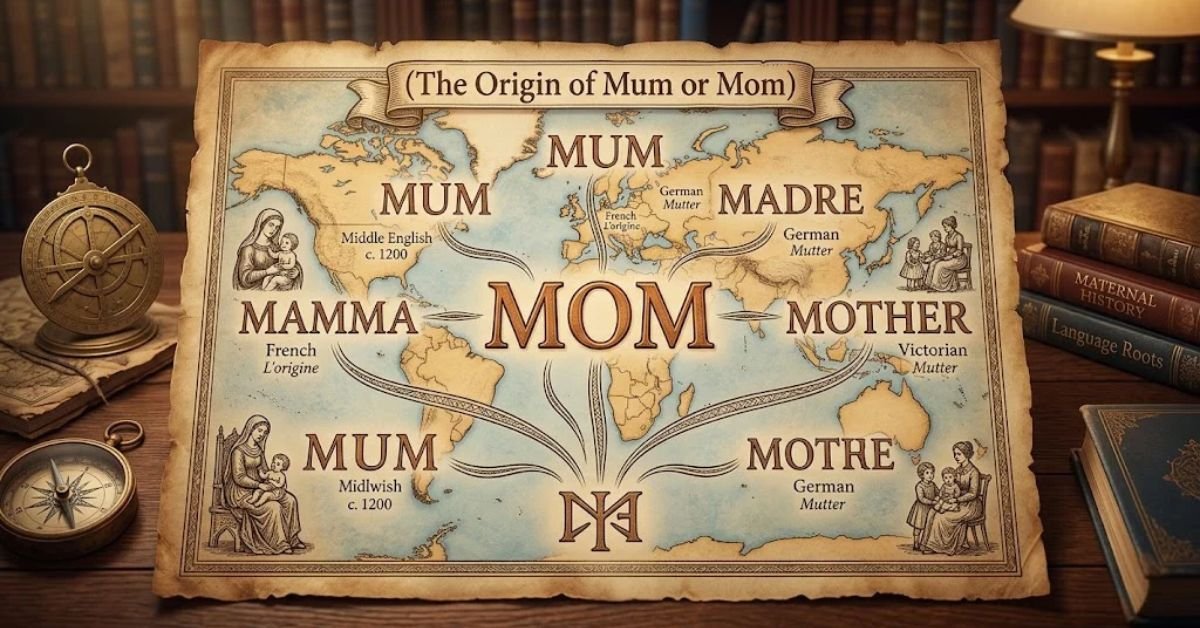
The words mum and mom have a similar origin. Both connect with early child speech sounds such as ma, mama, and other simple forms used by young children.
These sounds are easy for children to produce. Over time, different languages and regions developed their own forms. That process reflects natural language evolution rather than a simple spelling change.
In American English, mom became the familiar word for mother. British English developed mum as its common form.
Related forms include:
- Mother – more formal
- Mama – familiar and affectionate
- Ma – short and informal
- Mommy – common informal American form
- Mummy – common informal British form
Pronunciation also helped shape regional differences. Cultural habits and local speech patterns influenced how these words developed.
For language learning, this history explains why mom and mum look different while carrying the same basic meaning.
British English vs American English Spelling
The clearest difference between mum and mom appears in British English and American English.
In the United States (US), people generally use mom in everyday conversation and writing. In the United Kingdom (UK), mum is the usual form.
| English variety | Common word | Example |
| American English | Mom | My mom called me. |
| British English | Mum | My mum called me. |
| Formal English | Mother | My mother called me. |
This is a regional difference rather than an error. Both forms have the same basic meaning.
You may also notice these keyword variations:
- Mommy in American English
- Mummy in British English
- Mama and Ma in various settings
For professional writing, always consider your audience. Using the expected regional form improves clarity and shows attention to detail.
Which Word Should You Use?
Choosing mum or mom depends on your audience and writing style. Neither word is automatically wrong.
If you’re writing for US readers, mom usually sounds natural. For UK readers, mum generally fits better.
The same idea applies to emails, news, social media, formal writing, and personal writing. Match the vocabulary to the people who will read it.
Consider these factors:
- Your target audience
- Regional usage
- American style or British English
- Formal or informal writing
- Local pronunciation and vocabulary
- Consistency throughout the text
For example, an American social media post might say:
“Happy birthday to my amazing mom!”
A British post might say:
“Happy birthday to my amazing mum!”
The meaning stays the same. Only the regional language style changes.
Use mom when:
Choose mom when your writing targets people who use American English. This includes most everyday writing in the United States.
The word works naturally in casual conversation, social media posts, emails, personal writing, and many forms of professional writing.
Common situations include:
- Writing for US readers
- Following American style
- Creating US-focused content
- Writing casual messages
- Posting on social media
- Quoting American speakers
Conversation example:
“Are you calling your mom tonight?”
“Yes, I promised I’d call her after dinner.”
You can also use Mommy in affectionate or informal contexts.
For example:
“Mommy, can you read me a story?”
When your audience expects American English, mom keeps your writing clear and natural. Consistency also prevents unnecessary regional confusion.
Use mum when:
Choose mum when your writing follows British English. This form is especially common among UK readers and appears in everyday British conversation.
It can also occur in other Commonwealth countries, although regional usage may vary. English speakers in places such as India and Pakistan may encounter both forms.
Common situations include:
- Writing for UK readers
- Following British English
- Using British regional language
- Writing personal messages
- Creating British social media content
- Quoting British speakers
Conversation example:
“Is your mum coming to the party?”
“Yes, she said she’d arrive around seven.”
Mummy can serve as an informal British form, especially in family conversation.
The important point is simple: mum isn’t an incorrect version of mom. It’s the expected form in many British English contexts.
Audience guide:
Your audience should guide the choice between mom and mum. Think about where your readers live and which English variety they expect.
| Target audience | Recommended form |
| US readers | Mom |
| UK readers | Mum |
| British English users | Mum |
| American English users | Mom |
| Global audience | Choose a style and stay consistent |
| Formal context | Mother may be more suitable |
For a global audience, either form can work. However, consistent usage keeps your writing smooth and professional.
If you’re writing an email for an American reader, mom will usually feel natural. For British readers, mum fits the regional style better.
When regional confusion appears, context provides the answer. Check your audience, choose the appropriate form, and use it consistently throughout your writing.
Common Mistakes with Mum or Mom
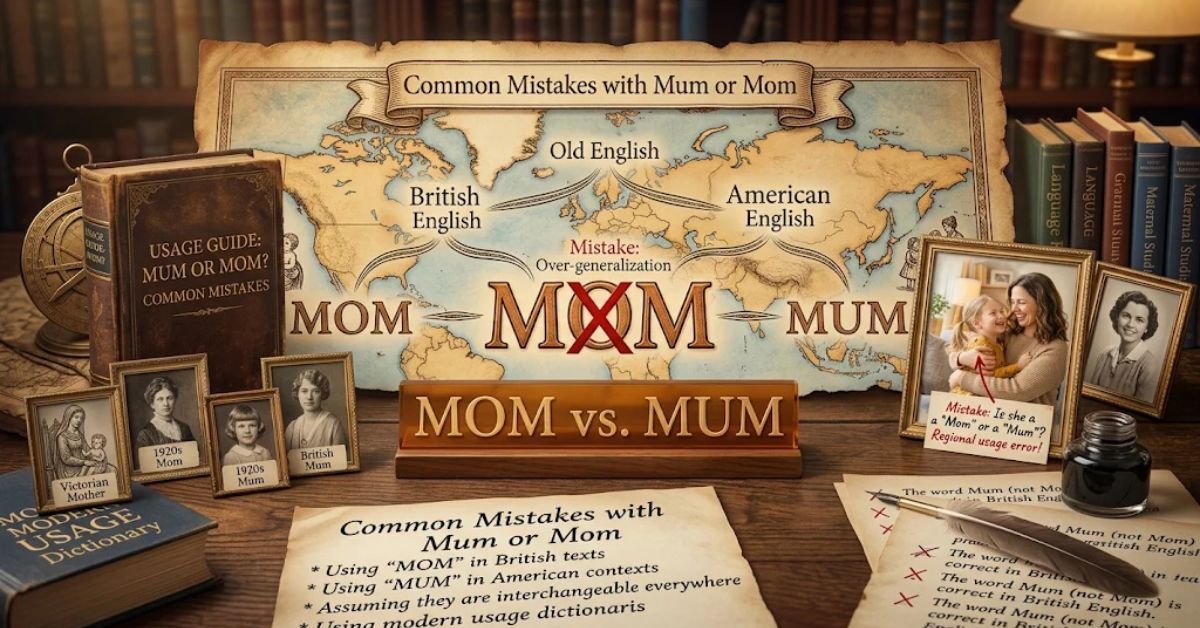
One common mistake is assuming that mom is correct everywhere. In reality, both mom and mum are correct in different regional language styles.
Another mistake involves mixing British English and American English without a clear reason. This can create inconsistent usage and distract readers from your message.
Common mistakes include:
- Treating mum as an incorrect spelling
- Treating mom as an incorrect spelling
- Mixing both forms throughout one piece
- Ignoring the target audience
- Confusing Mommy with formal language
- Assuming every Commonwealth country uses exactly the same form
- Forgetting that Mother works in formal contexts
Conversation example:
“Is mom the correct spelling?”
“Yes, especially in American English. British English commonly uses mum.”
Regional usage matters more than choosing one universal spelling. For professional writing, check your audience first. Then keep your writing style consistent.
If you quote someone from another region, however, you can preserve their original wording. That’s different from inconsistent usage in your own writing.
Mum or Mom in Everyday Examples
The difference between mum and mom becomes clearer through everyday examples. Both words appear in family conversations, messages, online posts, and personal writing.
Your choice usually depends on the English variety you use.
Everyday examples:
- American English: “My mom made dinner.”
- British English: “My mum made dinner.”
- Informal US: “Mommy, look at this!”
- Informal UK: “Mummy, look at this!”
- Familiar form: “Ma, can you help me?”
- Affectionate form: “Mama always knows what to say.”
These examples show the same basic meaning with different regional or informal forms.
Conversation example:
“Did your mom call?”
“Yes, she called before lunch.”
A British speaker might naturally say:
“Did your mum call?”
“Yes, she called before lunch.”
The meaning doesn’t change. The regional style does.
Emails
Emails often mix personal language with professional writing. Your choice between mom and mum should match the audience and overall writing style.
For an American reader, mom usually sounds natural:
“I’ll be visiting my mom this weekend.”
For a British reader, mum fits better:
“I’ll be visiting my mum this weekend.”
In personal emails:
- Use mom for American English.
- Use mum for British English.
- Use Mother when a more formal tone fits.
- Keep the same regional style throughout the message.
Email conversation example:
“I won’t attend dinner tonight because my mom is visiting.”
In professional writing, the family reference may need a more neutral tone. The right choice depends on context, audience, and relationship.
News
News writing often follows a publication’s established regional style. American news outlets generally use mom, while British publications commonly use mum.
For example, an American-style sentence might read:
“The mother said her mom helped her through the difficult time.”
A British-style sentence could say:
“The mother said her mum helped her through the difficult time.”
News writing values clarity and consistency. Writers usually follow the publication’s preferred form rather than switching between regional varieties.
Keep these points in mind:
- Follow the publication’s style guide.
- Match the intended regional audience.
- Preserve direct quotes accurately.
- Don’t change a speaker’s wording without reason.
News-style example:
“The mom said she was grateful for the support.”
For a British audience:
“The mum said she was grateful for the support.”
Context determines which form sounds natural.
Social Media
Social media gives you more freedom with language. Still, regional usage can influence how your post sounds.
An American user might write:
“Love you, mom! Thanks for everything.”
A British user might post:
“Love you, mum! Thanks for everything.”
Both captions communicate the same feeling. The difference comes from regional vocabulary and personal writing style.
You might also see:
- Mommy in affectionate US posts
- Mummy in affectionate UK posts
- Mama in warm or family-focused posts
- Ma in casual messages
Conversation example:
“Your mom looks so happy in this photo!”
“She really is. We had such a great day together.”
Social media also allows playful spelling and cultural expressions. However, if you’re building a brand, consistency still matters. Your chosen style should fit your target audience.
Formal Writing
Formal writing usually requires more careful word choice. In some contexts, Mother may sound more appropriate than mom or mum.
For example:
“The child lives with his mother.”
This sentence sounds neutral and professional. It works well in reports, academic writing, official documents, and formal communication.
However, mom isn’t automatically unsuitable for formal writing. Context matters.
Consider:
- The purpose of the document
- Your target audience
- The required writing style
- Whether the word appears in a quotation
- The regional English being used
Example:
“The participant stated that her mom supported her education.”
If the sentence reports someone’s exact words, keeping mom may be appropriate.
In formal writing, clarity should come first. Choose the word that fits the context rather than forcing a regional form.
Conversation
Everyday conversation is where mom and mum feel most natural. People usually choose the form they hear and use in their local community.
An American speaker might say:
“My mom is picking me up after work.”
A British speaker might say:
“My mum is picking me up after work.”
Neither sentence sounds unusual within its regional setting.
Other familiar forms include:
- Mom – common in American English
- Mum – common in British English
- Mommy – affectionate American form
- Mummy – affectionate British form
- Mama – familiar and affectionate
- Ma – short and informal
- Mother – more formal or neutral
Conversation example:
“What did your mom say?”
“She said she’ll call later.”
In British English, the same exchange may naturally use mum instead.
That simple regional difference explains most everyday usage.
Mum or Mom – Usage Data
The usage of mom and mum mainly reflects regional language habits. Both words refer to the same family relationship, yet their frequency changes across English-speaking communities.
In American English, mom is the usual everyday term. British English generally favors mum. Other regions may use one form more often or show mixed usage.
For language learning, these patterns explain why readers sometimes encounter both forms. Search results can also contain both spellings because people look for the regional difference.
Key points:
- Mom is strongly associated with American English.
- Mum is strongly associated with British English.
- Mother works across both varieties.
- Mommy and mummy are informal forms.
- Ma and Mama appear in different family settings.
Conversation example:
“Do Americans say mum?”
“They usually say mom instead.”
Usage can vary by country, family, age, and cultural habits. Therefore, broad claims about worldwide frequency should be treated carefully.
Why people search this keyword:
People search mum or mom because the two words look almost identical. However, their regional usage can create confusion.
Someone writing for US readers may wonder whether mum looks unusual. A British English learner may have the opposite question.
Common search reasons include:
- Checking the correct spelling
- Understanding regional differences
- Learning American English
- Learning British English
- Choosing a word for professional writing
- Understanding pronunciation
- Comparing mommy and mummy
- Avoiding common mistakes
- Improving writing accuracy
Conversation example:
“Which one should I use in my article?”
“Check your target audience first. Then choose mom or mum.”
Searchers may also want a quick answer before reading the history or linguistic details. That’s why a clear explanation of regional usage helps satisfy search intent.
Popular regions:
Regional language plays the biggest role in choosing mom or mum. The United States (US) strongly favors mom in everyday American English.
The United Kingdom (UK) generally uses mum. Several Commonwealth countries also use forms influenced by British English, although local usage can vary.
General regional patterns:
- United States: mom
- United Kingdom: mum
- Commonwealth countries: Often mum, but usage varies
- India: Both forms can appear
- Pakistan: Both forms can appear
- Global audience: Either form may be understood
These patterns aren’t absolute rules. Families, media, education, and cultural habits can influence vocabulary.
Conversation example:
“My mom lives in Texas.”
“My mum lives in London.”
Both speakers use a natural form for their regional language style.
For international content, consistency matters more than trying to force one form everywhere.
Usage contexts:
You can find mom and mum across many everyday contexts. The appropriate form usually depends on regional English and the relationship between writer and reader.
Common contexts include:
- Conversation: “My mom is calling.”
- Emails: “I’m visiting my mom this weekend.”
- Social media: “Love you, mom!”
- News: “The mom spoke to reporters.”
- Personal writing: “My mom taught me to cook.”
- Formal writing: “The child lives with his mother.”
- Education and learning: Comparing British and American vocabulary
Conversation example:
“Did you call your mom?”
“Yes, she called me earlier.”
In British English, a speaker would commonly use mum instead.
The same principle applies to informal forms. Mommy is common in American English, while mummy is common in British English. Mama and Ma can also appear depending on family preference and cultural background.
Comparison Table (Keyword Variations)
The following comparison table shows the main keyword variations and their typical meanings. Regional usage can vary, so these labels describe common patterns rather than strict rules.
| Word | Common usage | Regional association | Meaning | Style |
| Mom | Everyday term | American English | Mother | Informal |
| Mum | Everyday term | British English | Mother | Informal |
| Mommy | Family and child speech | American English | Mother | Affectionate |
| Mummy | Family and child speech | British English | Mother | Affectionate |
| Mother | Broad usage | US, UK, global | Female parent | Formal/neutral |
| Mama | Family speech | Various regions | Mother | Familiar |
| Ma | Family speech | Various regions | Mother | Informal |
These forms share the same basic meaning, but their tone and regional usage differ.
Conversation example:
“Does mommy mean something different from mom?”
“No. It usually sounds more affectionate or childlike.”
When writing for a specific audience, choose the form that matches its expected English variety. For a Global audience, either mom or mum can work when used consistently.
This approach improves clarity, supports natural writing, and prevents unnecessary regional confusion.
FAQs
1. Is mom correct?
Yes, mom is correct. It is the standard spelling used in American English and common in everyday writing.
2. Is mum correct?
Yes, mum is correct. It is widely used in British English and several Commonwealth countries for mother.
3. Do both words mean the same?
Yes, mom and mum have the same basic meaning. Both are informal words used to refer to your mother.
4. Which is more common worldwide?
There is no single worldwide standard. Mom is common in American English, while mum is common across British English regions.
5. Can I use both in one article?
Yes, you can use both when discussing regional differences. Otherwise, choose one style and stay consistent.
6. Is there a difference in meaning?
No, mom and mum do not have different meanings. The main difference comes from regional spelling and language usage.
7. Which should I use for global readers?
For global readers, either mom or mum can work. Choose one based on your audience and keep your writing consistent.
Conclusion
Choosing the right word can make your writing feel more natural. Mom and mum have the same basic meaning, but regional usage makes them different. American English usually uses mom, while British English commonly uses mum. You may also see words like mommy, mummy, mama, ma, and mother. Each form fits a different style or region. Knowing these differences helps you avoid common spelling mistakes. It also makes your writing clearer for your target audience.
When writing for US readers, mom is usually the natural choice. For UK readers, mum often sounds more familiar. In formal writing, mother can work well in many situations. Your audience should guide your choice. Keep your style consistent across emails, articles, social media, and personal writing. Once you understand the difference, mom or mum becomes an easy choice. Use the form that fits your readers and your writing style.

Jack Harrison is a passionate writer with 4 years of experience exploring names, meanings, origins, symbolism, and cultural significance. He creates clear, engaging, and well-researched content to help readers discover the deeper meanings behind names and words.
