
You saw “DTTM” in a text and froze for a second.Is it good? Bad? A threat? A joke?Here’s the short answer: DTTM usually means Don’t Talk To Me.It’s a quick way to set a social boundary without writing a whole paragraph about it.But that’s not the only story here.In tech circles, DTTM also stands for Date and Time, a common abbreviation used in database management and information technology.
So the real meaning depends entirely on where you spot it.Let’s break down every version of DTTM meaning, from your group chat to your company’s server logs.
DTTM Full Form and Definition
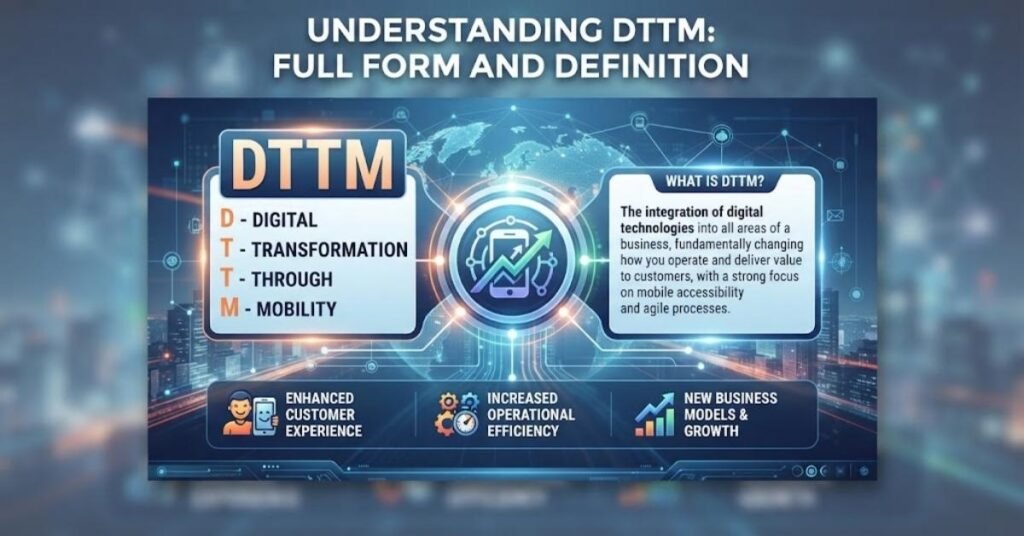
The DTTM full form splits into two completely different worlds.
In casual digital communication, it’s Don’t Talk To Me. Simple as that.
In technical context, DTTM stands for Date and Time, a metadata field used across computer systems to track when something happened.
Think of a bank transaction log. Every entry needs a timestamp showing the exact date and time it occurred.
That’s where the technical acronym earns its keep. It shows up in system logs, database documentation, and data sets everywhere.
Software engineers rely on standardized data formats for this. A clean DTTM field means less confusion later.
Without it, tracking an event or transaction across digital systems turns into guesswork.
So when you’re reading technical data, DTTM has nothing to do with attitude. It’s pure technical terminology, doing quiet, useful work behind the scenes.
DTTM Meaning in Text Messages
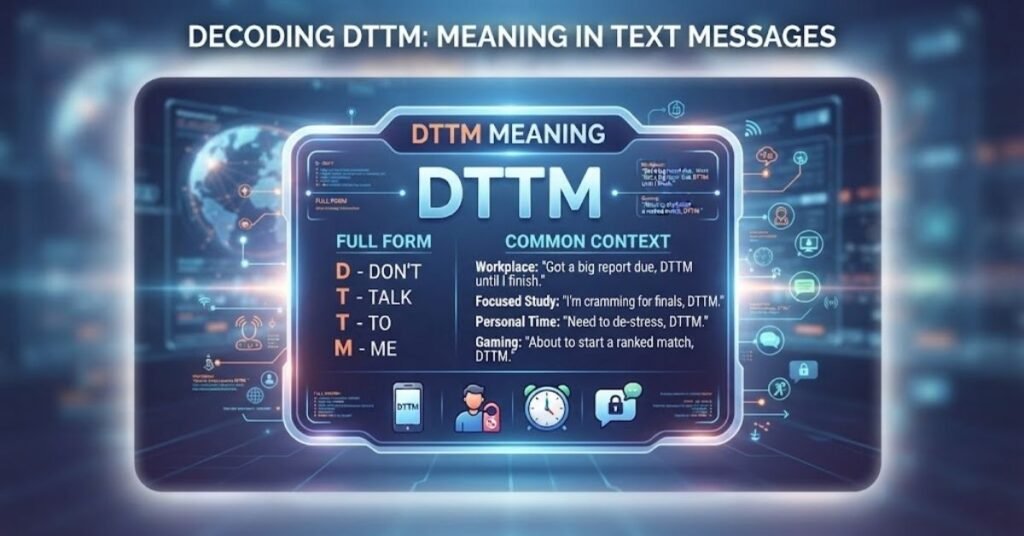
Your friend sends “DTTM” after a rough Monday. What’s going on?
They’re not mad at you. They’re just tapped out.
DTTM meaning in a text conversation almost always points to Don’t Talk To Me, and it’s less about anger than exhaustion.
Picture this: someone had a brutal shift at work, three deadlines, and a car that wouldn’t start.
They text “dttm rn” to a group chat. That’s not rudeness. That’s self-care in four letters.
It’s a communication tool for people who don’t have the mental bandwidth for small talk right now.
Context matters a ton here. A stressful day, a bad mood, or plain social exhaustion usually sits behind the message.
Reading the conversational nuance correctly means checking the relationship dynamics first. Best friends read it as “give me space.” Strangers might read it as cold.
That’s the tricky part of online communication. The words are identical, but the sentiment shifts with context.
DTTM Meaning on Snapchat and TikTok
Snapchat and TikTok move fast, and so does their slang.
On these apps, DTTM often shows up in story captions, bio lines, or comment sections under viral humor posts.
A creator might caption a video “dttm today” while lip-syncing to a dramatic sound. That’s not literal. It’s relatable content, dripping with playful energy.
TikTok users love short-form content that captures a mood instantly. DTTM fits that format perfectly, four letters, zero explanation needed.
Snapchat leans more personal. A status update with “DTTM” might mean someone’s genuinely asking for solitude after a long week.
Either way, these platforms treat DTTM as part of modern slang, something the whole online subculture already understands without a dictionary.
Audience engagement thrives on this shorthand. It’s fast, it’s honest, and it doesn’t need a caption explaining the joke.
DTTM Meaning on Instagram and X (Twitter)
Instagram and X handle DTTM a bit differently, mostly because of format.
Instagram is visual first. DTTM shows up in direct messages, comments, or a quick caption under a moody photo.
Someone posts a plain black screen with “dttm” written across it. No further context needed. Followers get it instantly.
X, being a text-heavy platform, uses DTTM constantly inside threaded discussions, replies, and standalone posts.
A user might tweet “dttm, I’m cooking something” as a joke about needing focus time. That’s irony at play, not literal isolation.
Because X thrives on real-time communication, slang like DTTM spreads fast and mutates just as quickly.
Creators building a personal brand often use it to sound relatable to their followers, keeping their tone casual instead of polished.
This is where internet slang really shows its speed. What means one thing on Monday might carry a slightly different perceived tone by Friday.
Different Meanings and Everyday Usage
Language is fluid, and DTTM proves it every day.
Sometimes it’s assertive. Sometimes it’s neutral. Sometimes it’s pure sarcasm wrapped in four letters.
A tease between close friends reads completely differently than the same message sent to a coworker.
That’s the conversational barrier slang always runs into. Without tone of voice, words carry extra weight.
Emotional communication through text depends heavily on who’s sending it and why.
Common Ways DTTM Appears in Chats
Here’s where you’ll typically spot it:
- After a long, stressful day at work or school
- When someone needs a temporary boundary, not a permanent one
- As a joke among friends who know it’s not serious
- In group chats when someone’s overwhelmed and needs quiet
- Paired with emojis to soften or emphasize the emotional weight
- As a digital shortcut instead of typing out a longer explanation
Notice a pattern? It’s rarely about the other person. It’s about social availability, or the lack of it, in that exact moment.
Is DTTM Positive or Negative?
Honestly, it’s neither by default.
DTTM is a social cue, not an insult. Most of the time, it signals boundary-setting, not rejection.
Think about it like closing your office door for an hour. You’re not mad at your coworkers. You just need quiet.
That said, tone still matters. Fired off with caps lock and three exclamation points, it can feel harsh.
Sent casually with a laughing emoji, it reads as joking, even humor-driven.
The perceived tone depends on relationship dynamics, timing, and honestly, how someone’s day went.
Most experts studying digital etiquette agree that boundary language like this actually supports healthier online interactions. It beats ghosting someone without explanation.
So next time you get a DTTM, don’t panic. Check the context. Nine times out of ten, it’s about them, not you.
DTTM vs Similar Internet Slang Terms
DTTM isn’t alone out there. Plenty of internet acronyms do similar jobs.
Take DND, short for Do Not Disturb. It’s more formal, often built right into phone settings rather than typed into a chat.
AFK, meaning Away From Keyboard, signals physical absence, not emotional distance. Someone’s just not at their screen.
Then there’s GTFO, a much harsher slang abbreviation that carries real frustration or anger, unlike DTTM’s usually softer edge.
Compare them side by side:
| Term | Meaning | Typical Tone |
| DTTM | Don’t Talk To Me | Boundary-focused, often neutral |
| DND | Do Not Disturb | Formal, system-based |
| AFK | Away From Keyboard | Practical, no emotion attached |
| GTFO | Get The F Out | Aggressive, blunt |
Knowing these slang abbreviations helps you read the room faster. DTTM sits comfortably in the middle, firmer than AFK, gentler than GTFO.
DTTM in Professional and Technical Settings
Here’s a gap most articles skip completely.
In professional context, DTTM almost never means “leave me alone.” It reverts back to its technical terminology roots.
Colleagues working with database systems use DTTM constantly inside spreadsheets, reports, and system logs.
A project manager might ask, “Did you update the DTTM field?” That’s about a timestamp, not a mood.
This dual identity causes real confusion sometimes. Someone new to a company might see “DTTM” in a workflow document and assume it’s slang.
Understanding data literacy basics helps avoid that mix-up entirely. Knowing your audience and environment tells you which meaning applies.
In office settings, always default to the technical reading unless the message clearly comes from a personal context.
Why DTTM Matters in 2026 Digital Communication
Slang doesn’t sit still, and 2026 trends show boundary-focused language growing, not shrinking.
More people talk openly about emotional well-being, and terms like DTTM give them a low-effort way to protect it.
Constant connectivity wears people down. Being reachable 24/7 sounds convenient until it becomes exhausting.
A short digital tool like DTTM lets someone step back without writing an essay about boundary-setting.
It’s become a positive habit for plenty of users, a way to protect mental bandwidth without disappearing completely.
Expect this kind of conversational shorthand to keep expanding as online subculture keeps rewarding linguistic precision over long explanations.
How to Respond When Someone Sends You DTTM
Don’t spiral. Seriously.
Give them space. That’s the whole point of the message.
A simple “okay, here when you’re ready” works better than pushing for answers.
Respecting someone’s temporary boundary actually builds trust over time. It shows you understand digital etiquette, not just the words on screen.
If it happens constantly with no context ever offered, that’s worth a real conversation later, face to face if possible.
But a one-off DTTM? Let it go. It’s rarely that deep.
Common Mistakes People Make With DTTM
Plenty of people get this wrong, and it usually causes needless drama.
The biggest mistake? Taking it personally every single time. A DTTM after a stressful day rarely has anything to do with you.
Another common slip is replying with a wall of text anyway. That defeats the whole purpose of the message and can feel like ignoring someone’s boundary-setting tool.
Some folks also confuse the casual and technical context versions. Seeing “DTTM” in a work spreadsheet and assuming your coworker is upset makes for an awkward Slack message.
Then there’s overusing it. If every single chat ends in DTTM, friends might start reading social withdrawal where there isn’t any, or worse, genuine social exhaustion that needs a real conversation instead of a shorthand.
The fix is easy enough. Pause, check the environment, check the relationship dynamics, and respond accordingly. Data literacy aside, plain old emotional intelligence solves most of the confusion here.
The Psychology Behind Boundary Slang
Ever wonder why terms like DTTM caught on so fast?
Humans have always needed ways to signal social availability without a full explanation. Slang just makes it quicker.
Typing out “I’m overwhelmed and need quiet time to recharge” takes effort nobody has left after a rough day. Four letters do the same job in half a second.
Psychologists studying digital interactions note that short boundary phrases actually reduce conflict, not increase it. They replace silence, which often gets misread as anger or ghosting, with a clear, if blunt, signal.
There’s also an element of exclusivity and mystery to it. A cryptic message like DTTM invites curiosity rather than demanding attention, which fits how younger users prefer to communicate on public platforms.
So the next time DTTM lands in your inbox, remember it’s less about pushing you away and more about someone managing their own mental bandwidth the best way they know how.
FAQs
What is the primary dttm meaning?
The primary DTTM meaning in casual chats is Don’t Talk To Me, used to signal a need for space or quiet.
How do friends use dttm meaning?
Friends often use it playfully or during a bad day, mixing humor with a real need for solitude. It’s rarely permanent.
Is dttm meaning considered offensive?
Not usually. It reads as neutral or assertive boundary-setting rather than an insult, though tone and context can shift that.
Where can you see dttm meaning?
You’ll spot it in text messages, Instagram captions, TikTok comments, X posts, and occasionally in technical documentation as Date and Time.
Why is understanding dttm meaning important?
Because misreading it causes real misinterpretation. Knowing the context helps you respond appropriately instead of overthinking a short message.
Final Thoughts
DTTM carries two lives, one emotional, one technical.In your group chat, it’s a boundary. In a spreadsheet, it’s a timestamp.Either way, context decides everything. Learn to read the room, the platform, and the person sending it.
Got a favorite piece of internet slang that confuses everyone at first? Drop it in the comments. Someone else is probably wondering the same thing.

Jack Harrison is a passionate writer with 4 years of experience exploring names, meanings, origins, symbolism, and cultural significance. He creates clear, engaging, and well-researched content to help readers discover the deeper meanings behind names and words.
