Have you ever received a party invitation with BYOB written on it and wondered what you’re supposed to bring? You’re not alone! This short abbreviation appears on party invitations, restaurant signs, text messages, and social media posts. It often shows up when friends plan birthday dinners, barbecues, picnics, or casual hangouts. But here’s the catch: BYOB can have different meanings depending on the situation. Understanding it helps you avoid confusion and show up prepared.
The byob full form usually means Bring Your Own Bottle or Bring Your Own Beverage. In simple words, you’re expected to bring your own drink instead of relying on the host. That could mean wine, beer, soda, juice, or water, depending on the event’s rules. Some restaurants also allow outside beverages under specific conditions. In this guide, you’ll learn what BYOB means in texting, parties, restaurants, and business settings. You’ll also find practical examples, common mistakes, and helpful etiquette tips.
Quick Answer
BYOB usually means Bring Your Own Bottle or Bring Your Own Beverage. It tells guests to bring their preferred drinks to a party, dinner, or other gathering.
The exact meaning depends on the situation. Some hosts use BYOB when they expect guests to bring alcoholic drinks. Others welcome soda, juice, water, or other non-alcoholic drinks.
- Full form: Bring Your Own Bottle or Bring Your Own Beverage
- Common use: Parties, dinners, picnics, and social gatherings
- Texting use: A short way to tell someone to bring their own drinks
- Restaurant use: A place that allows customers to bring outside beverages, sometimes with a corkage fee
For example, a friend might text, “We’re having a barbecue tonight. BYOB!”
This means you should bring a drink for yourself. If you’re unsure whether alcohol is allowed, ask the host before arriving.
Introduction to BYOB
Have you ever received a party invitation that says BYOB? You might wonder whether you should bring wine, beer, soda, or something else.
BYOB is a common abbreviation used in invitations, messages, restaurant notices, and casual conversations. It helps hosts explain that guests should bring their own beverages instead of expecting the host to provide every drink.
The phrase appears in different situations, so context matters. A house party might welcome beer and soft drinks, while a restaurant may have specific rules about outside bottles.
You may see BYOB in:
- A birthday party invitation
- A group chat about a weekend barbecue
- A restaurant sign or menu
- A casual message from a friend
- An event organizer’s instructions
Example conversation:
Alex: Are drinks included at the party?
Sam: Not this time. It’s BYOB, so bring whatever you’d like to drink.
Understanding this abbreviation makes planning easier and helps you avoid misunderstandings.
BYOB Meaning and Definition
BYOB most commonly stands for Bring Your Own Bottle or Bring Your Own Beverage. Both expressions ask people to bring their own drinks rather than rely on someone else to provide them.
The word bottle may suggest wine, beer, or liquor. However, BYOB doesn’t always mean alcohol. The host may welcome water, juice, soda, coffee, tea, or other non-alcoholic drinks.
The intended meaning depends on the event, venue, and local rules.
Common interpretations include:
- Bring Your Own Bottle: Often used when guests bring a bottle of wine or another beverage.
- Bring Your Own Beverage: A broader meaning that includes alcoholic and non-alcoholic drinks.
- Bring Your Own Beer: A casual variation used for some parties and gatherings.
- Bring Your Own Booze: An informal expression that specifically refers to alcoholic drinks.
Example: “The picnic is BYOB, but food is provided.”
This means guests should bring their own beverages while the organizer supplies the food.
Other expansions, such as Build Your Own Burger or Build Your Own Brand, may appear in specific business or marketing contexts. These are not the usual meanings at a party or restaurant.
What Does BYOB Mean in Text
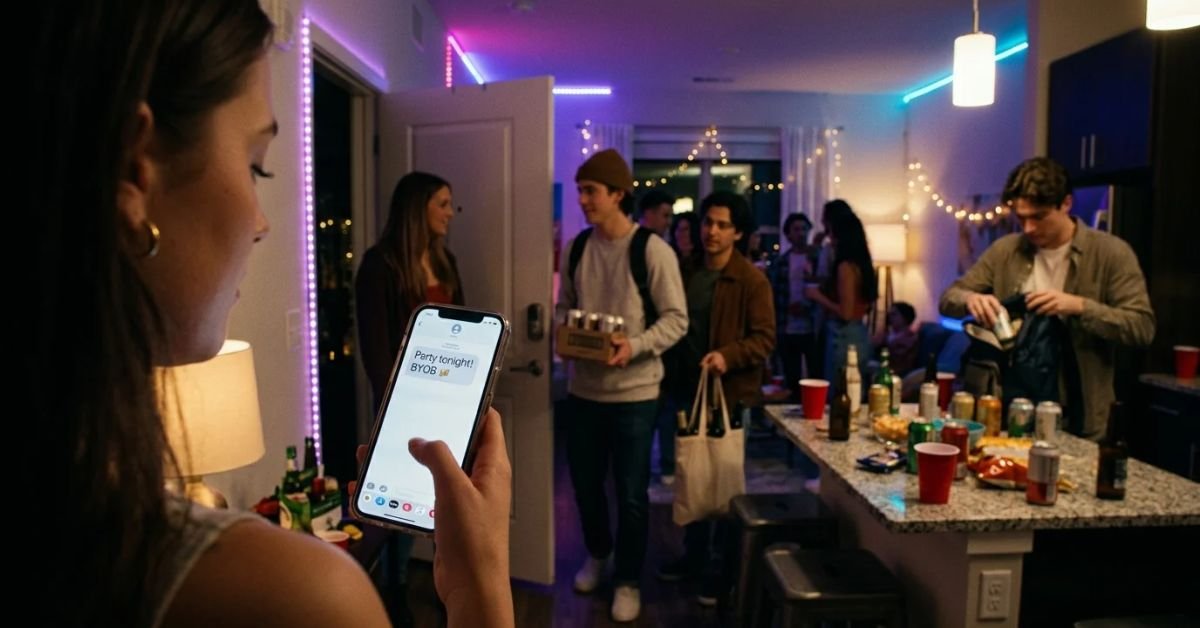
In a text message, BYOB usually means Bring Your Own Bottle or Bring Your Own Beverage. People use it to share plans quickly without writing a longer explanation.
You may see this abbreviation in iMessage, WhatsApp, Instagram DMs, Snapchat messages, or group chats. It is especially common when friends arrange parties, dinners, picnics, or casual hangouts.
The abbreviation keeps messages short and easy to understand. However, it doesn’t automatically tell you which drinks are acceptable.
Examples of BYOB in texting:
- “Movie night at my place. BYOB!”
- “We’re having a birthday dinner. BYOB if you want.”
- “The barbecue starts at 6. Food is covered, but BYOB.”
- “Is tonight BYOB, or are drinks included?”
Example conversation:
Mia: What should I bring to the house party?
Liam: Just bring your drink of choice. It’s BYOB.
Mia: Cool! Are soft drinks okay?
Liam: Of course. Bring whatever you prefer.
BYOB is casual and informal language. For formal invitations, business emails, or mixed-age gatherings, spelling out the instruction may be clearer.
What Does BYOB Stand For
The most widely recognized BYOB full form is Bring Your Own Bottle. Another common version is Bring Your Own Beverage. Both meanings appear in social settings, but the intended wording can vary.
BYOB is an acronym-like abbreviation formed from the initial letters of the phrase. People usually write it in capital letters because each letter represents a word.
Here are some meanings you may encounter:
| BYOB expansion | Typical context |
| Bring Your Own Bottle | Parties and restaurants |
| Bring Your Own Beverage | Events and social gatherings |
| Bring Your Own Beer | Casual gatherings where beer is expected |
| Bring Your Own Booze | Informal gatherings involving alcohol |
| Build Your Own Burger | Food events or restaurant promotions |
| Build Your Own Brand | Marketing courses and workshops |
| Bring Your Own Bag | Shopping or sustainability campaigns |
| Bring Your Own Book | Reading groups or school activities |
| Bring Your Own Business | Some networking or business contexts |
| Build Your Own Bundle | Product offers or marketing campaigns |
The last several meanings are context-dependent and less widely recognized than the beverage-related definition.
Always check the surrounding message before deciding what BYOB means. A restaurant promotion and a party invitation may use the same letters for different purposes.
BYOB Meaning in Party Invitations
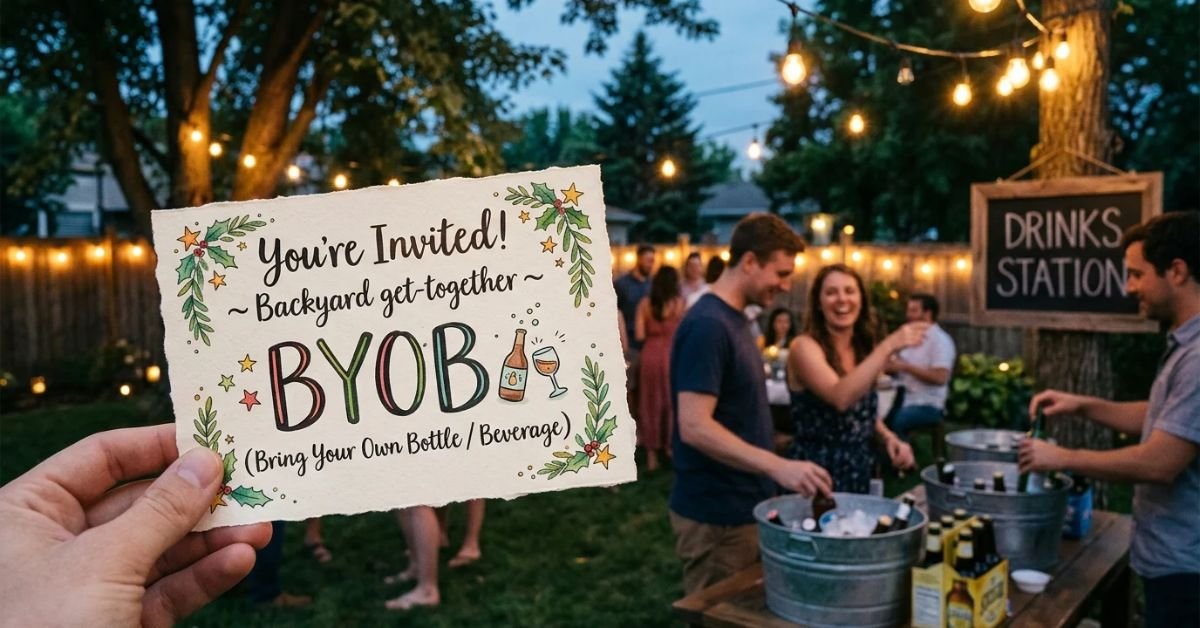
When BYOB appears on a party invitation, it usually means guests should bring their own drinks. The host may provide food, snacks, music, and other arrangements but leave beverages to each guest.
You might see BYOB on invitations for a house party, birthday party, birthday dinner, barbecue, or private celebration. It can also appear in invitations for picnics, game nights, movie nights, and outdoor gatherings.
The phrase helps guests plan ahead and understand what the host will provide.
Example invitation wording:
- “Join us Saturday for a fun house party. BYOB!”
- “Food and snacks are provided. Please bring your favorite drink.”
- “Celebrate with us this weekend. BYOB; all beverage choices are welcome.”
- “Bring a drink of your choice for our backyard barbecue.”
Example conversation:
Nina: The invitation says BYOB. Should I bring wine?
Ella: You can, but I’d ask the host whether non-alcoholic drinks are also welcome.
If you’re hosting, use polite wording and explain whether food is provided. For family events, school-related gatherings, or mixed-age groups, inclusive wording can prevent confusion.
BYOB Meaning in Restaurants
In restaurants, BYOB usually means customers may bring their own beverages instead of ordering every drink from the restaurant menu. The policy often relates to wine or other alcoholic drinks, but each venue sets its own rules.
A BYOB restaurant may allow outside bottles while charging a corkage fee for opening and serving them. Other restaurants may have bottle limits or restrictions on certain beverages.
Before bringing anything, check the restaurant’s corkage policy.
- Call ahead: Confirm whether outside bottles are allowed.
- Ask about fees: Find out whether the restaurant charges corkage.
- Check bottle limits: Some venues restrict how many bottles each table can bring.
- Confirm service rules: Ask whether staff can open the bottle and provide glasses.
- Review local laws: Alcohol rules vary by location.
Example conversation:
Customer: Is this a BYOB restaurant?
Staff member: Yes, but we have a corkage fee. Please call ahead if you have questions about our policy.
Never assume every restaurant accepts outside bottles. A sign or online listing may be outdated, so confirm directly with the venue before visiting.
BYOB Meaning in Events and Gatherings
At events and gatherings, BYOB means guests should bring their own beverages. It can make planning easier when the host or event organizer doesn’t want to supply drinks for everyone.
You may see BYOB instructions for a camping trip, beach meetup, picnic, barbecue, house dinner, or casual hangout. Some private celebrations also use the term to clarify who is responsible for drinks.
The exact expectations depend on the event. A casual game night may welcome soda and juice, while an adult dinner might suggest wine.
Common BYOB settings include:
- Birthday parties and family events
- Outdoor gatherings and camping trips
- Movie nights and game nights
- Weddings or wedding-related events
- Office events and private celebrations
Example conversation:
Noah: Do we need to bring anything to the picnic?
Ava: The organizer is providing food and snacks. It’s BYOB for drinks.
Noah: Got it. I’ll bring water and juice.
If you’re organizing an event, state what guests should bring and what you’ll provide. Clear instructions help everyone prepare and reduce last-minute confusion.
BYOB Meaning in Slang
BYOB isn’t usually slang with a hidden meaning. It is a familiar abbreviation that people use in casual and informal language to tell others to bring their own drinks.
In some settings, BYOB may imply alcohol, especially when people mention beer, wine, liquor, or booze. Still, the letters alone don’t guarantee that alcoholic drinks are expected.
You’ll often find BYOB in social media posts, party invitations, texting, and group chats. Friends may use it to keep plans short and relaxed.
Examples:
- “Friday night at my place. BYOB!”
- “Pool party this weekend. BYOB and bring sunscreen.”
- “Snacks are ready, so BYOB for movie night.”
- “The host said BYOB, but soda is fine.”
Example conversation:
Jay: Is BYOB just another way of saying bring beer?
Kim: Not always. It can mean bringing any beverage, depending on the host.
You may also hear related party phrases such as “have a blast,” “break the ice,” or “cheers to that.” These expressions add a friendly tone, but they aren’t alternative definitions of BYOB.
BYOB Meaning in Business
In a business context, BYOB may have a different meaning from its usual beverage-related definition. The correct interpretation depends on the company, campaign, workshop, or marketing course where it appears.
For example, a branding workshop might use BYOB to mean Build Your Own Brand. A food promotion could use it to mean Build Your Own Burger. A product campaign might use a similar phrase for building a custom bundle.
These meanings are context-dependent rather than universal business definitions.
BYOB may appear in:
- Brand-building workshops
- Personal brand or marketing courses
- Company events and networking sessions
- Restaurant promotions
- Campaigns involving custom bundles
Example conversation:
Riley: The workshop schedule says BYOB. Should I bring a drink?
Morgan: Check the description first. Since it’s a marketing course, it might mean Build Your Own Brand.
In professional communication, avoid assuming your audience knows an unfamiliar abbreviation. Spell out the intended full form the first time you use it, especially in presentations, emails, and formal documents.
BYOB Origin and History
The exact origin of BYOB is difficult to pin down from the abbreviation alone. Its use grew around the familiar phrase “bring your own,” which people use when guests or customers must supply something themselves.
The beverage-related meaning became widely associated with parties, restaurants, and social gatherings. Depending on the context, the final letters may refer to bottle, beer, or booze.
The broader phrase “bring your own” also appears in other situations. For example, schools may ask students to bring their own books, while businesses may run Bring Your Own Bag campaigns.
Keep these distinctions in mind:
- Bring Your Own Bottle: A common social and restaurant interpretation.
- Bring Your Own Beverage: A broader alternative.
- Other BYOB expansions: Usually depend on a specific activity or organization.
The abbreviation’s history shouldn’t be confused with unrelated expressions or later business uses.
When writing about its origin and history, it’s best to avoid assigning a precise invention date or naming a creator unless a reliable historical source supports that claim.
BYOB Pronunciation
People generally pronounce BYOB by saying the four letters individually rather than reading it as one ordinary word.
You may hear it in casual conversation when someone discusses a party invitation, restaurant policy, or weekend gathering. The pronunciation usually stays the same even when the intended full form changes.
For example, someone might say, “It’s a BYOB party,” to explain that guests should bring their own drinks.
Here are a few ways it appears in everyday speech:
- “The invitation says BYOB.”
- “Is that restaurant BYOB?”
- “Should I bring wine to the BYOB dinner?”
Example conversation:
Chris: What does BYOB mean on this invitation?
Taylor: It means guests should bring their own drinks.
When speaking to someone unfamiliar with the abbreviation, saying the complete phrase can be clearer. In formal writing, you can also spell out the meaning on first use and use BYOB afterward.
BYOB vs BYO
BYOB and BYO are closely related abbreviations. Both come from the phrase “Bring Your Own,” but BYOB usually specifies a beverage-related item, while BYO leaves the item unstated.
The extra B in BYOB commonly stands for Bottle, Beer, or Beverage. In BYO, the missing item usually becomes clear from the surrounding words or situation.
| Term | Common meaning | Example |
| BYOB | Bring Your Own Bottle or Beverage | “The party is BYOB.” |
| BYO | Bring Your Own | “It’s a BYO event.” |
| BYO food | Bring your own food | “Bring a meal for the picnic.” |
| BYOB restaurant | A restaurant that permits customers to bring drinks | “Call to check the corkage fee.” |
BYOB vs. Bring Your Own Bottle: The abbreviation is shorter, while the full phrase makes the instruction clearer.
BYOB vs. Bring Your Own Beverage: Both can communicate the same idea, but beverage clearly includes drinks beyond bottled alcohol.
Example conversation:
Emma: The invitation says BYO. What should I bring?
Olivia: Check the event details. It could mean drinks, food, or another item.
The key difference is context. If you want to avoid confusion, write out exactly what guests should bring.
BYOB vs Bring Your Own Bottle
BYOB and Bring Your Own Bottle usually communicate the same idea. The main difference is that BYOB is an abbreviation, while Bring Your Own Bottle spells out the complete phrase.
People often use BYOB in party invitations, restaurant notices, and casual text messages. The longer version works well when you want to make instructions clear, especially for guests unfamiliar with the abbreviation.
Both expressions commonly suggest that guests should bring a bottle of their choice. However, the type of drink depends on the event and the host’s preferences.
- BYOB: Short, convenient, and common in informal writing.
- Bring Your Own Bottle: Clearer for formal invitations and event instructions.
- Alcoholic drinks: Wine, beer, or liquor may be welcome at some adult gatherings.
- Non-alcoholic drinks: Water, juice, and soda may also be acceptable.
Example conversation:
Mia: What does BYOB mean on the invitation?
Liam: It means Bring Your Own Bottle. You should bring your own drink.
If you’re hosting, explain whether you welcome all beverages or have specific rules. This simple step prevents confusion.
BYOB vs Bring Your Own Beverage
BYOB can stand for Bring Your Own Bottle or Bring Your Own Beverage. Both expressions tell guests to bring their own drinks, but the wording creates a slightly different impression.
The word bottle suggests a container and may bring wine or beer to mind. The word beverage is broader and includes almost any drink, whether alcoholic or non-alcoholic.
For this reason, Bring Your Own Beverage can be a useful choice for family-friendly events, mixed-age gatherings, and casual outdoor activities.
- Bring Your Own Bottle: Often associated with bottled drinks or wine.
- Bring Your Own Beverage: Includes water, soda, juice, coffee, tea, and other drinks.
- BYOB: A shorter option that relies on context.
- Clear invitation wording: Helps guests understand what the host expects.
Example conversation:
Noah: Does BYOB mean I need to bring wine?
Ella: Not necessarily. The host might mean any beverage, so it’s best to ask.
When writing an invitation, choose the phrase that matches your event. If you want everyone to feel included, say that alcoholic and non-alcoholic drinks are welcome, if appropriate.
BYOB Meaning Comparison Table
BYOB has several interpretations, but the beverage-related meanings are the most common in social settings. Other expansions depend on the situation, so context is important when interpreting the abbreviation.
Use this comparison table to understand the main differences between BYOB and related phrases.
| Term | Meaning | Common context |
| BYOB | Bring Your Own Bottle or Beverage | Parties and restaurants |
| Bring Your Own Bottle | Bring a bottle of your choice | Social gatherings |
| Bring Your Own Beverage | Bring your preferred drink | Parties and events |
| Bring Your Own Beer | Bring beer for yourself | Casual adult gatherings |
| Bring Your Own Booze | Bring alcoholic drinks | Informal adult parties |
| BYO | Bring Your Own | General instructions |
| BYO food | Bring your own food | Picnics and shared meals |
| Build Your Own Burger | Customize your burger | Restaurants and food events |
| Build Your Own Brand | Develop a personal or business brand | Marketing courses and workshops |
| Bring Your Own Bag | Bring a reusable bag | Shopping and sustainability campaigns |
Example conversation:
Ava: The event poster says BYOB. Does that mean Build Your Own Burger?
Jack: Probably not. Since it’s a party, it most likely means Bring Your Own Bottle or Beverage.
Remember that alternative expansions are context-dependent. When the meaning isn’t obvious, check the surrounding information or ask the organizer.
Common BYOB Idioms and Related Phrases
BYOB is an abbreviation, not an idiom. However, it often appears in conversations about parties, drinks, celebrations, and social gatherings.
Understanding related phrases can help you follow informal conversations and write more natural invitations. Some expressions refer to drinking, while others describe having fun or meeting new people.
Here are common phrases you may encounter around BYOB events:
- Bring Your Own Bottle: Bring a bottle of your preferred drink.
- Bring Your Own Beer: Bring beer to a gathering.
- Bring Your Own Beverage: Bring a drink of your choice.
- Bring Your Own Booze: Bring alcoholic drinks.
- Raise a Glass: Celebrate or show appreciation.
- Drink Responsibly: Make safe and sensible choices about alcohol.
- On the House: Provided free by a business.
- Bottoms Up: An informal expression encouraging people to drink.
- Cheers to That: A phrase expressing agreement or celebration.
- Party Animal: Someone who enjoys partying frequently.
- Life of the Party: Someone who makes a gathering lively.
- Social Butterfly: Someone who enjoys meeting and talking to people.
- Break the Ice: Help people feel comfortable when meeting.
- Paint the Town Red: Go out and celebrate energetically.
- Have a Blast: Have a wonderful time.
- Let Your Hair Down: Relax and behave less formally.
These expressions don’t share the same definition as BYOB. Their meanings depend on the conversation and situation.
Bring Your Own Bottle
Bring Your Own Bottle is one of the most common meanings associated with BYOB. It tells guests to bring a bottle of their preferred drink instead of expecting the host to supply everything.
The phrase often appears on party invitations, restaurant signs, and event announcements. Depending on the host’s rules, the bottle might contain wine, beer, soda, juice, or water.
For example, a friend might write, “Saturday dinner at my place. Bring Your Own Bottle!”
This wording gives guests a simple instruction. However, it doesn’t automatically mean alcohol is allowed.
Example conversation:
Lily: The invitation says Bring Your Own Bottle. Should I bring wine?
Sophie: Ask the host first. They might welcome soft drinks, too.
If you’re hosting, mention which drinks are welcome. Clear instructions help guests plan ahead and avoid misunderstandings.
Bring Your Own Beer
Bring Your Own Beer is a variation of BYOB that specifically asks guests to bring beer. People may use it for casual adult gatherings, backyard barbecues, or relaxed evenings with friends.
Unlike the broader phrase Bring Your Own Beverage, this wording identifies a particular type of drink. Guests shouldn’t automatically assume that wine, liquor, or non-alcoholic drinks will meet the request.
Hosts should also consider local alcohol laws and the ages of their guests. Not every gathering is suitable for alcohol.
Example conversation:
Ben: Are we bringing drinks to the barbecue?
Max: The message says Bring Your Own Beer, but check whether other drinks are available.
If you’re writing an invitation, use this phrase only when you genuinely mean beer. For mixed groups, you can offer inclusive wording and explain the available choices.
Bring Your Own Beverage
Bring Your Own Beverage is a broad, flexible expression. It tells guests to bring their preferred drinks without limiting them to one particular type.
This phrase works well for family gatherings, picnics, movie nights, office events, and outdoor celebrations. Guests can bring water, soda, juice, coffee, tea, or other suitable drinks.
It can also make an invitation feel more inclusive. People have different tastes and dietary preferences, so allowing everyone to choose their own beverage can simplify planning.
Example conversation:
Emma: Should I bring something to drink for movie night?
Olivia: Yes, Bring Your Own Beverage. Anything you like is fine.
If you’re the host, clarify whether alcoholic drinks are welcome. You can also mention whether food and snacks will be provided.
Bring Your Own Booze
Bring Your Own Booze is an informal phrase that usually means guests should bring their own alcoholic drinks. Booze is a casual term for alcohol, so this expression is more direct than Bring Your Own Beverage.
You might encounter it in private party invitations, messages between adult friends, or informal social media posts. It isn’t usually the best choice for professional invitations or family-friendly events.
The phrase also doesn’t override local alcohol laws, age restrictions, or venue policies. Guests should follow the host’s rules and drink responsibly.
Example conversation:
Ryan: The group chat says Bring Your Own Booze. What should I bring?
Alex: Check with the host about what’s allowed and whether other drinks are available.
If you’re organizing a gathering, use polite, clear wording. Consider offering non-alcoholic options so everyone can participate comfortably.
Raise a Glass
“Raise a glass” is an expression used to celebrate someone or recognize a special moment. People often use it during birthdays, weddings, anniversaries, and other meaningful gatherings.
The phrase refers to lifting a drink as a gesture of appreciation, congratulations, or goodwill. The drink doesn’t have to contain alcohol. Guests can raise glasses of juice, soda, or water, too.
You might hear this expression during a toast or see it in a celebration caption.
Examples:
- “Let’s raise a glass to your success.”
- “Raise a glass to another wonderful year.”
- “Tonight, we raise a glass to friendship.”
Example conversation:
Nina: What should I say before the birthday toast?
Ella: Try, “Let’s raise a glass to another happy year!”
This expression is about celebrating, not about the BYOB full form. It can add a warm, thoughtful touch to speeches and invitations.
Drink Responsibly
“Drink responsibly” means making sensible choices when consuming alcohol. It encourages people to understand their limits, avoid dangerous behavior, and consider their safety and the safety of others.
The phrase often appears on party invitations, event notices, alcohol advertisements, and restaurant signs. It’s especially relevant when guests bring their own drinks to a gathering.
Responsible choices include:
- Following local alcohol laws and age rules.
- Never driving after drinking.
- Arranging safe travel before an event.
- Respecting people who choose not to drink.
- Avoiding pressure to consume alcohol.
Example conversation:
Sam: Should I drive home after the party?
Jordan: If you’ve been drinking, don’t drive. Arrange a sober ride instead.
Hosts can help by providing water and non-alcoholic options. They should also avoid pressuring guests to drink. A welcoming event makes it easy for everyone to make their own choices.
On the House
“On the house” means something is provided free of charge by a business or establishment. You might hear it in restaurants, cafés, bars, or other hospitality settings.
For example, a restaurant might offer a complimentary dessert or drink to thank a customer. The phrase can also appear in conversations about special occasions or customer service.
It doesn’t mean the same thing as BYOB. With BYOB, guests or customers bring their own drinks. When something is on the house, the establishment provides it without charging the recipient.
Examples:
- “The restaurant gave us dessert on the house.”
- “Your coffee is on the house today.”
- “The manager offered a drink on the house.”
Example conversation:
Mia: Do we need to pay for this dessert?
Leo: No, it’s on the house.
If a restaurant has a BYOB policy, ask about outside bottles and corkage fees separately. Complimentary items and outside-drink rules are different matters.
Bottoms Up
“Bottoms up” is an informal expression people use when encouraging others to drink. It commonly appears during celebrations, parties, and casual gatherings.
The phrase is associated with lifting a glass and drinking, sometimes quickly. However, nobody should feel pressured to drink or finish a beverage. It’s perfectly fine to participate with a non-alcoholic drink or decline.
You’ll most often hear this expression among friends rather than in formal business communication.
Examples:
- “Bottoms up, everyone!”
- “Here’s to a great evening. Bottoms up!”
- “We’ve got our drinks, so bottoms up!”
Example conversation:
Chris: Everyone has a drink. Ready?
Taylor: Cheers! But I’m taking my time.
Unlike BYOB, “bottoms up” doesn’t tell guests to bring drinks. It describes a moment when people are drinking together. Use it casually and respect everyone’s comfort level.
Cheers to That
“Cheers to that” is an informal phrase used to show agreement, appreciation, or excitement. People often say it when someone shares good news or suggests something worth celebrating.
The phrase works in everyday conversations, social media captions, birthday dinners, and friendly gatherings. It can accompany a toast, but people also use it without raising a glass.
For example, if a friend says, “We finally finished the project,” you might respond, “Cheers to that!”
Examples:
- “More happy memories? Cheers to that!”
- “A relaxing weekend sounds perfect. Cheers to that!”
- “Here’s to new beginnings. Cheers to that!”
Example conversation:
Ava: We finally planned our long-awaited beach trip.
Mia: Cheers to that! It’s going to be amazing.
This expression isn’t another BYOB definition. Instead, it’s a friendly way to express enthusiasm or agreement. It fits casual conversations better than formal business writing.
Party Animal
A “party animal” is someone who enjoys parties, celebrations, and lively social events. The phrase is informal and often describes a person who likes dancing, meeting people, or staying out late.
It can sound playful or complimentary among friends. However, depending on the context, it may suggest that someone parties excessively.
The expression often appears in birthday messages, social media captions, and conversations about nightlife.
Examples:
- “You’re such a party animal!”
- “The party animal arrived before everyone else.”
- “Our resident party animal planned the celebration.”
Example conversation:
Liam: Who organized another weekend party?
Noah: Jake did. He’s the biggest party animal in our group.
Being a party animal doesn’t mean someone must drink alcohol. People can enjoy music, dancing, games, and good company without drinking. The phrase describes a social style, not a BYOB requirement.
Life of the Party
The “life of the party” is the person who makes a gathering lively and enjoyable. They might tell funny stories, start conversations, organize games, or help guests feel welcome.
This expression is generally positive. It describes someone whose energy helps people relax and enjoy themselves.
You may hear it at birthday parties, weddings, office celebrations, and casual hangouts. It also works well in playful social media captions.
Examples:
- “She’s always the life of the party.”
- “His jokes made him the life of the party.”
- “Good music made everyone feel included.”
Example conversation:
Ella: How was the birthday party?
Maya: Amazing! Chris was the life of the party.
The life of the party doesn’t have to be the loudest person in the room. Someone who welcomes guests and helps everyone connect can play the same role. This phrase describes social energy rather than drinking habits.
Social Butterfly
A “social butterfly” is someone who enjoys meeting people and moving comfortably between conversations. They often make friends easily and feel at home at parties, networking events, and group gatherings.
The phrase is informal and usually positive. It can describe someone who enjoys introducing guests, starting conversations, and helping new people feel included.
A social butterfly doesn’t necessarily drink or stay out late. Their defining trait is their enjoyment of social interaction.
Examples:
- “She’s a social butterfly at every event.”
- “He chatted with everyone at the party.”
- “Our social butterfly welcomed every guest.”
Example conversation:
Nora: How did you meet so many people tonight?
Grace: I guess I’m a social butterfly!
At a BYOB event, a social butterfly might help guests connect or introduce newcomers. However, being sociable doesn’t mean ignoring personal boundaries. Good hosts and guests respect different comfort levels.
Break the Ice
“Break the ice” means making people feel more comfortable when they first meet or when a conversation feels awkward. It often involves asking a friendly question, sharing a light joke, or starting a simple activity.
The expression is common at parties, meetings, workshops, and networking events. It can be especially helpful when guests don’t know one another.
Examples:
- “A quick game helped break the ice.”
- “She asked everyone about their favorite movies.”
- “The host used music to break the ice.”
Example conversation:
Alex: Nobody’s talking at this gathering. What should we do?
Jamie: Let’s play a quick game to break the ice.
A BYOB party can bring together friends, relatives, and unfamiliar guests. Simple activities can help everyone connect without making alcohol the center of attention. Good conversation and welcoming behavior often work just as well.
Paint the Town Red
“Paint the town red” means going out to celebrate and having an exciting time. People often use it when describing a lively evening with friends, a special occasion, or a night out.
The expression is informal and may suggest visiting restaurants, attending events, dancing, or enjoying nightlife. It doesn’t necessarily involve alcohol.
Examples:
- “We’re going to paint the town red tonight.”
- “They painted the town red after graduation.”
- “Let’s celebrate and paint the town red.”
Example conversation:
Mia: How are you celebrating your promotion?
Lily: Dinner with friends. Maybe we’ll paint the town red!
The phrase can describe an energetic celebration, but it isn’t suitable for every setting. For a family event or professional gathering, a simpler phrase such as “celebrate together” may sound more appropriate.
Have a Blast
“Have a blast” means to have a wonderful, exciting, or enjoyable time. It’s a friendly expression used when wishing someone fun at a party, trip, concert, or other event.
You might use it in an invitation, a text message, or a social media caption. The phrase works in many situations and doesn’t imply that alcohol is involved.
Examples:
- “Have a blast at your birthday party!”
- “Enjoy the barbecue and have a blast.”
- “Have a blast on your weekend trip.”
Example conversation:
Noah: I’m heading to the game night now.
Ethan: Have a blast! Tell me who wins.
Hosts can use this phrase to make invitations sound warm and welcoming. For a BYOB gathering, you could write, “Bring your favorite drink and have a blast.” Just remember to explain any beverage rules separately.
Let Your Hair Down
“Let your hair down” means relaxing, being yourself, and temporarily setting aside formal behavior or everyday worries. People often use it when talking about holidays, parties, celebrations, or time spent with friends.
The phrase doesn’t mean someone must behave recklessly. It simply suggests feeling comfortable enough to enjoy the moment.
Examples:
- “It’s the weekend. Let your hair down!”
- “We finally relaxed and let our hair down.”
- “The team celebrated and let their hair down.”
Example conversation:
Sophie: You’ve been working hard all week.
Emma: I know. Tonight, I’m going to let my hair down and enjoy the party.
At a BYOB event, guests can relax through music, games, food, and conversation. A good host creates a comfortable environment where people can enjoy themselves while respecting party rules and one another’s choices.
Good Company
Good company means spending time with people whose presence makes an occasion enjoyable. These people might be friends, family members, coworkers, or new acquaintances who make you feel comfortable.
The phrase often appears in conversations about parties, dinners, picnics, and other social gatherings. It reminds us that enjoyable experiences depend on more than food and drinks.
At a BYOB party, guests might bring their favorite beverages while the host provides snacks, music, or a place to relax. However, the best part is often the people sharing the moment.
Examples:
- Good company makes every gathering better.
- Great food and good company make wonderful memories.
- A simple evening becomes special with good company.
Example conversation:
Mia: We don’t have anything fancy planned tonight.
Ella: That’s fine. Good company is all we need!
You can use this phrase in casual conversations, party invitations, and Instagram captions. It has a warm, friendly tone and fits both formal and informal celebrations.
Call It a Night
“Call it a night” means deciding to stop an activity and go home, go to bed, or end the evening. People often use this expression after a party, dinner, movie night, or social gathering.
The phrase is common in casual conversations and text messages. It offers a polite way to say you’re ready to leave without making the occasion sound unpleasant.
At a BYOB gathering, guests might use it when the event winds down or they need to arrange safe travel home.
Examples:
- “It’s getting late. Let’s call it a night.”
- “We had a great time, but it’s time to call it a night.”
- “I’ll call it a night after this movie.”
Example conversation:
Alex: It’s almost midnight. Are we staying longer?
Sam: I think we should call it a night.
This expression doesn’t mean the party was unsuccessful. It simply signals that someone is ready to finish the evening. If guests have been drinking, they should arrange a sober ride before leaving.
Drink Like a Fish
“Drink like a fish” is an informal idiom that usually means drinking alcohol in large amounts or drinking frequently. It often appears in jokes, casual conversations, and descriptions of someone’s drinking habits.
The phrase can sound humorous, but it may also criticize excessive drinking. Its meaning depends on the speaker’s tone and the situation.
You might hear it when friends discuss a party, a night out, or someone’s behavior at a gathering. It isn’t a suitable phrase for every professional or formal setting.
Examples:
- “He used to drink like a fish.”
- “That expression describes someone who drinks heavily.”
- “The joke about drinking like a fish made everyone uncomfortable.”
Example conversation:
Jake: Does Mark really drink like a fish?
Ryan: I don’t know. We shouldn’t assume that from one party.
This idiom is not part of the BYOB full form. BYOB tells guests to bring their own beverages, while “drink like a fish” describes a person’s drinking habits. Remember that excessive alcohol consumption can be dangerous, so don’t treat it as something everyone should imitate.
Wet Your Whistle
“Wet your whistle” is an informal idiom that means having a drink, often to satisfy thirst. People sometimes use it when inviting someone to stop for a beverage or take a quick break.
Although the expression can refer to alcohol, it doesn’t always mean an alcoholic drink. Depending on the situation, the beverage could be water, juice, soda, or something else.
You may hear it in casual conversations at restaurants, parties, or outdoor gatherings. It has a slightly old-fashioned, playful feel.
Examples:
- “Let’s stop for a drink and wet our whistles.”
- “Grab some water to wet your whistle.”
- “The guests arrived early and wanted to wet their whistles.”
Example conversation:
Ben: We’ve been walking for an hour.
Chris: Let’s find some water and wet our whistles.
This expression is different from BYOB. BYOB asks people to bring their own drinks, while “wet your whistle” refers to having a drink. You can use it playfully, but a simple phrase such as “grab a drink” may sound more natural in everyday conversation.
Practical Usage of BYOB
BYOB usually means Bring Your Own Bottle or Bring Your Own Beverage. People use it to explain that guests should bring their own drinks instead of expecting the host or venue to provide them.
You may encounter BYOB in text messages, party invitations, restaurant notices, social media posts, and event announcements. The exact meaning depends on the situation.
Here are some practical ways to use it:
- Party: “We’re having a house party on Saturday. BYOB!”
- Picnic: “Food is provided, but please BYOB.”
- Restaurant: “Call ahead to confirm our BYOB policy.”
- Group chat: “Game night starts at 7. Bring your drink of choice.”
- Family event: “Please bring a non-alcoholic beverage to share.”
Example conversation:
Nina: Does BYOB mean I need to bring wine?
Emma: Not necessarily. Ask the host whether soda or juice is fine.
BYOB is casual and informal language. In formal writing, explain the abbreviation the first time you use it. Also, remember that a BYOB restaurant may have a corkage fee or other restrictions.
BYOB Invitation Wording Ideas
A good BYOB invitation tells guests what to bring without making them feel confused or uncomfortable. Keep the wording friendly and explain whether food, snacks, and other drinks will be provided.
You can use BYOB for a birthday party, barbecue, house dinner, game night, or casual hangout. However, consider your audience before mentioning alcohol. Family-friendly events and gatherings with mixed age groups may need more inclusive wording.
Here are a few invitation ideas:
- Casual party: Join us Saturday for good food and music. BYOB!
- Birthday dinner: Celebrate with us! Dinner is provided, so bring your favorite beverage.
- Barbecue: We’re firing up the grill. Bring your drink of choice!
- Movie night: Snacks and movies are ready. Please bring your own drinks.
- Outdoor picnic: Pack your favorite beverage and join us for a relaxed afternoon.
- Non-alcoholic event: Drinks aren’t provided, so please bring water, juice, or soda.
Example conversation:
Olivia: How should I mention BYOB without sounding demanding?
Maya: Try saying, “We’ll provide the food and snacks. Please bring a beverage you’d enjoy.”
If you’re hosting, state what guests should bring and what you’ll provide. Polite wording helps everyone plan ahead and makes your invitation feel welcoming.
BYOB Party Rules and Etiquette
BYOB etiquette means understanding the host’s expectations and respecting other guests. If an invitation asks you to bring your own beverage, don’t assume the host will supply extra drinks for everyone.
Before attending, check whether alcoholic drinks are welcome. Some gatherings are alcohol-free, while others offer a mix of alcoholic and non-alcoholic beverages.
Follow these simple guidelines:
- Ask before bringing alcohol: Confirm the host’s preferences.
- Bring enough for yourself: Don’t expect others to share their drinks.
- Respect the host’s home: Follow house rules and clean up after yourself.
- Offer inclusive choices: Water, soda, and juice help accommodate different preferences.
- Follow local laws: Respect age restrictions and alcohol regulations.
- Plan safe travel: Arrange a sober driver or another safe way home if drinking.
- Avoid pressure: Never push anyone to drink alcohol.
Example conversation:
Ryan: Can I bring a bottle of wine to your party?
Jordan: I’d prefer non-alcoholic drinks this time, but you’re welcome to bring soda or juice.
Good etiquette starts with clear communication. If you’re the host, explain your party rules in the invitation. If you’re a guest, respect those rules and help create a comfortable environment for everyone.
BYOB Restaurant Rules
A BYOB restaurant allows customers to bring their own beverages under the restaurant’s stated conditions. Some venues permit wine or beer, while others restrict outside alcohol or prohibit it entirely.
Policies vary by restaurant and location. Never assume that a restaurant accepts outside bottles just because someone describes it as BYOB.
Before visiting, check these details:
- Corkage fee: Ask whether the restaurant charges to open and serve your bottle.
- Bottle limit: Confirm how many outside bottles each table may bring.
- Allowed beverages: Check whether wine, beer, liquor, or non-alcoholic drinks are permitted.
- Staff assistance: Ask whether staff will open the bottle and provide glasses.
- Restaurant menu: Check whether the venue requires guests to purchase food.
- Local rules: Confirm applicable alcohol laws and age restrictions.
- Call ahead: Verify the current policy before your visit.
Example conversation:
Customer: Can we bring our own wine tonight?
Restaurant staff: Please call ahead. Our outside-bottle policy and corkage fee may depend on the booking.
Some restaurants may also prohibit outside drinks during certain events. Checking the corkage policy beforehand helps you avoid unexpected charges or disappointment.
How to Use BYOB Correctly
Use BYOB when you want to tell people to bring their own beverages. The abbreviation is common in informal communication, including party invitations, group chats, restaurant notices, and social media posts.
The most common BYOB full form is Bring Your Own Bottle. Bring Your Own Beverage is another widely used interpretation. Choose your wording based on the situation.
Here are some tips for correct usage:
- Use capital letters: BYOB is the standard written form.
- Provide context: Explain whether you mean alcoholic or non-alcoholic drinks.
- Use a clear sentence: “Our picnic is BYOB, so bring your favorite drink.”
- Avoid ambiguity: Spell out the full form when readers may not recognize the abbreviation.
- Check the setting: Restaurant rules may differ from private party expectations.
Example conversation:
Ava: Can I write BYOB on an office party invitation?
Noah: You can, but spell out the meaning and explain what drinks are allowed.
For formal vs. informal writing, the complete phrase often works better in professional communication. In casual messages, BYOB is usually enough when everyone understands the context.
Common Mistakes With BYOB
People sometimes misunderstand BYOB because the abbreviation can have different meanings in different settings. The beverage-related meanings are the most common, but context-dependent alternatives also exist.
Avoid these common mistakes:
- Assuming BYOB always means alcohol: It can include soda, water, juice, and other beverages.
- Confusing BYOB with BYO: BYO means Bring Your Own, but the item depends on context.
- Ignoring restaurant policies: Some venues charge corkage fees or restrict outside bottles.
- Using unclear invitation wording: Tell guests what to bring and what the host will provide.
- Treating every expansion as standard: Meanings such as Build Your Own Brand or Build Your Own Burger depend on the context.
- Using the abbreviation without explanation: Some readers may not recognize it.
- Ignoring party rules: Guests should respect the host’s preferences and local alcohol laws.
Example conversation:
Liam: The invitation says BYOB, so everyone has to bring beer, right?
Mia: Not necessarily. It usually means Bring Your Own Bottle or Beverage. We should ask the host.
The best way to avoid confusion is to check the surrounding message. When writing an invitation, use the full phrase if necessary and state exactly which drinks are welcome. Clear wording helps guests prepare and keeps everyone on the same page.
Conclusion
Understanding the byob full form makes party invitations, restaurant signs, and text messages easier to understand. BYOB usually means Bring Your Own Bottle or Bring Your Own Beverage. It tells guests to bring their preferred drinks to an event. These drinks can include wine, beer, soda, juice, or water. However, the exact meaning depends on the situation. Some restaurants also have rules about outside drinks and corkage fees. Always check the details before bringing your own bottle.
Now that you know the byob full form, you can use this abbreviation with confidence. It works well in casual messages, party invitations, and friendly conversations. Remember that BYOB doesn’t always mean alcohol. The host may welcome other beverages, too. If you’re unsure, ask before the event. Understanding the byob full form helps you avoid confusion and prepare properly. Keep the meaning clear, follow the rules, and enjoy your gathering!
BYOB Meaning FAQs
What does BYOB mean?
BYOB usually means Bring Your Own Bottle or Bring Your Own Beverage. The byob full form depends on context.
What does BYOB stand for in texting?
In texting, BYOB usually means Bring Your Own Bottle or Beverage. Friends use it when planning parties or casual gatherings.
What does BYOB mean on an invitation?
On an invitation, BYOB means guests should bring their own drinks. The host may provide food, snacks, or entertainment.
Does BYOB always mean alcohol?
No, BYOB doesn’t always mean alcohol. Guests may bring soda, juice, water, or other non-alcoholic drinks, depending on the event.
What does BYOB mean at a restaurant?
At a restaurant, BYOB usually means customers can bring their own beverages. The restaurant may have specific rules or fees.
What is the difference between BYOB and BYO?
BYO means Bring Your Own, while BYOB adds Bottle or Beverage. BYO needs context to explain what guests should bring.
Is BYOB formal or informal?
BYOB is mostly informal and common on party invitations, signs, and texts. Formal writing usually benefits from spelling out its meaning.
Can BYOB mean bring your own beverage?
Yes, BYOB can mean Bring Your Own Beverage. This meaning includes alcoholic and non-alcoholic drinks, depending on the host’s rules.
What should guests bring to a BYOB party?
Guests should bring the drinks they prefer, such as soda, juice, or wine. Check the invitation for specific rules first.
How do you write BYOB on an invitation?
Write BYOB and explain what guests should bring. For example, please bring your favorite beverage to share or enjoy.
Is BYOB rude to put on an invitation?
No, BYOB isn’t rude when written politely. Clear wording helps guests understand expectations and plan what drinks to bring.
What does BYOB mean in slang?
In casual slang, BYOB usually means Bring Your Own Bottle or Beverage. Its exact meaning depends on the conversation and setting.
What does BYOB mean in business?
In business, BYOB may mean Bring Your Own Business or Build Your Own Brand. The intended meaning depends on the industry and context.
What is a corkage fee in BYOB restaurants?
A corkage fee is a charge for bringing outside wine or other permitted drinks. Each restaurant sets its own policy and fees.

Jack Harrison is a passionate writer with 4 years of experience exploring names, meanings, origins, symbolism, and cultural significance. He creates clear, engaging, and well-researched content to help readers discover the deeper meanings behind names and words.
