You’re filling out a hospital form, and your pen stops. Is it “donar” or “donor”? Maybe you’re writing a thank-you note to a blood donor and don’t want to look careless.
Donor is the correct spelling. Donar is a spelling mistake. This guide shows why, where the mix-up comes from, and how to never second-guess it again.
Donar or Donor: Quick Answer
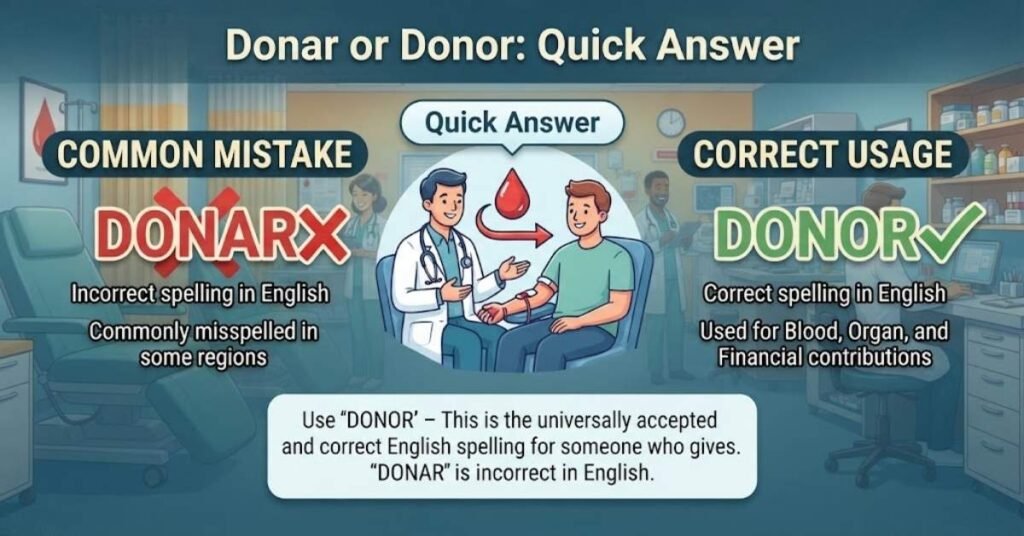
The correct spelling is donor. It’s a noun that means a person who gives something, such as blood, organs, or money. Every major English dictionary lists it this way.
“Donar” isn’t a word in standard English. If you see it in an English sentence, it’s an incorrect spelling. Your spellcheck will flag it, and it’s right to do so.
Here’s the quick version to keep in your pocket:
- Donor is correct in both British English and American English.
- Donar is an error, not a regional variant.
- The plural is donors.
The Origin of Donar or Donor
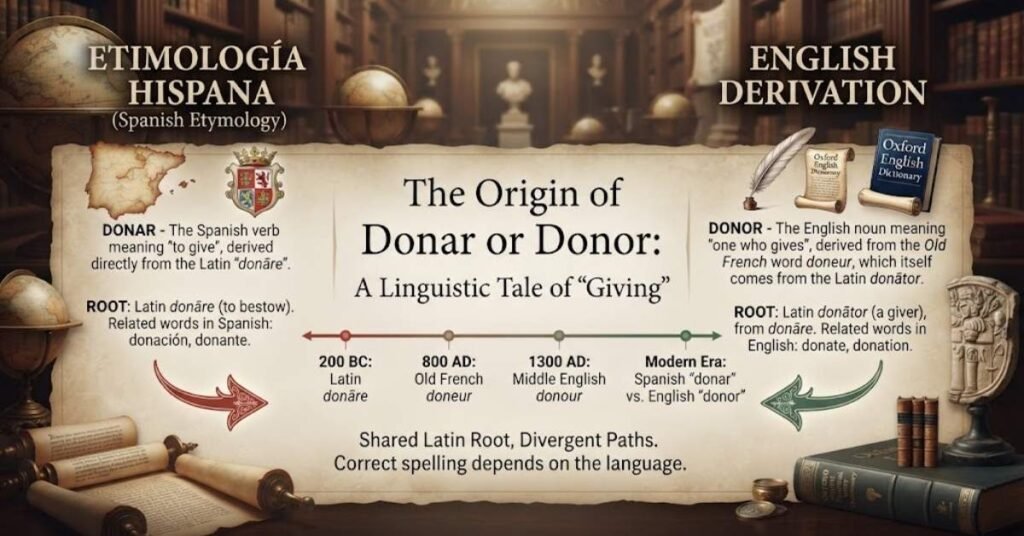
The word comes from the Latin word donare, which carries the meaning “to give.” From that root came the Latin donator. English picked it up through French, and the spelling settled as donor.
That “-or” ending isn’t random. English uses it for people who do an action, like actor, editor, and doctor. A donor is simply someone who donates.
This etymology matters because it shows the spelling wasn’t a coin toss. It followed established language patterns for centuries. The “a” in “donar” has no historical backing at all.
Donar Around the World: Where the Confusion Starts
Here’s a twist. “Donar” is a real word in other languages. In Spanish and Catalan, donar means “to give” or “to donate.” A Spanish speaker who writes “blood donar” is carrying a familiar word into English.
That’s language interference, and it’s very common in ESL learning. It isn’t carelessness. It’s a smart brain reusing a pattern it already trusts.
Donar also shows up as a name. It’s an old Germanic thunder god, close to Thor. So if you search it online, you’ll find mythology alongside spelling questions.
British English vs American English Spelling
Many spelling debates come from UK English versus US English. Think color and colour, or organise and organize. Some words split down the Atlantic.
Donor isn’t one of them. Both British spelling and American spelling use the same form. There’s no split, so nobody can call “donar” a regional choice.
Comparison Table
| Word | British English | American English | Notes |
| Donor | donor | donor | Same everywhere |
| Color | colour | color | Regional variant |
| Organize | organise/organize | organize | Both used in UK |
| Leveled | levelled | leveled | Double L in UK |
| Acknowledgments | acknowledgements | acknowledgments | Extra “e” in UK |
| Kindergarten | kindergarten | kindergarten | “Kindergarden” is wrong |
Notice the last row. “Kindergarden” is the same kind of slip as “donar.” Both replace a correct letter with one that feels natural.
Which Spelling Should You Use?
Use donor, every time. That’s true in academic writing, professional writing, and casual writing. There’s no context where “donar” wins.
Even a quick text deserves the right spelling. It costs you nothing. And it keeps readers focused on your message, not your typo.
If you’re unsure about any word, check Merriam-Webster or another trusted dictionary. These are authoritative sources, and they settle debates fast. Bookmark one and use it.
Donor and Its Word Family
Once you know the root, related words fall into place. Donate is the verb. Donation is the act or the gift. Donating is the ongoing action.
The person on the other side is the recipient. So a kidney donor gives, and the recipient receives. Keep that pair in mind and the vocabulary gets easier.
Here’s how they work in a sentence:
- She’s a regular blood donor.
- Their donation covered the school’s new library.
- He’s donating a kidney to his brother.
Common Mistakes with Donar or Donor
Most errors come from pronunciation. We say “DOH-ner,” and the last syllable sounds soft. So the ear can’t tell “or” from “ar,” and the hand guesses.
Other slips happen for simple reasons. Some are typing errors. Some come from copying incorrect spelling from a website that got it wrong.
Watch for these habits:
- Ignoring spellcheck warnings because you’re in a hurry
- Assuming a regional variant exists when it doesn’t
- Repeating mistakes you saw online
- Trusting a non-native spelling from a friend’s post
Donar or Donor in Everyday Examples
Let’s see the correct word at work. Real sentences help it stick better than rules do. Here are four places you’ll meet it.
Emails
Professional emails to hospitals, schools, and NGOs often mention donors. A typo here can look sloppy. Getting it right shows care.
Try lines like these:
- “Thank you for being a loyal donor to our cause.”
- “Please confirm your donor registration by Friday.”
News
News writing follows strict style guides. Editors catch “donar” before it reaches print. You’ll see “organ donor numbers rose this year” in headlines.
Reporters covering healthcare use the word constantly. Every story spells it the same way. That consistency is what you should copy.
Social Media
On social media posts, people type fast. So mistakes slip through, like “Need a blood donar urgently.” Those posts spread, and the wrong spelling spreads with them.
If you share an urgent appeal, double check it. A clear post gets faster help. A confusing one may get scrolled past.
Formal Writing
Formal writing includes official documents, consent forms, and student assignments. A consent form with “donar” would raise eyebrows. Teachers and clerks notice.
For medical writing, accuracy carries extra weight. Think hospital forms, research papers, and organ donor registration pages. One wrong letter can hurt trust.
Why Correct Spelling Matters for Charities and Hospitals
Charity websites ask strangers to give money and trust. A typo in the headline works against that. Readers may wonder what else got overlooked.
The same goes for hospitals, governments, and universities. Their pages guide blood donation drives and organ donation choices. Clear, correct language signals professionalism, credibility, and accuracy.
Small details build trust. When a nonprofit organization spells “donor” correctly, people feel safer giving. It’s a tiny fix with a real payoff.
Donar or Donor: Google Trends & Usage Data
People do search “donar or donor” to check the spelling. Search queries like this usually come from readers unsure of the right form. That’s a normal pattern for spelling searches.
I won’t quote exact numbers here, because search volume shifts monthly. What you can do is test it yourself. Open Google Trends, compare the two terms, and filter by country.
When you do, look at where “donar” is popular. You’ll often see interest in non-native English regions. That fits the language interference we covered earlier.
Comparison Table: Donar vs Donor
Here’s a side by side view for a fast reference. Save it or screenshot it. It settles the question in seconds.
| Feature | Donor | Donar |
| Correct in English? | Yes | No |
| Part of speech | Noun | Not applicable |
| Meaning | A person who gives | None in English |
| Plural | Donors | Not valid |
| Found in dictionaries | Yes | No |
| Used in medical contexts | Yes | Never |
| Origin | Latin donare | Spanish/Catalan verb |
Easy Tricks to Remember Donor
Try this: donors are doers. Both words end in “or,” and both describe people who act. If you can spell “doctor,” you can spell “donor.”
Another trick uses the word “or” itself. A donor gives blood, organs, or money. That “or” sits right at the end of the word.
Last, lean on your tools. Turn on spellcheck and don’t dismiss its warnings. Then read your text once before you hit send.
Conclusion
The answer is simple. Donor is the correct word, and donar is the spelling error. That holds in UK English, US English, and everywhere in between.Now you know where the mix-up starts, why it spreads, and how to avoid it. Use the Latin root, the “-or” pattern, and the tricks above.
Your blood donation post, your charity work email, and your essay will all read cleanly.Did this clear things up? Drop a comment with another word that trips you up. And if a friend keeps writing “donar,” share this with them. It might save them a red pen.
FAQs
Is “donar” ever correct in English?
No. In English, the only correct form is donor. “Donar” belongs to Spanish and Catalan, or to Germanic mythology.
Is donor spelled differently in British and American English?
No. Both use donor. It isn’t a regional spelling difference like color and colour.
What does donor mean?
A donor is a person who gives something, often blood, organs, or financial support. The gift is called a donation.
What is the plural of donor?
Add an “s” to get donors. For example, “The hospital thanked all its blood donors.”
Why do people spell it “donar”?
Usually because of pronunciation, typing errors, or language influence from other languages. Copying a wrong spelling from a website also plays a part.
Is donor a verb or a noun?
It’s a noun. The verb is donate, and the action is donating.
How can I check the spelling quickly?
Use a trusted English dictionary or your spellcheck tool. Either will show donor right away.

Jack Harrison is a passionate writer with 4 years of experience exploring names, meanings, origins, symbolism, and cultural significance. He creates clear, engaging, and well-researched content to help readers discover the deeper meanings behind names and words.
