
Ever typed potatoe in an email and then stared at it, unsure if you just made a spelling mistake? You’re not alone. This one word trips up more people than you’d think, from students doing school work to bloggers writing a recipe blog.
Here’s the short version before we go deep: potato is the correct spelling. Potatoe is the incorrect spelling, full stop. Stick around, though, because the story behind this mix-up is more interesting than you’d expect.
Potato or Potatoe – Quick Answer
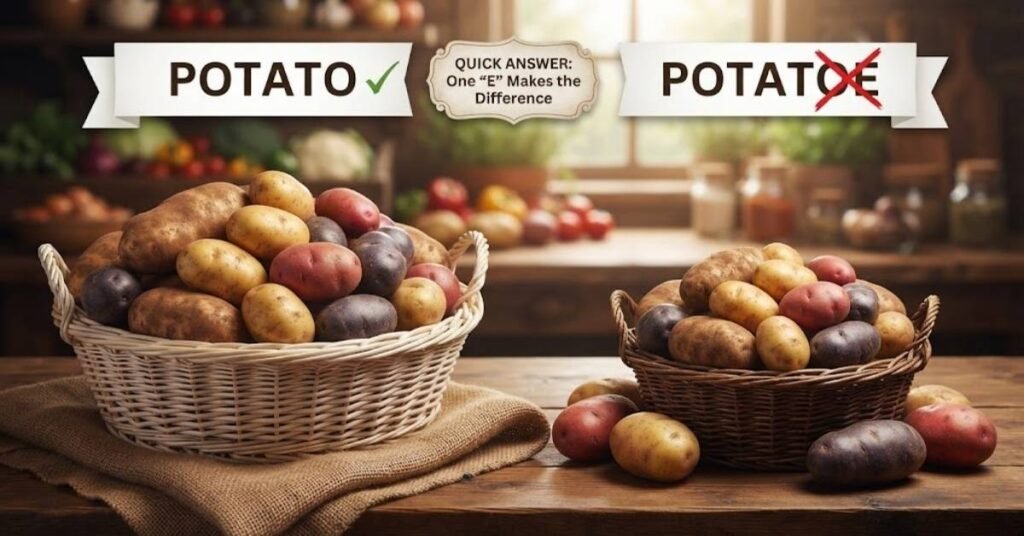
If you only remember one thing from this guide, remember this: potato (no E at the end) is the only accepted spelling in standard English. Whether you’re writing in British English or American English, the singular form stays the same everywhere. There’s no regional difference here, which honestly makes life easier.
The plural, though, is where people stumble. Potatoes takes an E before the S, unlike words like “photos” or “pianos.” So one potato, two potatoes, and never a potatoe in sight.
The Origin of Potato or Potatoe
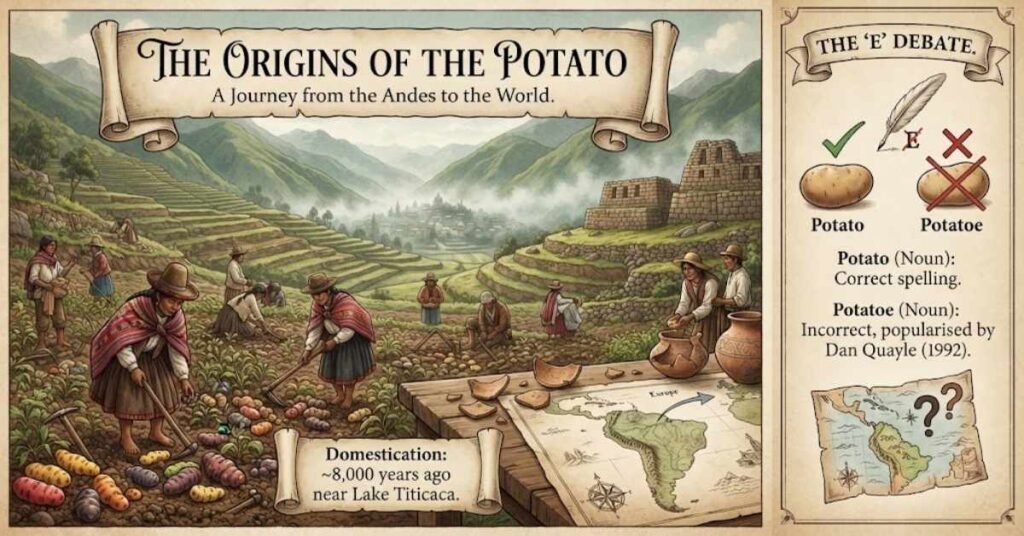
Words don’t just appear out of nowhere, and potato has a pretty fun backstory. It traces back to the Spanish word patata, which itself borrowed from Taino, a language spoken in the Caribbean. When the vegetable made its way to Europe, English speakers adapted the pronunciation and spelling over time.
This kind of word origin story explains a lot about why English spelling feels so messy sometimes. We borrow from other languages, tweak the sounds, and end up with rules that don’t always make sense on paper. Studying the etymology of common words like this one actually builds real writing confidence, because you start seeing patterns instead of random chaos.
By the time potato settled into English, the spelling had already dropped extra letters and simplified. Nobody was around campaigning for an added E, yet somehow that mistake still shows up centuries later. Funny how these things stick.
British English vs American English Spelling
Here’s something that surprises a lot of people. UK English and US English disagree on plenty of words like “colour” versus “color” or “theatre” versus “theater.” But potato isn’t one of those battlegrounds.
Both sides of the Atlantic spell it the exact same way, singular and plural. So if you’ve been assuming this is some British versus American spelling comparison, you can drop that theory right now. This is one of the rare cases where English spelling actually agrees with itself across the pond.
That said, plenty of English learners still get confused because so many other words do change between dialects. It’s a fair mix-up to make. Just file this one under “no drama needed.”
Which Spelling Should You Use?
Simple answer: always use potato for singular and potatoes for plural, no matter where you’re writing from or who’s reading. This applies to formal writing, casual writing, professional writing, and everything in between. There’s genuinely no situation where potatoe is the right word choice.
Think about how this plays out in real life. A recipe that lists “3 potatoe” instead of “3 potatoes” looks unpolished, even if the dish tastes amazing. Menus, blogs, social posts, and even a quick email to a coworker all deserve the correct version.
If you’re ever unsure mid-sentence, a fast trick helps: picture the word PATATA in your head, then subtract letters until you land on P-O-T-A-T-O. No sneaky E at the end. That little mental image saves you from a lot of unprofessional writing moments.
Common Mistakes with Potato or Potatoe
Let’s talk about why this common English mistake keeps happening in the first place. A lot of it comes down to mobile typing, where autocorrect sometimes adds letters you never meant to type. Thumbs move fast, brains move faster, and an extra E sneaks in before you notice.
Another reason is confusion with pluralization patterns. Words ending in a consonant plus “o,” like “tomato” or “hero,” often add “es” in the plural, and some people mistakenly think the singular needs an E too. That logic feels reasonable, but it’s simply not how the spelling rules work here.
There’s also the classic mix-up between singular noun and plural noun forms when people are typing fast or thinking in another language first. If your first language handles plurals differently, English’s odd exceptions can feel like a trap. None of this makes you bad at English, by the way. It just makes you human.
Potato or Potatoe in Everyday Examples
Real examples make this stick way better than just repeating rules. Picture a school garden project where kids grow their own vegetables and write signs labeling each starchy vegetable patch. One sign says “Potatoe Patch” and another says “Potato Patch,” and only one of those is heading home with a gold star.
Now picture a dinner table conversation. Someone says, “Can you pass the baked potatoes?” and nobody blinks, because that’s just normal, everyday speech. But if that same person texts a group chat and writes “grabbing potatoe’s from the store,” a few friends will definitely notice the typo. Real-life examples like these show how the stakes change depending on where you’re writing.
Here’s a quick breakdown of situations where getting this right actually matters:
- Recipe blog posts where credibility matters to readers
- News articles where a typo correction should happen before publishing
- Social media captions that get shared with global readers
- Professional email threads with clients or coworkers
- Menus at restaurants where customers notice small details
Small word, but it shows up everywhere.
Nouns Ending in “O” and Their Plural Patterns
This is one of those grammar quirks worth understanding on its own, because it explains so much confusion. English has a whole group of nouns ending in “o” that don’t follow one single plural form rule, and that inconsistency is exactly why mistakes happen.
Some words just add an S, like “photos,” “pianos,” and “kilos.” Others need the full -es plural, like “potatoes,” “tomatoes,” and “heroes.” There isn’t a magic formula that covers every case, which is honestly a bit annoying, but knowing the exceptions for common words like potato gets you most of the way there.
If you’re building your English vocabulary and want fewer surprises, keep a mental list of the “-es” group since it’s smaller than the “-s” group. Once you memorize that shorter list, the rest falls into place by default. It’s a small shortcut, but it works.
Potato or Potatoe – Google Trends & Usage Data
Curious how often people actually search for the wrong version? The usage data tells an interesting story. Search queries for “potatoe” spike regularly, which tells us search intent around this topic is strong and ongoing, not a one-time fluke.
Google Trends shows steady interest in spelling-related searches for this word, especially around holidays when people cook more and write more recipes. Thanksgiving and other big cooking seasons tend to bring noticeable jumps. That pattern lines up with common sense. More cooking content means more chances to second-guess a spelling.
This also tells content creators something useful. If your recipe blog or food website targets global readers, addressing this exact confusion answers a real question people are actively typing into search bars. It’s not a niche worry. It’s a widespread one.
Comparison Table: Potato vs Potatoe
Sometimes a simple table clears things up faster than paragraphs ever could.
| Aspect | Potato | Potatoe |
| Correctness | Correct spelling | Incorrect spelling |
| Singular form | Yes | No |
| Plural form | Potatoes | Not applicable |
| Found in dictionaries | Yes | No |
| Accepted in formal writing | Yes | No |
| Accepted in casual writing | Yes | Rarely, only as a typo |
| Regional spelling difference | None | None |
Short, clear, and exactly what most readers are searching for when they land on this page.
Why This Small Typo Hurts Credibility
You might think one extra letter isn’t a big deal, but context changes everything. A single spelling mistake on a business email can make a client pause, even if the rest of the message is solid. First impressions form fast, and small errors chip away at trust before anyone reads your actual point.
This matters even more for anyone running a recipe blog or food website where readers expect polish. If your recipe ingredient list has a typo right at the top, some visitors bounce before they even reach the good stuff. Search engines notice patterns too, and pages riddled with basic errors tend to struggle in search queries rankings over time.
The fix isn’t complicated, though. A quick pass with any decent spelling checker catches this instantly, and reading your work out loud catches what tools sometimes miss. Two minutes of proofreading can save you from looking careless in front of global readers.
How Kids and English Learners Can Master This Word
Teaching this word to beginners works best with repetition and real objects, not just rules on a page. Hold up one potato, say the word, then set two next to it and say potatoes, letting the sound of the extra syllable stick in memory. This hands-on approach beats memorizing abstract spelling rules any day of the week.
English learners often benefit from grouping tricky words together instead of studying them one at a time. Pair potato with similar words like “tomato” and “hero,” since they all share that unexpected -es plural pattern. Seeing the pattern repeat across multiple words makes the exception feel less random and more like a rule you can actually predict.
Flashcards, simple grammar rules charts, and short quizzes work wonders here too. Even something as basic as a school garden activity, where students label plants with correct signage, reinforces spelling naturally. Learning through doing tends to stick longer than learning through lectures.
What Dictionaries Say
If you want proof beyond a blog post, dictionaries settle this instantly. The Cambridge Dictionary, along with other major English dictionaries, lists only potato and potatoes as valid entries. No trusted books, style guides, or spellcheck tools recognize potatoe as legitimate.
This matters because dictionaries reflect actual, agreed-upon language rules, not personal opinion. When you’re double-checking correct usage versus incorrect usage, a dictionary is always your safest bet. Bookmark one, use it often, and your spelling accuracy will improve fast.
Tips to Avoid This Spelling Mistake for Good
Want to lock this in permanently? A few small habits go a long way.
- Say the word out loud before typing it. Pronunciation naturally skips the extra E
- Use a spelling checker built into your writing app before hitting publish or send
- Practice writing “one potato, two potatoes” a few times until it feels automatic
- Double check recipe ingredients lists before posting them publicly
- Keep a short list of tricky nouns ending in “o” nearby while writing
None of these take more than a few seconds, but together they build lasting writing confidence.
FAQs
Is “potatoe” ever correct? No. It’s always considered an incorrect spelling in standard English, regardless of context.
Why do some people spell it with an E? Mostly due to confusion with pluralization patterns and mobile typing errors from autocorrect.
Do British and American English spell it differently? No. There’s no regional difference for this particular word, unlike many others.
What’s the plural of potato? Potatoes, with an E added before the S.
Where did the word potato come from? It comes from the Spanish word patata, tracing further back to a Taino origin.
Conclusion
At the end of the day, this comes down to one simple rule worth remembering: potato, never potatoe. It’s a common word with a surprisingly rich history, tied to the Spanish word patata and centuries of language evolution. Whether you’re a farmer talking about potato prices, a home cook trying to boil potatoes for soup with onions, or a writer polishing a blog post, getting this right adds a small but real layer of writing accuracy.
Keep a dictionary handy, trust your proofreading instincts, and don’t let autocorrect win the battle. Now go enjoy your fresh potato dish, correctly spelled and all.

Jack Harrison is a passionate writer with 4 years of experience exploring names, meanings, origins, symbolism, and cultural significance. He creates clear, engaging, and well-researched content to help readers discover the deeper meanings behind names and words.
